Writers International Edition

weadmin

Emergent ‘New Woman’ in the ‘Toxic Patriarchal Society’: A Fearless and Fierce Voice in Meena Kandasamy’s When I Hit You

Abstract

The emerged ‘new woman’ in the ‘toxic patriarchal society’ stands against oppression and fights back with resistance, which is well portrayed through relentless and unshakable spirit of evolving women writers such as Meena Kandasamy. This paper highlights the way Kandasamy makes her unnamed narrator use language as a weapon against oppression and violence of deadly masculinity and patriarchy. Further it explores the stratagems applied in an abusive marriage with a misogynist husband who imposes clampdowns and inhumaneness upon the woman of the house that too on a feminist writer who finally backfires with her flaming voice writing the narrative of dictatorship of the patriarch cum psychic husband and freedom of her feminine psyche from the shackles.                                      

Keywords: Patriarchy; narrative; identity; feminine; oppression; identity.

Indian women have been progressive a lot with resilient strides from early Vedic period to postmodern era, passing through Mughal Period to Colonial and post-independence period with influence of feminist movements. In the period when Britishers colonized the country, many writers like Torulata Dutt, Rajlakshmi Debi, Krupabai Sathianandhan, Pandita Ramabai Saraswati, Swarna Kumari Ghosal, and Cornelia Sorabji scripted with an altering perspective and a convincing societal drive. 

The next generation of Indian women writers including Nayantara Sehgal, Kiran Desai, Amrita Pritam, Arundhati Roy, Shashi Deshpande, Chitra Banerjee Divakaruni, Anita Desai, Shobha De, Githa Hariharan, Jhumpa Lahiri, Ismat Chughtai, Jotirmoyee Devi, Begum Rokeya Sakhawat Hussain, Bama Faustina, Baby Halder, Rajam Krishnan, Sujata Bhatt, Meena Kandasamy, Manjul Bajaj and Samhita Arni are such female psyche who got recognition for their creativity, straightforwardness and contribution to Indian Feminist Writings with their much-appreciated works. Their female characters portrayed vivid experiences of life as a woman and how the psyche emerged and a ‘new woman’ came into existence gradually. These writers have made their women characters insistently voice to reject the imposed burden of patriarchal supremacy of men hence due to the predominant gender perception, they have always been thought-out frail, incompetent and therefore subdued. Even Indian epics such as Ramayana and Mahabharata are retold and re-interpreted from Sita and Draupadi’s feminist perspective.

A ferocious woman writer Meena Kandasamy voiced various issues of caste, poverty and violence in Southern India in The Gypsy Goddess her debut novel. Her second novel When I Hit You: Or, a Portrait of the Artist as a Young Wife is written in first-person with usage of an unnamed narrator who is a newly-wed writer undergoing hasty societal seclusion, inaccessibility to social platforms and life-threatening violence under her husband’s authoritative behaviour. It’s a fictional work but with autobiographical reflex hence Kandasamy’s own marriage also went worse in the same way. This narrative seems not just of one Indian woman but behind this story, the stories lie of thousands and lakhs of Indian women who suffer in their marriages. The National Family Health Survey last year found that

over 30 percent of women have been physically, sexually or emotionally abused by their partners at some point. This book is Kandasamy’s rebuke to those who think privilege, financial or educational, protects against harm. Her characters are never named, their anonymity allowing the reader to slip easily into their skins.” (Maher)

Consequently in this terrifying, eye-opening and heartbreaking writing, Kandasamy has put up a ceaseless resistance to agony and travail through her strong lexis. She says “I am the woman who has tried to shield herself from the pain of the first person singular. I am the woman who tum-my-rubs every received taunt so that it can be cajoled into sentences.” (Kandasamy 248) She further expresses that she is the woman 

“who stands in the place of the woman who loathes to enter this story in any of its narrations- police or procedural, personal or fictional- because that woman has struggled so hard and so long to wriggle out of it- and now, when asked to speak, she would much rather send a substitute. Sharing stories might be catharsis, but to her it is the second, more sophisticated punishment. I am the woman deputed on her behalf.” (Kandasamy 248)

The narrative moves ahead with a nerve-wracking pace like an extended poem in the form a prose appearing as a feminist anthem, crafted onward like a manifesto realizing oneself. Kandasamy’s narrative can’t be delimited hence it has a pounding heart, with comprehensively acknowledged pursuit for independence and sense on the earth where women are still distressingly belittled. She expresses being the representative of new emerged woman who could be “removed from the brutality of the everyday- from its dying grasshoppers and fading flowers and starving children and drowning refugees” (248) and “sheltered within words, the one distanced into a movie running in her mind, the one asked to bear the beatings, the one who endures everything until something snaps so that fate can escape her.” (248-249) 

Kandasamy portrays the image of new woman via the emancipated feelings of her narrator who says, “I am the woman with wings, the woman who can fly and fuck at will.” (247) She has “smuggled this woman out of the oppressive landscape of small-town India.” (247) She adds that she needs to “smuggle her out of her history, out of the do’s and don’ts for good Indian girls” hence she has been limited in the confinement of set patriarchal codes of conduct from centuries. (247-248)

The story starts with lines by the narrator how her mother never stops talking about what had happened past five years, though with each year, the story had “mutated and transformed, most of the particulars forgotten” (3) such as events’ sequence, day, date, month and time of the year etc. but she keeps on giving absurd details about the physical and mental condition she was in when her daughter escaped from the brutal situation at her husband’s place she was stuck into, by saying, “were they even feet? Were they the feet of my daughter? No! Her heels were cracked and her soles were twenty-five shades darker than the rest of her, and with one look at the state of her slippers you could tell that she did nothing but housework all the time. They were the feet of a slave.” (4) She further continues that when their daughter came back to them after a bad marriage with a criminal husband, she came “with her feet looking like a prisoner’s, all blackened and cracked and scarred and dirt an inch thick around every toenail” (4) and her father washed her feet with his own hands, scrubbing and scrubbing and scrubbing them with hot water and salt and soap and an old toothbrush and applying cream and baby oil to clean and soften them”. (4-5) The condition of the protagonist is also described with such phrases that she was “brittle and empty like a shell” (6) and it took months to get her back to normal moreover, “her hair was swarming” with lice that drained all the energy of the girl. (7)

The protagonist being the writer finally decides to write her own story after listening various plagiarized versions with added anecdotes created by her mother to tell people. Kandasamy calls “authorship” is a “trait” which one needs to take very seriously being “ruthless”. (9)

The journey of the narrator towards being an assertive and strong voice is not so easy. It initiates with a depriving of the narrator’s independence after her marriage to a University lecturer, Marxist and one-time revolutionary person in South India. Her husband is a communist with his beliefs covering his own sadism and tries to control her. The narrator expresses that she feels “blank” like “a house after a robbery” and like “a mannequin stripped of its little black dress and dragged away from the store window, covered in a bedsheet and locked off in the godown”. (16) She talks about his sadist attitude and “the plainness that makes him pleased”. (16) She further releases her feelings, “This plainness that has peeled away all my essence, a that can be controlled and moulded to his will” though she took that “plainness” she wears as a protection “mask” further not only to hide her face but to “prevent arguments” with him. (16) Her husband wanted to play the role of a perfect wife, therefore, to escape punishments, she says

“I begin to wearing my hair the way he wants it: gathered and tamed into a ponytail, oiled, sleek, with no sign of disobedience. I skip the kohl around my eyes because he believes that it is worn only by screen-sirens and seductresses. I wear a dull T-shirt and pajama-bottoms because he approves of dowdiness.” (15)

Further she proceeds saying that it gave her a feel of being a woman who has given up in the life “to play the part of the good housewife. Nothing loud, nothing eye-catching, nothing beautiful.” (16) Her husband wanted her to look like “a woman whom no one want to look at or more accurately no one even sees.” (16) Her life became depedent on him while playing a role of a dutiful wife who had to pretend that her husband is the hero of everyday. She compares and expresses her freedom what she relished before marriage saying that “a once-nomad” is “to be confined” now to “the four walls of a house”. (20) Though she is confined to home. She tries to seek solace in reading and writing, but “the house appears to shrink the minute her husband is home, how there is nowhere to run, nowhere to hide, nowhere to evade his presence.” (21)

Through her firm and fierce usage of language, she exposes the double standards and dialectics of patriarchal and in specific of Communism putting forth “she must learn that a Communist woman is treated equally and respectfully by comrades in public but can be slapped and called a whore behind closed doors.” (34)

After moving to another city where she couldn’t now anything and that became torturous for her “an assault on her tongue, mind and body”. The linguistic barrier restricted her speech to fulfill duties as a wife like bringing vegetables or any grocery item. Moreover at that stay, her husband with a “self-inflicted ordeal” (50) blackmails and forces her to deactivate her Facebook account, which was her “lifeline to the world outside” (52) in Mangalore with all her professional links as a freelance writer to promote her work, give her news, and to keep her in the loop of the literary scene. Very consciously knowing that it is her space as a writer he wanted her to cut herself off from Facebook though she calls it as “an act of career suicide” (52). The control freak further makes her submit all her email accounts to him to operate on her behalf in addition keeps an eye on her phone too. He does like her writing articles in English calling it being a poet prostitute or whore moreover absurdly connects it to colonization period where whore used to be a link between the colonizer and the colonized. More he hates the feminism inside her treating it as a problem between to remain good couple. The narrator gradually cloistered to her silence to make sense of the world. For her “To stay silent is to censor all conversation. To stay silent is to erase individuality. To stay silent is an act of self-flagellation…” (161

Her silence strategy irritated the man further. Therefore she was frequently raped and beaten down even with routine household stuff such as the hose of the washing machine and the power cord for her laptop. She was kicked in her stomach, her hair gathered in bunch, blood rushing to her head, moreover dragged “from the table and into the bedroom”. (163) Even her parents kept on saying to tolerate this all brutality and beastly violence to save her marriage and didn’t understand what she really went through. About the narration of being beaten down, Preti Taneja in the review of the novel When I Hit You expresses, 

“through Kandasamy’s use of stylistic devices such as repetition, are we – the narrator reflects that every moment has narrative potential. The risk of desensitization is averted: the novel becomes a meditation on the art of writing about desire, abuse and trauma.” (Taneja)

Kandasamy expresses with audacity the gut-wrenching experience how the protagonist feels to be raped within a marriage. She feels like dead person whose ceremonial feeding goes on. She describes it metaphorically “motionless, devoid of touch, taste sight smell sound, the corpse feels nothing. It lies there, playing the role of the obedient half of an obligatory ritual, as close relatives drop white rice through its parted lips. It is a feeling of unfeeling.” (168) She feels humiliated and calls that her body learns “to play dead” and “extends it own threshold of pain and shame and brutality”. (169)

Kandasamy talks about petite bourgeois mindset of those people in the society for whom shame is “not the beatings, not the rape. The shaming is in being asked to stand to judgment.” (219) She applies her own strategies to get rid of this marriage by not conceiving a child and further not reverting back to any of his torture by speaking to him. Silence becomes another weapon after her writings hence she understood that “there are no screams that are loud enough to make a husband stop”. (167)

Using language as a weapon, she includes epigraphs at the start of chapters from Pilar Quintana, Wislawa Szymborska, Anne Sexton, Kamala Das, Margaret Atwood, and Malathi Maithri and many more correlating herself to these feminist writers “beyond caste, race or culture, even beyond language difference”. (Taneja) Added to her style, Sudipta Dutta says about the title selection in her review that 

“The title, unwillingly or not, reminds us of an illustrious predecessor, James Joyce, and his first novel, A Portrait of the Artist as a Young Man, in which Stephen Dedalus or the writer’s literary alter ego, finds words to create his identity and his art, to describe Dublin and her many moods, to defy convention on nationality, language, religion”. (Dutta)

Kandasamy dissects the “Indian form of toxic masculinity” by giving illustrations of Indian male leaders never wanted to be seen at public platforms with a woman by their side hence it meant for them that they were not masculine enough, not the man enough to lead the people, if they go for conjugal relationships therefore they continued “to remain bachelor politicians”. (124)

When I HIt You is a powerful gender narrative and an expression of protest against suppression and inhumane conditions of existence a woman was fallen into, how she survived and came out the traumatic situation. Therefore such gender narratives including gender issues and women emancipation become the new catchphrase across the globe with very fast pace transforming social structures and prevailed inequalities settling the minds of people.

Kandasamy’s feminist narrative is a scorching chronicle of one woman’s encounter with marital rape and abuse, how she castoffs the overtly idolized image of the good Indian girl opening up in a very affirm voice which exhibits desire, feels pain and has unyielding courage. It screams from its modest case, denying to be silenced in its search for love and identity; leaving the gut-wrenching impression how the epitome of submissive Indian femininity is in ruins at last and a new woman has emerged out of the cocoon. 

Works Cited

  1. Dutta, Sudipta. Words gave her wings. May 27, 2017. Retrieved on July 25, 2021.
  2. https://www.thehindu.com/books/books-reviews/words-gave-her-wings/article18583321.ece
  3. Kandasamy, Meena. When I Hit You. Juggernaut Books, New Delhi, 2018.
  4. Kishore, Henry. The Evolution of Indian Women Psyche: A Chronological Study of Women and Woman Writers in India. 2017.
  5. Maher, Sanam. She Was Abused by Her Husband. So Is the Narrator of Her New Book. The New York Times, March 17, 2020.
  6. Taneja, Preti. When I Hit You: Or, A Portrait of the Writer as a Young Wife by Meena Kandasamy – review. July 7, 2017. Retrieved on July 25, 2021.
  7. https://www.theguardian.com/books/2017/jul/07/when-i-hit-you-meena-kandasamy-review

Emergent ‘New Woman’ in the ‘Toxic Patriarchal Society’: A Fearless and Fierce Voice in Meena Kandasamy’s When I Hit You Read More »

Chronicles: A Historical Monument: Book Review by Sushant Thapa

Too much individualistic behaviour makes you a conformist. Bob Dylan says this in Volume one of his autobiography “Chronicles.” Being a conformist can mean being rigid and always having an aura to win the argument, instead of making proper meaning and holding the truth close. For those of us who are introverted, this saying from Dylan’s book can bring us out of our personal closet and mix with society. This evokes a call for metamorphosis from individuality to commonality, a social need.

I do not think I need to introduce Bob Dylan. He is an American singer-songwriter with a poetic soul who won the Nobel prize in Literature in 2016 for his songs that told stories. He is a folk musician. He defines song in the book as “A song is like a dream, and you try to make it come true.” He also defines what folk music does. He says, “Folk music, if nothing else, makes a believer out of you.”

All of Dylan’s songs depict the world, they are not much abstract and can simply make meanings. They have told human stories with a poetic touch. His songs rhyme and that is also one old conventionality of poetry. I say it is old because modern poets have abandoned rhyme. Dylan however is brutally contemporary. His songs “Everything is Broken” and “Political World” are contemporary. War has devasted the modern world, things lie broken. This is the reality.

I would like to talk more about the song “Everything is broken.” The music of it is also good and it has carefree representation. He talks about how everything like objects is broken. I feel that everything can be in a broken state. It is good to talk about that state of things when things can be underrepresented. Even broken things are valued by Dylan. Like they can be joined. After all, things are made of pieces. The present-day wars and pandemics have created brokenness. People can have broken hearts. Bob says in the autobiography that the critics did not like this song because they did not find it autobiographical.

I did not know that in America slavery and the civil war were related. I did not know that Bertolt Brecht was banned in Germany, in his own country, for being an antifascist German Marxist poet-playwright. I have learned new things from Dylan’s autobiography. I would love to read Volume two of Chronicles too. Dylan’s autobiography is informative. Not only it contains people whom Dylan met during his music career, and songs that he heard, the studios where he recorded his songs in; it is also a historical monument in itself.

Bob Dylan says towards the end of the autobiography that the song that he was leaning towards singing did not exist and he began playing with the form, trying to grasp it- trying to make the kind of song that transcended the information in it, the character and form. I am not sure but it sounds like saying that sometimes similes and metaphors alone make a poem. They are the form that provides some shape to your poem. Going too much out of form does not shape the artwork unless you are doing something groundbreaking.

Sinclair Lewis was the first American to get Nobel Prize in Literature. Author of Elmer Gantry. Master of Absolute Realism. He had invented it. I came to know about him through this autobiography by Dylan.

Dylan says he was not getting influenced by good or bad comments by people on his songs. He says he did not have preconditioned audience. This is what we can learn from the Nobel laureate. Artists and even writers should be able to not be influenced by any comments and the measure of the work lies in the dedication with which they do it. Recognition is the aftermath, it is not the main target. Having no preconditioned audience made Dylan more focused on his songs. He loved Woody Guthrie and his songs. Bob Dylan sang songs by Guthree although he received feedback like “you will never turn into Guthree.” Well, I am sure Dylan made his own image. Dylan liked the diction and repertoire in Guthree’s song. Dylan even went on to change his own musical image. He changed the way his songs sounded from when he started. I appreciate the changes in his singing style. I can listen to that in his songs. He says in the book that he even started singing in a different voice. Bob Dylan has written a blurb in Jack Kerouac’s book “On the Road.” He mentions Jack Kerouac in this autobiography and says that Kerouac had retired and the travelling spirit of “On the Road” has been diminished now. He makes a short critique on the book “On the Road” in this autobiography.

When Bob Dylan says that in New Orleans there is only one day at a time here, then it’s tonight and then there will be tomorrow again. I think here Bob is talking about the slow passage of time and like postponing everything for later attitude of New Orleans. His next sentences in the book are: “Chronic melancholia hanging from the trees. You never get tired of it. After a while, you feel like you start to feel like a ghost from one of the tombs, like you are in a wax museum below crimson cloud.” When Dylan says that you feel like a ghost from one of the tombs, I feel he is talking about getting things done slow attitude. He also says one day at a time. Despite everything he praises New Orleans and says it’s a good place to record music. I am writing about this because I can view America through Dylan’s eyes although I am a foreign man in America.

This has been my experience with the first Volume of Chronicles, an autobiography written by the legendary Bob Dylan. I hope to read Volume two soon and write a review on it. I learned many things and the lesson from this autobiography has brought me close to one of the best-appreciated musicians of the current time who will always have a literary aura around him, no matter the passage of time.

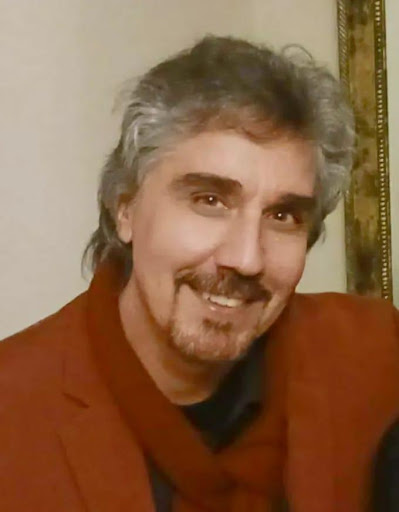
Sushant Thapa
M.A. English, Jawaharlal Nehru University
New Delhi, India

Biography

Sushant Thapa (1993) is from Biratnagar, Nepal. He is an M.A. in English literature from Jawaharlal Nehru University, New Delhi, India. His fourth and upcoming book of poems titled “Love’s Cradle” is going to be published by World Inkers Printing and Publishing, New York, USA. He teaches Business English to undergraduate students in Biratnagar, Nepal.
Chronicles: A Historical Monument: Book Review by Sushant Thapa Read More »

Amigo Aire: Poem by Raúl Hernández Correa

Amigo Aire…
Tú que eres el pintor de nuestro cielo,
el soplo imprescindible de la vida.
Concédeme el color que tanto anhelo
para plasmar tu brisa y tu embestida.
Permite que mi musa tome vuelo
y toque el corazón del inconsciente;
de aquel que contamina nuestro suelo
y nubla nuestro espacio transparente.
Graciosa coquetea tu corriente
bailando en la maleza como un juego.
Si puedes desgarrar la inmensa nube.
¿Por qué sueles dejar que un vil tan ciego
la tóxica impureza te la incube?
¡Defiéndete a ti mismo, te lo ruego!

Amigo Aire…
Regálame el silbar de tu decir
para adornar la luz del pensamiento.
Silente precursor de lluvia y viento,
sin ti jamás podríamos vivir.
No es bueno que intoxiquen nuestro aliento;
ni justo que te mezclen con Don Nadie.
Si al menos no condenas al culpable,
no dejes que mi verso vuele en vano…
Ayúdame a enfrentar al detestable
que suele envenenar al ser humano
y a todo nuestro gran ecosistema.
Permite que mi sueño imaginable
respire los colores de un poema
en este festival insuperable.

Poem by
Raúl Hernández Correa
Cuba- USA

Biography of the Poet

Raúl Hernández Correa
Vizconde de La Casa de Homestead en la micronación de Andorra.
Poeta, escritor y compositor. Embajador y miembro ejecutivo de varias asociaciones internacionales

  • Primer Rey Tertulia Versos desde el Pilcomayo, Bolivia 2019
  • Poeta del año. Elsa Award Miami 2019.
  • Primer premio en Fotopoema Indonesia 2021
  • Premio “GENTLEMAN ARCÁNGEL DE LA PALABRA Y LA VIDA” Hombre 2021-2022

Sus obras están en múltiples antologías internacionales
Participó como invitado en el “Festival Internacional de Literatura Panorama 2022 y 2023”


Amigo Aire: Poem by Raúl Hernández Correa Read More »

Unloving A Flower Bouquet: Poem by Sushant Thapa

What happens
When you don’t love
A flower bouquet?
Love just sales and
Becomes too costly.
A store of love
Goes empty
Unless you
Love an appreciative artist.
A personal redemption
Builds a rusted prison in you.
The fragrance of boredom wafts.
A universal river
Just becomes
A washing consolation.
Art is there to mystify
It is there to measure
The height of fall
When affection
Fall from the height of imagination
And make proper awakenings.
A bar
Cannot replace
A barefoot garden walk
In the morning dewy grass.
A bouquet if loved
Becomes a garden of love.

Poem by
Sushant Thapa
©Sushant Thapa 2023

Bio of the Poet

Sushant Thapa (1993) is from Biratnagar, Nepal. He is an M.A. in English literature from Jawaharlal Nehru University, New Delhi, India. His fourth and upcoming book of poems titled “Love’s Cradle” is going to be published by World Inkers Printing and Publishing, New York, USA. He teaches Business English to undergraduate students in Biratnagar, Nepal.

Unloving A Flower Bouquet: Poem by Sushant Thapa Read More »

O Captain! my Captain! Poem by Walt Whitman

O Captain! my Captain!
O Captain! my Captain! our fearful trip is done;
The ship has weather’d every rack, the prize we sought is won;
The port is near, the bells I hear, the people all exulting,
While follow eyes the steady keel, the vessel grim and daring:
But O heart! heart! heart!
O the bleeding drops of red,
Where on the deck my Captain lies,
Fallen cold and dead.
O Captain! my Captain! rise up and hear the bells;
Rise up—for you the flag is flung—for you the bugle trills;
For you bouquets and ribbon’d wreaths—for you the shores a-crowding;
For you they call, the swaying mass, their eager faces turning;
Here Captain! dear father!
This arm beneath your head;
It is some dream that on the deck,
You’ve fallen cold and dead.
My Captain does not answer, his lips are pale and still;
My father does not feel my arm, he has no pulse nor will;
The ship is anchor’d safe and sound, its voyage closed and done;
From fearful trip, the victor ship, comes in with object won;
Exult, O shores, and ring, O bells!
But I, with mournful tread,
Walk the deck my Captain lies,
Fallen cold and dead.
**********
O capitano! Mio capitano!
O Capitano! Mio Capitano! Il nostro viaggio spaventoso è finito,
La nave ha superato ogni ostacolo, il premio che cercavamo è conquistato,
Il porto è vicino, odo le campane, il popolo tutto è esultante,
Mentre gli seguono la ciglia solida, la nave severa e ardita;
Ma o cuore! Cuore! Cuore!
O le gocce sanguinanti di rosso,
Dove giace il mio Capitano sul ponte,
Caduto gelido e morto.
O Capitano! Mio Capitano! Alzati e ascolta le campane;
Alzati – per te è issata la bandiera – per te suona la tromba,
Per te fiori e ghirlande ornate di nastri – per te le rive affollate,
Per te invoca, la massa ondeggiante, a te volgono loro volti ansiosi;
Ecco Capitano! Amato padre!
Questo braccio sotto la tua testa!
È solo un sogno che sul ponte,
Sei caduto gelido e morto.
Non risponde il mio Capitano, le sue labbra sono pallide e immobili
Mio padre non sente il mio braccio, non ha polso né volontà,
La nave è ancorata sana e salva, il suo viaggio concluso e finito,
Dal viaggio spaventoso, la nave vittoriosa, torna con la meta raggiunta;
Esultatevi, o rive, e suonate, o campane!
Mentre io, con funebre passo,
Percorro il ponte dove giace il mio Capitano,
Caduto gelido e morto.
**********
Oh Capità! El meu Capità!
Oh Capità! El meu Capità! S’ha acabat l’espantós viatge,
La nau ha superat tots els esculls, hem guanyat el premi que anhelàvem,
El port és ben a prop, sento les campanes, la gent està exultant,
Els ulls segueixen la ferma quilla, la nau severa i audaç,
Però oh cor! Cor! Cor!
Oh sagnants gotes vermelles!
Allà, a la coberta, el meu Capità
Jeu fred i mort.
Oh Capità! El meu Capità! Aixeca’t i escolta les campanes;
Aixeca’t -per a tu s’alça l’estendard -per tu sona la trompeta,
Per tu rams i corones florents -per tu les platges atapeïdes de gent.
Per tu crida la massa oscil•lant, per tu les seves cares es giren anhelants;
Aquí, Capità! Pare estimat!
Que el teu cap descansi sota el meu braç!
Això ha de ser algun somni, a la coberta
Jeus fred i mort.
El meu Capità no contesta, els seus llavis tan pàl•lids i quiets,
El meu pare no nota el meu braç, no té pols, ni voluntat,
La nau ha ancorat sana i estàlvia, s’ha acabat el seu viatge,
De l’espantosa travessia, la nau arriba victoriosa amb un trofeu;
Exulteu-vos, oh platges, i soneu, oh campanes!
Però jo, amb una fúnebre càrrega,
Camino per la coberta on el meu Capità
Jeu fred i mort.
**********
Ω Καπετάνιε! Καπετάνιε μου!
Ω Καπετάνιε! Καπετάνιε μου! Το τρομερό ταξίδι μας τελείωσε.
Το σκαρί άντεξε στον καιρό, αποκτήσαμε το ζητούμενο έπαθλο.
Το λιμάνι είναι κοντά, ακούω τις καμπάνες, ο κόσμος όλος αγαλλιά,
Καθώς ακολουθούν τα μάτια τους τη σταθερή καρίνα,
το σκάφος πλέει βλοσυρό και με τόλμη.
Μα, ω, καρδιά! Καρδιά! Καρδιά!
Ω, οι άλικες στάλες που αιμορραγούν,
Εκεί που στο κατάστρωμα κείται ο καπετάνιος μου,
Πεσμένος παγωμένος και νεκρός.
Ω Καπετάνιε! Καπετάνιε μου! Εγέρθητι κι άκου τις καμπάνες.
Εγέρθητι—για σένα κυματίζει η σημαία—για εσένα η σάλπιξ ηχεί.
Για σένα οι ανθοδέσμες και τα στεφάνια με κορδέλα — για σένα συνωστίζονται οι ακτές.
Εσένα καλούν, οι παλλόμενες μάζες, στρέφοντας ανυπόμονα τα πρόσωπά τους.
Ορίστε, Καπετάνιε! Αγαπητέ Πατέρα!
Αυτό το χέρι κάτω από το κεφάλι σου.
Είναι όνειρο πως στο κατάστρωμα,
κείτεσαι κρύος και νεκρός.
Ο Καπετάνιος μου δεν απαντά, τα χείλη του είν’ ωχρά κι ασάλευτα.
Ο πατέρας μου δε νιώθει το χέρι μου, δεν έχει σφυγμό μήτε θέληση.
Το πλοίο έριξε έγκυρα, είναι σώο και αβλαβές, το ταξίδι του ολοκληρώθηκε.
Από τρομερό ταξίδι, εισπλέει το πλοίο της νίκης, ο στόχος επετεύχθη.
Αγαλλιάστε, ακτές, και χτυπήστε, καμπάνες!
Μα εγώ, με πένθιμο βήμα,
περπατώ στο κατάστρωμα, όπου ο Καπετάνιος μου
κείται παγωμένος κι άψυχος.

Poem by
Walt Whitman
traduzione in italiano Joan Josep Barcelo
traduzione in catalano: Jaume C. Pons Alorda
traduzione in greco: Irene Doura-Kavadia

Walt Whitman was an American poet born on May 31, 1819, in West Hills, Long Island, New York. He grew up in a large family and attended Brooklyn public schools. At the age of twelve, he began to learn the printer’s trade, which fueled his love for the written word. He read extensively and became acquainted with the works of Homer, Dante, Shakespeare, and the Bible. After working as a teacher for several years, Whitman turned to journalism as a full-time career, and he founded or edited various newspapers. In 1855, he self-published his first edition of “Leaves of Grass,” which he continued to refine and republish throughout his life. During the Civil War, Whitman worked in hospitals, tending to the wounded, and in 1873, he suffered a stroke that left him partially paralyzed. He spent his final years living in Camden, New Jersey, where he continued to work on additions and revisions to “Leaves of Grass” and his final volume of poems and prose, “Good-Bye My Fancy.” Whitman died on March 26, 1892, and is considered one of America’s most important poets, along with Emily Dickinson.

O Captain! my Captain! Poem by Walt Whitman Read More »

India’s Animal Welfare Board urges people to celebrate Valentine’s Day hugging cows

The Animal Welfare Board of India has suggested in a circular to embrace a cow on Valentine’s Day. The circular mentions that the cow is a significant aspect of India’s culture and rural economy and thus, “Cow Hug Day” should be celebrated.

According to the circular, hugging cows brings happiness, which has been causing the circular to spread widely on social media. The circular also mentions the influence of Western culture on Indian society and explains that the call for embracing cows was made to promote compassion towards animals.

Cows are considered sacred and revered in Hinduism, which is the majority religion in India. Worshipping cows is a common practice among many Hindus who believe that cows are a symbol of wealth, strength, motherly love, and nurturing nature.

In Hinduism, cows are believed to represent the divine and selfless giving nature and are associated with the Hindu god Lord Krishna. The worship of cows is seen as a way to attain blessings and good fortune, and the milk of the cow is considered pure and sacred.

India’s Animal Welfare Board urges people to celebrate Valentine’s Day hugging cows Read More »

Mother Earth’s Pain: Poem by Austin Ajit

Our agony-filled mother
Whose children we tend to slaughter.
Who weeps for humans’ self-indulgence?
Zillions of critters are lost
To our inhuman deeds.
To our ceaseless needs.
But ! Mother’s smile is what we need.
Hey Human!
You are not superior!
We wholly make ecosystem.
Handle us with respect.
If not Mamma will be enraged.

I dream of a homeland
All stand hands in hand
Grin and triumphant everywhere.
Peace and tenderness everywhere.

Poem by
Austin Ajit
© Austin Ajit

Austin Ajit is a 9-year-old child from Bangalore. He is a young author, naturalist, artist, storyteller, and avid reader. At the age of 8, he penned and published his first book titled ‘Grandma And Austin’s Plant Kingdom’ and his second book titled ‘Austin’s Dino World’ at the age of 9. He holds the record as the youngest author in various categories from ‘Harvard World Records – London’, the ‘India Book of Records’ and the ‘International Book of Records’. He has also received Ukiyoto Literary Awards, India Education Awards, India’s Independent Inspiration Child awards and recognized by various other literary forums.


Mother Earth’s Pain: Poem by Austin Ajit Read More »

Filippo Papa’s Conceptual art and body art: The artistic symbolism of performance

Speaking of art, we delve into a special artist, Filippo Papa, according to whom and in his words: “Non è solo corpo ma anima, forza e culture”. Filippo Papa has just performed his last holoperformance “Desnudo” in the III Edition Canal´Art 2022, Ajuntament de Santanyí, in Mallorca (Spain), performed for the first time in October 2022 in the “Estudi Garrit”.

“Desnudo” is the new artistic performance by the artist Filippo Papa after “Regeneration” which he re-presented at the Biennale Amedeo Modigliani in Venezia. This new performance is part of the concepts devised and promoted by Papa: Holoperformance with the dematerialization of the body through holography and the use of the “Skin Collage” technique.

The philosophy of the project is based on a detailed study by Papa of the performing arts, of the artistic nude to focus on a specific work “La Maja Desnuda” one of the best-known paintings by Francisco Goya made around 1800. It is a portrait revolutionary, where for the first time the naked body is represented without any mythological reference that justifies its nudity. Its importance, therefore, is not only due to the pictorial technique but also to the symbolic historical primacy that it holds, since “La Maja Desnuda” is portrayed in a seductive attitude with her hands crossed behind her head, a direct gaze and provocative, who is not afraid of being seen is a self-confident woman.

It is true that defining art is a complex and difficult task. Thus, art must be understood as a skill that seeks an aesthetic result (Hatcher, 1999) through imagination to create environments and aesthetic experiences that can be shared with other people. This ability is used to express and manifest the creativity of the artist, to connect and reach the aesthetic sensibility of others.

Since ancient times, especially in Greece, tekné, a term meaning “art”, has developed, representing various artistic activities not related to the visual arts, but rather to poetry, theatre, music, and science. Later, Kant in 1790, proposed various categories of art, such as the bildenden Künste, as the expression of ideas in the intuition of the senses, including painting, sculpture and architecture; the redenden Künste, like the language arts; and the Schönen Kunst Spiels der Empfindungen, the art of the beautiful play of sensations, such as music and colours. In this way, we can define art as a set of related concepts rather than one single concept. More modernly, in the 1910s and 1920s, Marcel Duchamp will introduce the beginning of conceptual art, which will emerge as a movement during the 1960s, and will influence subsequent art movements, developing a broad conceptual art in the 1990s. in Great Britain, which will be developed to create an impact on the basis that the object is not the work of art. In this way, conceptual art is understood as an artistic movement in which the conceptualization or the idea is more important than the work of art as a physical or material object, where ideas prevail over its formal and sensible aspects, and where artistic is the concept to represent, indifferent to the technique, form, and material. Initially, a conceptual work is based on textual language to convey ideas, although it will evolve and be complemented by other resources from the visual field, including photography and performance, closely adapting it to contemporary art.

Among all these evolutionary processes, we can talk about body art, this is going to be a style framed in conceptual art, using the body as a plastic material. In body art, the body is the support of the artistic work, painting it, decorating it, tattooing it, modifying it, etc. This action, which we can call performance, is generally carried out with a photographic, videographic, holographic, poetic, pictorial accompaniment or other means, all or part of them, used during or after the performance. Body art stands out for the abject aspects of the body, marking strong contrasts, including clothing and the nude. It is here that the body becomes a work to create art, the body itself is the work of art, expressing the acceptance of one’s own individuality and establishing connections with related ideologies and certain social movements. Since the fundamental focus is on the body, it conditions viewers to understand and focus on their own concepts of the physical. Body art will also have a close relationship with questions of gender and personal identity, while delving into themes of the relationship between the body and the psyche, expressed in the body.

Papa’s intention is complex and ambivalent, personifying “il Filippo desnudo” he wants to draw attention to the importance of the artistic nude and uncensored art, a mission that has been going on for years with the “Naxed” project, to reinforce this concept, also Five photographic/performative artistic nudes from the “In the room” project, already presented in Spain, were exhibited. In addition, he wants to launch a message of gender fluidity to educate the vision of the figure of a male artistic nude that is still considered unusual today. Nudity is part of our human being, the male and female nude body is universal, like its beauty.

Thus we come to performance or action art, a term derived from the English performance art, meaning live art, as a form of free expression that emerged to be an alternative artistic manifestation, an avant-garde art developed extensively throughout the 20th century and early 21st century, an art form created through actions performed by the artist, alone or with other participants, live performance, closely documented, following a pre-written script, or spontaneous, presented in an interdisciplinary manner to an audience within an exhibition context. Its first manifestations arise in 1916, welcomed under the conceptual art of the Dadaist movement, responding to artistic purposes and the desire to experiment with new avant-garde trends. The performance needs the presence and execution of the artist himself, involving four basic elements: time, space, the body or the presence of the artist in a medium, and the relationship between the creator and the public. The performances are usually developed in art galleries, museums, cultural centres, and bookstores, although they can take place in any type of setting or space and during any period of time. The themes represented are usually linked to the experiences and ideas of the artist himself, who makes actions emerge through improvisation and a sense of aesthetics with the aim of generating a reaction from the public. Performance is related to Western postmodernism and culture linked to concepts of visual art, being an antithesis of theatre and challenging established art forms, since it is born from an antagonistic and critical position towards the performing arts, since performance differs from the formal narrative idea of other performing arts, linking more to the fine arts, far from any idea of scenic representation as a unique and sublime ephemeral experience. Some artists are closer to the experimental idea, where performance can intertwine many more disciplines, including any type of performing art, such as dance, theatre, poetry or music. In performance, the interpreter is the artist who rarely represents a character as an actor and the content does not follow a traditional plot. The performance will show tiny gestures for a few minutes to many hours, it can be performed once or repeated many times, with or without a prepared script, spontaneously improvised or previously rehearsed. The performance escapes beyond the fact that it is living art made by artists, since it resorts to very diverse disciplines and means of communication, in fact, no other form of artistic expression has such an unlimited manifestation, since each performer makes his or her particular definition in the process and manner of execution.

The artist Papa undresses on a sofa in the same pose as “La Maja Desnuda”, in a pose that emulates showing off behind a screen as on social networks. The nudity of his body will be seen simultaneously both in reality and fragmented, dematerialized through the projection of a holographic video. During the performance Papa will apply the word “NUDE” in 12 languages on the body using the technique that he devised the “Skin Collage” to further emphasize his message by printing it on his skin that will be “dressed” in nudity.

In the mid-1960s, Process art emerged, an artistic movement within the field of study of performance, where the art object is not the main focus of attention, but rather a process of art formation such as the search for and the creation of concepts adherent to the work, as well as the ephemerality of the work itself, concerned with the real «doing»; art as performance. Therefore, art is seen as a creative journey or process, rather than the finished product. On the other hand, in 1982 the joint form of poetry and performance appears, emerged to distinguish vocal interpretations based on the word of artistic interpretations, especially the works of scenic or musical performance artists. Performance poets rely more on the rhetorical and philosophical expression of their poetics than performance artists of the visual arts genres.

The performer Filippo Papa reworks Goya’s “La Maja Desnuda” in a new interpretation, which is still talked about today. In “Desnudo” we find the union between the history of art, the performative act and contemporary technology. Careful work in the unmistakable style that Papa has accustomed us to see.


Filippo Papa’s Conceptual art and body art: The artistic symbolism of performance Read More »

Poetry is the language of the heart, capable of touching everyone’s heart, says Dr. Meenakshi Mohan

Athens (Greece): With more and more people coming up to read poetry in the coming days, it is a language of the heart capable enough to touch the hearts of people, said noted children’s writer, poet and artist Dr Meenakshi Mohan. She was speaking during the Meet the Author Programme conducted by the Writers Capital Foundation in association with Writers International Edition, Greece.

Poetry has been a part of children. As children, we all have grown up listening to and reading poetry and for this very reason, it has a greater influence on our lives. We need to expose children to poetry as much as we can so that just like a sponge they will absorb the content in it, Dr Meenakshi said adding that it is as much exposure we give they develop an interest in reading habit. The programme also discussed ‘Tapestry of Women in Indian Mythology’ an anthology of poetry by seventy poets edited by Dr Meenakshi Mohan.

Writers Capital International Foundation Secretary-General Irene Doura Kavadia presided over the programme. Chief Human Resources Officer Johanna Devadayavu, executive board member Joan Josep Barcelo, Poet Ramakrishna Perugu, Writers International Edition advisory board member Theodoros Dalmaris, executive editor Despena Dalmaris and other dignitaries participated in the event. Renowned poet Meera Vineeth introduced the author.

Poetry is the language of the heart, capable of touching everyone’s heart, says Dr. Meenakshi Mohan Read More »

Shalini Yadav sets her journey ‘Across the Seas’ with a message for global peace and harmony

To ensure a sense of unity and promote global citizenship; a harmonious and peaceful cosmos, crossing the waters and bridging the gaps through their distinct, groovy and artistic ink, forty-one iridescent star poets as representatives of twenty-seven countries took initiative and contributed to the poetry collection ‘Across the Seas’ which is recently released. The collection is published with White Falcon Publishing House. Dr Shalini Yadav, a creative soul, philanthropic and Professor of English compiled and edited the volume of verses full of sensibility for fulfilment and complacency of the objective.

‘Across the Seas’ is an omnibus of lucid, picturesque and sensible poetic pieces and stimulates the hearts. The volume includes various themes including war, peace, harmony, brotherhood, nature, mystery, spirituality, humanity and the right to equality beyond all borders.

In his article titled ‘A Hymn For All Mankind: Where The Mind Is Without Fear’, Badrul Hasan says- “The verse continues to exhort people—particularly in conflict zones across the world—to seek fearless truth, progressive thoughts and actions, and to stand up and see the world as one, undivided by borders or “narrow domestic walls.”

Even James Kirkup’s poem ‘No Men are Foreign’ is one of the upright exemplars to teach the value of universal brotherhood, non-violence and equality to create a harmonious environment in the world. He tried to make everyone remember that no man is a stranger and no country is a foreign country by the lines-“Remember, no men are strange, no countries foreign/Beneath all uniforms, a single body breathes/ Like ours: the land our brothers walk upon/ Is earth like this, in which we all shall lie.”

In the techno-advanced competitive era, our lifestyle, caste, race, culture, gender, economic or literacy status may vary ‘across the seas’ but we all are the same as we all have the same type of body within which one’s ‘self’ resides and heart breathes. Besides, poems prove to be a remedy for mental and psychological anxieties of as ‘antidotes against illness’.

The collection is a kind of Pandora with lexis full of love, audacity, respect and trust for unanimous synchronization and enlivening sensitivity in the aura. The poems are highly distinct, versatile, rich in imagery and sensitive to the human heart with an individualistic approach and would surely create a cinematic effect on the mind of readers to enjoy the lyrical bounty. A must-read book for poetry lovers.

The book is available online and in bookstores.

Links to buy books in foreign lands:

Ingram Links:
– https://www.amazon.co.uk/dp/1636406653
– https://www.amazon.de/dp/1636406653
– https://www.amazon.fr/dp/1636406653
– https://www.amazon.es/dp/1636406653
– https://www.amazon.it/dp/1636406653
– https://www.amazon.nl/dp/1636406653
– https://www.amazon.co.jp/dp/1636406653
– https://www.amazon.ca/dp/1636406653
– https://www.amazon.com.au/dp/1636406653

Links to buy in India:

https://www.flipkart.com/across-the-seas/p/itm55315c2dac3f3
https://store.whitefalconpublishing.com/…/across-the-seas

Shalini Yadav sets her journey ‘Across the Seas’ with a message for global peace and harmony Read More »