Writers International Edition

Editor

The Timeless Relevance of Mahavir’s Teachings: Emphasizing Non-Violence, Compassion, and Self-Discipline

Mahavir, also known as Vardhamana Mahavira, was an Indian sage and the founder of Jainism. Born in the 6th century BCE in the kingdom of Vaishali, Mahavir renounced his royal privileges at the age of 30 and spent the next 12 years meditating and seeking enlightenment. He attained enlightenment at the age of 42 and spent the rest of his life preaching his philosophy to the people of India.

The teachings of Mahavir are relevant in the world today because they emphasize the importance of non-violence, compassion, and tolerance towards all living beings. Mahavir believed that all living beings, whether humans or animals, had a soul and that the purpose of life was to achieve liberation from the cycle of birth and death. He preached that the path to liberation lay in living a life of non-violence, truthfulness, celibacy, and detachment from material possessions.

The principle of non-violence, or ahimsa, is perhaps the most important of Mahavir’s teachings. He believed that all life was sacred and that one should not harm any living being, including animals and insects. This principle has inspired countless individuals and movements throughout history, including Mahatma Gandhi’s nonviolent resistance movement in India and Martin Luther King Jr.’s civil rights movement in the United States.

Mahavir’s teachings on non-violence and compassion towards all living beings also have relevance in today’s world, where violence and cruelty towards animals is often rampant. The Jain philosophy of ahimsa extends not just to humans but to all living beings, and it advocates for a vegan lifestyle that avoids harm to animals in any form. This is an important message in a world where animal agriculture and exploitation are major contributors to climate change and other environmental problems.

Another important teaching of Mahavir is his emphasis on the importance of self-discipline and detachment from material possessions. In a world where consumerism and materialism are often prioritized over spiritual and moral values, Mahavir’s teachings remind us of the importance of living a simple and humble life, free from the distractions and temptations of material wealth.

Mahavir’s teachings also emphasize the importance of self-reflection and introspection, and the idea that true liberation comes from within. His philosophy encourages individuals to look inward and cultivate self-awareness, rather than relying on external sources of happiness and fulfillment.

In conclusion, the teachings of Mahavir are still relevant in today’s world, where violence, consumerism, and materialism are all too common. His emphasis on non-violence, compassion, self-discipline, and self-reflection can provide a much-needed guidepost for individuals seeking to live a more meaningful and purposeful life. As we continue to grapple with the challenges of our time, we can draw inspiration and guidance from Mahavir’s timeless teachings.

The Timeless Relevance of Mahavir’s Teachings: Emphasizing Non-Violence, Compassion, and Self-Discipline Read More »

‘Not in ideas, But in things’: A peep into the Poetics of Dr. Molly Joseph through her latest Book, Voice over the Waves

As a poet Dr. Molly Joseph, I believe, declares her credo in a short poem titled “Poet” in her previous anthology of poems Songs of Silence. She writes: “Life touches … / You script it out / immersing / not in ideas, but / in things / slowly / subtly / becoming / everyone/everything…” The desire not to immerse in ideas, but to be everyone and everything, slowly and subtly, signifies the poet’s desire for non-theoretical and non-judgmental participation in the life of things rather than her being a mere detached observer. This is true of Dr. Molly’s poetry too as it demands an immersive response from us, that is, her readers. The intensity of her poetry, leaving no alternative to the reader, demands enraptured immersion in its life. The reader enters the life of her poems, and becomes the poems s/he reads, slowly, subtly and unselfconsciously.

Such a response constitutes the opposite end of the reading spectrum which Toby Litt in his text Mutants (2016) terms as ‘disenchanted reading’, the kind of stylistic reading promoted mostly in academic poetry workshops. Litt calls stylistic reading as ‘reading done by a low-grade computer.’ One can add to it the fact that poetry itself compels the reader to respond in a certain way, and Dr. Molly’s poems elicit enraptured responses from us. This is despite the fact that the very typography of her poems draws our attention to their textuality, to the words and their very arrangement.

How does one respond to this kind of typographical arrangement that claims its poetic status? How does one respond to the dancing, playful words on a page, words polyvalent and gesturing tentatively into multiple directions, words – to borrow the very title of Dr. Molly book – that are ‘voices over waves’ containing sea-deep secrets that are transmogrified into silences and blank spaces on the page, each word prismatic like the rainbow-coruscating droplets in a misty spray when the fervent waves strike against a rock, words musical with their intermittently sustained and syncopated rhythms, words magical performing the miracle of the love of life on the page, words endeavouring to go beyond their own quiddities, and words that make us wonder at the richness of life beyond words, that life which the words themselves bring alive?

Dr. Molly Joseph’s poems come to us with such interesting queries and proposals. The poems cast their spell, enthral us with the life throbbing in them. The poem “Life” in the present anthology gives us ample evidence of the author’s preference for a pulsating life of becoming: “Life … How you pulsate / the vital / energy/coalescing/cascading / in an / upsurge / to upend / aspirations, / always / in the / tumult / of creative / confusion. . . life pulsates / unbeaten / in forms/variant / in shifting / shadows / that play / endless / hide and seek . . .” Apart from the dynamism of life, this poem conveys, the most significantly operative image in it is that of the throbbing, thrumming, continuously changing life that upends all aspirations. This is how, with a consummate economy of words, the poet underscores the mercurial nature of life. In suggesting that life is unpredictable, real and unreal (a shadow) at the same time, and is outside human control and structuration, the poet reminds the reader to give up their grand Faustian aspirations to control life. Thus, the deeper message is not obtrusive as the poet does not don the robes of a preacher.

Dr. Molly’s themes are varied; they are supratemporal though they refer firmly to the present times. For example, her love for nature does not exist in a temporal vacuum, rather it has a distinctly contemporary ring to it. She questions the very idea of progress we are so much besotted with in the poem “Hmm… Progress!” The very colloquial-sounding title ending with an exclamation mark itself announces the ironic aims of the poem. The poem lays bare the fact that what we call progress is pitted against nature and by pursuing this chimaera we are depriving green rights to future generations. The poem “Freedom” voicing similar concerns about the idea of progress weaves into its rich tapestry the intolerant and anti-democracy thrust of contemporary politics dominated by demagogues and rabble-rousers who nurse their vote banks by dividing the gullible with their desperate ‘isms’.

She yearns for oneness with nature as is evident from her poem “My Moon.” The poem begins with a sense of regret at the moon’s aloofness: “Oh, moon, my moon / up above you stand/refusing to land…” But it concludes with an entreaty: “O moon, / up above, / come down… / together / we can stretch / selfless, silent, smooth / over meadows we tread / mindscapes that spread…” She also knows that this is just a dream, but then poets are dreamers! However, this poem foregrounds how the human will has no way with or control over nature. Nature is what it is, beautiful and life-affirming but evanescent like the last flicker of the setting sun that lends its golden glow to the evening shadows in the poem “The Last Flicker.”

Feminist concerns reverberate in Dr. Molly’s poems. The poem “Woman” begins with a sense of wonderment: “Where else is a better poem / than you!” The woman is a poem that bears all the pain to give birth to a new life. This metaphor of a woman being a poem actually expresses the wonder of being a woman, a poem: “You need no acclaim, / space special doled out / since you are born special/unique, rising from ashes / resilient, rejuvenating, / with the seed power /of creation…” like the Mother Earth. Thus this metaphor of woman as a poem is a highly condensed trope in which creation, poetry (as creation), nature (as Mother Earth) and woman comingle. Another poem “When you give bath to your newborn…” is a beautiful, delicate poem which adds a spiritual dimension to a very quotidian act of a mother giving a bath to her newborn daughter. The mother messaging the neonate with coconut oil she has extracted herself from the grated coconut juice is a sculptor carving “out a future/beauty / of feminine / charm …” This poem appears to be symbolic of Dr. Molly herself sculpting new realities and universes with her words in her poems – her babies, in a way – like the mother carving out a future for her newborn daughter. In her poetic micro-worlds, Dr. Molly is able to weld memories, thoughts, and experiences with very keen observations on contemporary issues in a language bare and simple. The easy flow and uplifting lightness of her verses coax the readers to inhabit these micro-worlds, make these small universes their home and live in them.

I am sure the Voices above the waves will find an echo in the minds of the readers and they will respond with the same gusto with which these voices have been sculpted.

Prof. Swaraj Raj
Professor of English, SGGSWU University Fatehgarh Sahib,
Punjab, India

‘Not in ideas, But in things’: A peep into the Poetics of Dr. Molly Joseph through her latest Book, Voice over the Waves Read More »

Here are the easy ways to find out if your partner’s love is true or fake!

Love is a complex and multifaceted emotion that has been explored in literature, music, and art for centuries. At its core, love is an intense feeling of affection and connection towards another person. It can take many forms, including romantic love, familial love, and platonic love.

Love is often described as a powerful force that has the ability to bring people together and inspire them to do great things. It is a feeling that can be both exhilarating and terrifying, as it requires vulnerability and trust. While love can bring immense joy and happiness, it can also bring heartache and pain. Ultimately, love is a fundamental part of the human experience that has been celebrated and scrutinized throughout history.

Identifying fake love can be challenging, but it’s important to be able to recognize it in order to avoid getting hurt or being taken advantage of. Here are some key signs to look out for:

It’s all about them

If your partner only seems to care about their own needs and desires, and doesn’t take your feelings or needs into consideration, it could be a sign that their love is not genuine.

They don’t listen

Communication is key in any relationship, and if your partner consistently ignores what you have to say or doesn’t seem interested in your thoughts and feelings, it could be a sign that they’re not truly invested in the relationship.

They’re inconsistent

If your partner’s behavior is unpredictable and they’re hot and cold with their emotions, it could be a sign that they’re not truly invested in the relationship or are only interested in it when it’s convenient for them.

They’re controlling

If your partner tries to control your every move or make all the decisions in the relationship, it could be a sign that their love is not genuine and they’re more interested in having power and control over you.

They’re not supportive

A true partner will support your goals and dreams, but if your partner consistently puts you down or doesn’t show any interest in what you’re passionate about, it could be a sign that their love is not genuine.

They’re secretive

If your partner is hiding things from you or is not open and honest with you about their life, it could be a sign that they’re not truly invested in the relationship and may be hiding something from you.

They don’t want to commit

If your partner is not interested in committing to the relationship or is hesitant to take it to the next level, it could be a sign that their love is not genuine and they’re not truly invested in the relationship.

Remember, love should be a two-way street, and both partners should be invested in the relationship and each other’s well-being. If you notice any of these signs, it may be time to reevaluate the relationship and consider moving on.

Here are the easy ways to find out if your partner’s love is true or fake! Read More »

Mi último aliento: Poem by Alejandra Veruschka

Es pleno día y el sol ya no alumbra como antes,
las tinieblas envuelven el entorno de nuestra aldea.
Se aproxima una tormenta de arena, no se puede respirar,
se escucha como silbidos graves y agudos; allí fuera.

No recuerdo la edad que ahora tengo,
Solo veo frente a mí, un antiguo espejo
que refleja un rostro y un cuerpo demacrado.
Asustada, cierro los ojos para recordar el tiempo pasado.

Lo que ahora nos falta, un día sobró en nuestros días.
Hoy traemos en el aliento, incontables historias y agonías.
de esos días felices cuando respirábamos aire puro.
Pero fue más fácil para el ser humano crear, fábricas y llenarse
los bolsillos de dinero sin importar las consecuencias,
botando desechos químicos en nuestros ríos, bosques
y ciudades, contaminando el aire que se expandió por el planeta
con nubarrones de níquel y de lluvias ácidas.

Hace un tiempo, la naturaleza empezó a pasarnos factura,
los ríos están se secaron, los árboles desaparecieron,
las enfermedades se multiplicaron y nosotros quedamos sin aliento.

Regreso a mi sillón después de la turbulencia,
mis latidos se están apagando, ya casi no siento mi respiración,
sin embargo, tengo la esperanza de que un día el ser humano
vuelva respirar del aire puro que aliviaba al sol.

Alejandra Veruschka
D/Reservados, Bolivia

Alejandra Veruschka San Miguel Avalos, Lic. Contador Público, Escritor, poeta y Art, Plástico. Diplomado en Promotor de lectura
Miembro activo: Unión Monárquica Balear- España, Embajador distintas Org. Literarias internacionales. Reconocimientos internacionales por la trayectoria literaria. Fundador Presidente del Centro Cultural “Versos desde el Pilcomayo”
-Publicación, “Latidos desde el Pilcomayo” y las antologías “Los Reyes de la tertulia “(Bolivia 2019-2020-2021-2022). Antologías estudiantiles “Los Príncipes de la Tertulia ETG.” Bolivia 2020- 2021- 2022

Mi último aliento: Poem by Alejandra Veruschka Read More »

THE TRUTH, I’M COGNIZANT OF: Poem by Dr Bhawani Shankar Nial

The truth is known
fully well that
all that I claim
to be mine today,
all my affluence,
my prosperties, my landed
properties and
my great domain,
shall parish away one day.

It’s a truth that
everything shall pass away:
this soothing morning and
its great effects,
the great historical day,
the footprints of the first
glistening sun
of the free country and
the magnetic effect
of the night prelude to
the Great Freedom.

I know that,
my pride throne will not be
there from tomorrow,
there will be no kingdom and
its innocent subjects,
there will be no power,
no rivals to fight with,
and no sycophants
will be seen buzzing around
me from tomorrow morning.

I know the truth that
I know nothing, nothing at all
I knew nothing ever before.

But, I’m sure
I know why I born and
why should I die one day

I know the secrets
of my death
as my enemies
may get success one day
in their heinous conspiracy
against me.

Though they failed
many a times during
my short – stay with this body
they will definitely
get success one day,
the very day of my death.

Original Poem by
Dr. Bhawani Shankar Nial

Translated by
Dr.Tapan Kumar Rath

About the author

Bhawani Shankar Nial is a poet, editor, thinker and human rights activist. Originally an Odia poet of high repute, he also writes in Hindi. He is the author of three poetry collections in Odia (Srusti, Pachash Barshara Pachash Phasala, Jhiara Chitrakhata), two in Hindi and two in English (An Encounter with Death, Lockdown). He is the Chief Editor of The Mahuri, a widely circulated Odia literary magazine. His poetry embodies a hieroglyphic manifestation on variegated minutiae of human conditions and relationships. His poetic oeuvre is impregnated with multidimensional themes of love and longings at one hand and unmusical themes of bread, food, hunger etc. on the other. This anthology, a compilation of his poems on death consciousnessis, is Bhawani’s first poetry collection in English.


THE TRUTH, I’M COGNIZANT OF: Poem by Dr Bhawani Shankar Nial Read More »

TARGET: Poem by Aneek Chatterjee

Evening wraps up the day and
unfolds a long night.
The old eagle finally settles down
on the big, tall tree.
In this juncture of orange lights,
someone whispers:
the night ahead is long;
try to sail through the night.
And I get ready with my bow
and arrow to target adikia,
fear, holocaust, charade.

In the morning, after a long
sleepless night, I find all
arrows are targetting me.

Poem by
Aneek Chatterjee
© Aneek Chatterjee 2023

Aneek Chatterjee is a poet and academic. He has published more than five hundred poems in reputed literary magazines and anthologies across the globe. He has authored and edited 16 books including four poetry collections and a novel. Chatterjee has a PhD in International Relations and he has been teaching at leading Indian and foreign universities. He was a Fulbright Visting Professor at the University of Virginia, USA and a recipient of the prestigious ICCR Chair (Govt of India) to teach abroad. His poetry has been archived at Yale University. Contact: akchatjee@gmail.com

TARGET: Poem by Aneek Chatterjee Read More »

NEED FOR A UNIVERSITY OF ETHICS TO GIVE A U-TURN TO CONTEMPORARY CIVILIZATION TOWARDS RE-HUMANIZATION

Humanity is not a race, it is a value.
And we have lost it in our blind
pursuit of success and prosperity.
Anand

In this age of falling moral standards and near-absolute absence of the sense of discrimination between good and evil, we find that the structures which imparted values to humanity have been erased out of existence, or distorted so that they stand only in form, while their essence is essentially lost. Let us look at religion. All the goodness that it preaches remains restricted to the holy pages, while what we see going on in society is utter lack of divinity even among the holiest of holy people. Religion has been reduced to a habit, a custom, a rite, and its spirit has been taken away. In the same way, the second structure which was supposed to maintain morality in the system was the teaching profession. It has been dropped from the list of ‘noble professions’. It is not a matter of choice with our youngsters. It is only a matter of employment, a dry attachment to a job from which we extract monthly salary to support the family. The systems which decide the content of teaching subjects want that there should be no literature in the syllabi, students should learn only how to write a letter, a quotation, and how to draft advertisements. The third structure that has fallen, absolutely, is the presence of the grand parents at home. Need I mention the broken family system, and the single-parent families where old people have been exiled from homes and quarantined old age homes? Who is there to teach the stories of Raja Harish Chander and Shakuntala, and even the Ramayana to the young minds? They have been replaced with the TV which has tumbled them into a world of consumerist culture, day and night telling them, eat this eat that, making them obese in body and mind too.

Man or a Perfect Manipulator

With all the moralizing structures gone with the wind, we are now in a helpless state, in which the modern generation is exposed to market values. It is commerce, success, wealth, power and fame that rule the minds of men. In fact, let us agree that in a society, what happens is decided by the government and these days, governments want smart men who look charming, and intelligent, and who can be masterminds. In other words, modern society needs manipulators, who have mastered the art of success, because ultimately, it is the success that matters in a competitive conglomerate to which our society has been reduced.

The culture of corruption that has made inroads into human society on a spectacular scale has increased the pace of humanity towards self-destruction. Philosophically, we appear to be at the end of the cycle of Kalyuga, and this being the last phase of the epoch, we can see signs of an imminent disaster waiting for us, when every value has been lost. Humanity is not a race, it is a value. And we have lost it in our pursuit of success and prosperity.

What do we require today?

We are opening universities, and colleges, and sending our kids abroad for education.
It is all a surcharged exercise to make money, and then, more money so that you can lead a life of comfort and luxury. I wonder if there is any other passion which works with our younger generations. I want to underline what makes India different from western cultures. India stands for a life which believes in God, in godliness, in religion, in scriptures like Ramayana and Mahabharata, in Guru Nanak, in Tulsi Das, in Rabindranath Tagore and in Mahatma Gandhi. There is no India if you drop even one person from your search. India never dwelt on BARE LIVING PRACTICES as we are now going to imbibe in our upcoming generations. Earning money or a job makes 20 per cent of a man’s life, the rest of it is leading a life in love, compassion, family, believing in goodness, working hard and praying.

And what we are now preaching is a lifestyle which is shorn of all values. Which has only money as the first and the last value. It is a destructive passion that we are teaching to our younger generations. How many old couples are now taking care of each other, because their kids have migrated to US or Canada? And how many when die, remain unattended by their sons at their funerals?

Man is not body, nor bones. Man is his emotions. His family. His love. His likes his dislikes.
His peace. His time. His vacant hours. His dreams. We deny all these things and force them to live on money and impractical dreams of a high life. If we remove our flesh from our bones, can we sustain ourselves? Where are emotions in our blood? In our flesh? Where are dreams in our minds? And visions in our eyes? We are much more than bare bones. No science can dissect us. Let these people who decide our fate know this fact.

THE COUNTER-BLAST

We, all those who wish well to this society, who want values to return to our younger generations, who want that we must rise above crass commercialism, and turn human again, need to join heads together. Certain things are clear. We cannot look for correction towards religion. Education has been destroyed by masters of commercialism. And family system has gone down the drain. Our worry is how to inculcate Humanism among our growing children, who are going to make our world tomorrow. How to bring them to realize that this society needs certain values of goodness, humanity, honesty and integrity. That wealth is not the last value. That fame, power are glittering illusions only.

We can do so if in each state, we have a University of Ethics, which should be beyond the pale of all religions, regions, and creeds. We need to teach literature and philosophy, and issue 6 month certificate courses in Moral Engineering and make them compulsory to pass Higher Secondary. No person who does not possess a degree can get into a job. A three year degree programme in Moral Engineering may give us Ethical Supervisors to be placed, one in ten schools in a cluster. In Universities too, we need to open Department of Ethics, and make the study compulsory in every department.

Let us take the cue from Shanti Niketan. That is a University with a different mindset. Let us in each state open a University of Ethics, so that the world knows we have taken the much needed U-turn. It will be India’s pioneering effort to push the world back from the brink of moral disaster.

Article by
Dr. JERNAIL SINGH ANAND
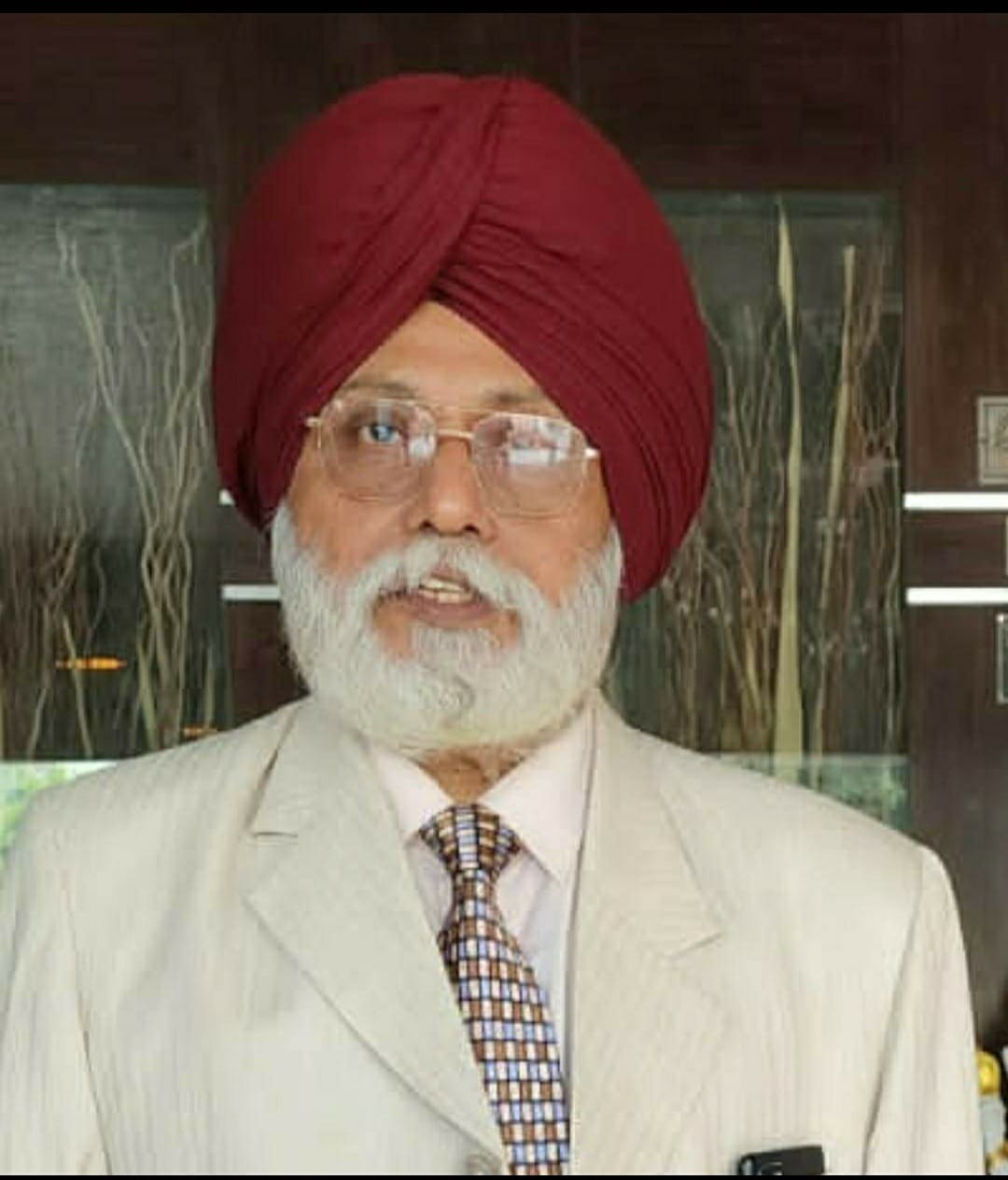
Jernail S AanandDr. Jernail Singh Anand is an Honorary Member of the Association of Serbian Writers. He is Prof. Emeritus in Indian Literature at The European Institute of the Roma Studies and Research Belgrade. Dr Anand has authored more than 150 books in English poetry, fiction, non-fiction, spirituality and philosophy. He is credited with the theory of Biotext in critical theory. His work has been translated into more than twenty world languages. Author of 9 epics which are regarded as modern classics, Anand has organized 4 International Literary Conferences, latest of them, in Chandigarh. He was conferred Franz Kafka Laureateship 2022 and International Aco Karamanov Poetry Award 2022 (Mecedonia).

More about the author: https://en.wikipedia.org/wiki/Jernail_Singh_Anand?

NEED FOR A UNIVERSITY OF ETHICS TO GIVE A U-TURN TO CONTEMPORARY CIVILIZATION TOWARDS RE-HUMANIZATION Read More »

poem by emily dickinson in writers edition

I felt a Funeral, in my Brain: Poem by Emily Dickinson

I felt a Funeral, in my Brain,
And Mourners to and fro
Kept treading – treading – till it seemed
That Sense was breaking through –

And when they all were seated,
A Service, like a Drum –
Kept beating – beating – till I thought
My mind was going numb –

And then I heard them lift a Box
And creak across my Soul
With those same Boots of Lead, again,
Then Space – began to toll,

As all the Heavens were a Bell,
And Being, but an Ear,
And I, and Silence, some strange Race,
Wrecked, solitary, here –

And then a Plank in Reason, broke,
And I dropped down, and down –
And hit a World, at every plunge,
And Finished knowing – then –

Poem by Emily Dickinson


Poem by Emily Dickinson ,Writers EditionEmily Dickinson (December 10, 1830–May 15, 1886) was an American poet best known for her eccentric personality and her frequent themes of death and mortality. Although she was a prolific writer, only a few of her poems were published during her lifetime. Despite being mostly unknown while she was alive, her poetry—nearly 1,800 poems altogether—has become a staple of the American literary canon, and scholars and readers alike have long held a fascination with her unusual life.


I felt a Funeral, in my Brain: Poem by Emily Dickinson Read More »

poem by emily dickinson in writers edition

I felt a Funeral, in my Brain: Poem by Emily Dickinson

I felt a Funeral, in my Brain,
And Mourners to and fro
Kept treading – treading – till it seemed
That Sense was breaking through –

And when they all were seated,
A Service, like a Drum –
Kept beating – beating – till I thought
My mind was going numb –

And then I heard them lift a Box
And creak across my Soul
With those same Boots of Lead, again,
Then Space – began to toll,

As all the Heavens were a Bell,
And Being, but an Ear,
And I, and Silence, some strange Race,
Wrecked, solitary, here –

And then a Plank in Reason, broke,
And I dropped down, and down –
And hit a World, at every plunge,
And Finished knowing – then –

Poem by
Emily Dickinson

Emily Dickinson (December 10, 1830–May 15, 1886) was an American poet best known for her eccentric personality and her frequent themes of death and mortality. Although she was a prolific writer, only a few of her poems were published during her lifetime. Despite being mostly unknown while she was alive, her poetry—nearly 1,800 poems altogether—has become a staple of the American literary canon, and scholars and readers alike have long held a fascination with her unusual life.

I felt a Funeral, in my Brain: Poem by Emily Dickinson Read More »

THE GENDER IMBALANCE: Poem by Jernail S Aanand

If you go anywhere,
You find men and men
And few women
Are they really small in number?
No, they are forced within
The four walls.

Now ‘thankfully’,
Homes have lost two walls
And roof too is cracked
And we can see the eternal prisoners
Enjoying sunbath and fresh air
On the outskirts of the darker times

Men supply the shortages
Of female colleagues
With a powerful dose
Of imagination.
Which mind is free
From feminine fantasies?

If both the sexes had got
Equal opportunities,
Civilization would have
Fared (faired) better,
Than limping on one leg
The other tied with apron strings.

They are neither weaker
Nor dependent on men,
Having endured untold suffering
They have proved their steadfastness
It is time to decide new mores
So that the balance is restored.

Forget it only at your peril
For every boy, a girl is born
Somewhere in the world
No human crook can belie
Gods’ sense of balance
Which we men both deny and defy.

Poem by
Jernail S Aanand
© Jernail S Aanand

Jernail S AanandDr Jernail Singh Anand is an Honorary Member of the Association of Serbian Writers. He is Prof Emeritus in Indian Literature at The European Institute of the Roma Studies and Research Belgrade. Dr Anand has authored more than 150 books in English poetry, fiction, non-fiction, spirituality and philosophy. He is credited with the theory of Biotext in critical theory. His work has been translated into more than twenty world languages. Author of 9 epics which are regarded as modern classics, Anand has organized 4 International Literary Conferences, latest of them, in Chandigarh. He was conferred Franz Kafka Laureateship 2022 and International Aco Karamanov Poetry Award 2022 (Mecedonia).


THE GENDER IMBALANCE: Poem by Jernail S Aanand Read More »