Writers International Edition

Articles

Panorama International Literature Festival (PILF) 2024: Guidelines

Welcome to the virtual marvel that is the Panorama International Literature Festival (PILF) 2024! Spanning 87 countries, PILF is a global celebration of literature’s boundless power. In the digital expanse of January 2024, esteemed writers and readers will convene from around the world, crafting connections and embracing diverse stories. PILF is more than an event; it’s a testament to the unifying spirit of words, proving that even in the virtual realm, literature creates bridges, fostering understanding, and kindling the flames of creativity. Join us for this extraordinary virtual odyssey, where cultures converge, and the shared love for literature knows no virtual boundaries.

In the vibrant landscape of PILF 2024, geographical distances fade into insignificance. From the heart of Greece to the corners of the world, this virtual festival transcends screens, inviting literary enthusiasts on a global journey. With 87 countries contributing to this digital mosaic, PILF promises an immersive experience where stories become pathways to understanding, empathy, and unity. Join us in January 2024 and let your literary adventure begin!

The Theme of PILF 2024

At the heart of the Panorama International Literature Festival (PILF) 2024 flickers the profound theme, “Agni: The Spark.” This theme encapsulates the essence of creation and destruction, echoing the dual nature of fire. In the digital expanse of our festival, “Agni: The Spark” becomes a guiding beacon, illuminating the path for writers, readers, and thinkers alike. It symbolises the transformative power of literature, akin to the ancient concept of Agni, representing not only physical fire but also the fire within us – the spark of passion, creativity, and change.

As we delve into this theme in January 2024, we invite you to explore the multifaceted aspects of Agni. It’s more than a flame; it’s the force that kindles creativity, sparks conversations, and ignites the spirit of innovation. “Agni: The Spark” serves as a reminder of our shared humanity, urging us to delve into the depths of literature to understand the world and ourselves better. Through this theme, PILF becomes a platform where ideas blaze, illuminating the digital realm with stories that inspire, inform, and challenge.

Guidelines

Here’s a step-by-step guide to make your participation in PILF 2023 a seamless and enriching experience:

1. Registration

After completing the registration process, an email containing essential guidelines will be sent to you. Please review this carefully for a smooth participation experience.

2. Photographs and Biography

Kindly provide us with two high-resolution photographs (one landscape and another portrait).
Please attach a biography of not more than one page for an article featuring you in our web magazine.


PORTRAIT SIZE PHOTO
LANDSCAPE SIZE PHOTO

3. Theme Contribution

Once you are featured through our social media pages, align your creative genius with the festival theme, “Agni: The Fire.” To get inspired, watch the theme video provided. https://youtu.be/WAtQFBnKs2I Your work should reflect the essence of this theme.

4. Video Presentation

Create a LANDSCAPE video presenting:

  1. Introduction to yourself and your interpretation of the theme.
  2. Showcase your literary work.
  3. Conclude with a summary.

Send the video as a Google Drive attachment to wcifcentral@gmail.com. Please remember that we won’t accept files through WhatsApp, Messenger or other apps. Ensure the video maintains quality for effective editing.

5. Curated Sessions

Our dedicated team will evaluate all submissions to find delegates for curated online sessions to be conducted from 1-31 January 2024. This will be notified to the delegates who can choose dates convenient to them.

6. Global Visibility

All entries will be published on our official YouTube and Facebook pages. The content will be shared across various social media platforms, ensuring lasting visibility for you as a writer on the World Wide Web.

7. The Quill Compendium 2023

All delegates will receive a unique opportunity to feature themselves in our upcoming directory of significant writers worldwide, “The Quill Compendium 2023.” Your biographies will be showcased, and the book will be sent to prominent libraries, including that of the United Nations.

8. Professional Biographies

Our dedicated team will prepare professional biographies for all delegates, which will be published on our prestigious global virtual literary website, www.writersedition.com. We hope that this will help literary enthusiasts from across the world to know you and will also ensure search engine optimization.

9. Panorama International Literary Awards 2024

A prestigious jury of eminent literary figures will declare the Panorama International Literary Awards 2024. Official communication regarding the results will be sent to you.

10. Final Decision

The decision of the international jury is final. We appreciate your understanding, and no communication challenging the decision will be entertained.

If you have further queries, please write to wcifcentral@gmail.com.

IMPORTANT

To streamline our workflow and ensure efficient processing, please adhere closely to the provided guidelines. Please note that our team is currently managing multiple submissions, and, unfortunately, we may not be able to engage in separate communication if the submissions do not align with our specified criteria. Non-compliance with the guidelines could regrettably result in the rejection of your work during the festival. Your understanding and adherence to these guidelines are greatly appreciated.

Panorama International Literature Festival (PILF) 2024: Guidelines Read More »

Angeliki Kompoholi: Bridging Eras Through Literature and Ethnography

Born in the picturesque city of Kalamata in 1967, Angeliki Kompoholi stands as a beacon of intellectual prowess and scholarly dedication. Her academic journey commenced at the Faculty of Philosophy at the University of Athens, where she immersed herself in the rich tapestry of knowledge from 1986 to 1990.

The culmination of years of scholarly dedication led Angeliki to present her doctoral thesis at the University of Athens in October 2008, marking a significant milestone in her academic journey. Her doctoral work showcased not only her commitment to academia but also her prowess in ethnographic research—a dimension that would become a hallmark of her scholarly contributions.

The recognition for her ethnographic research work came in waves, with distinctions bestowed upon her by the prestigious Academy of Athens in the years 2002, 2006, and 2010. These accolades underscored the depth and significance of her contributions to the field, solidifying her position as a distinguished scholar in the academic landscape.

Angeliki Kompoholi’s intellectual footprint extends beyond the borders of her native Greece. A member of several scientific societies, she has not only enriched Greek scientific discourse but has also made her mark in international academic circles. Her studies, published in both Greek and foreign scientific journals, serve as a testament to the universality of her scholarly pursuits.

Participation in Greek and international conferences further attests to Angeliki’s commitment to fostering academic dialogue and contributing to the global intellectual tapestry. As a professor of ancient Greek literature and philosophy, she imparts her extensive knowledge to eager minds, bridging the gap between eras and cultures through the enduring legacy of literature.

In the realm of academia, Angeliki Kompoholi’s name resonates as a scholar, researcher, and educator whose passion for knowledge transcends boundaries. Her journey, marked by honors, distinctions, and a commitment to both Greek and global intellectual communities, continues to inspire the next generation of thinkers and scholars.

Angeliki Kompoholi: Bridging Eras Through Literature and Ethnography Read More »

From Activism to Art: The Meher Pestonji Saga

In the mosaic of Indian social activism, Meher Pestonji emerges as a formidable force—a social worker, freelance journalist, and writer whose journey is marked by a relentless pursuit of justice and a seamless blend of advocacy and artistry.

Since the 1970s, Pestonji has been at the forefront, championing the cause of the oppressed and underprivileged. Her early activism echoes in the campaign to reform rape laws, a pivotal moment in the history of women’s rights in India. The housing rights of slum dwellers, children’s rights, and anti-communalism campaigns became the battlefields where Pestonji fearlessly fought for a more equitable society.

In the aftermath of the Babri Masjid riots in 1992–93, Pestonji’s commitment to communal harmony soared. She became an integral part of a group of activists working tirelessly to restore peace after the devastating Mumbai riots, demonstrating the transformative power of collective action. Amid these challenging times, Pestonji found solace and purpose in creative writing, infusing her advocacy with the power of storytelling.

During the mid-1980s, Pestonji’s engagement with street children and her mobilization for filmmaker Anand Patwardhan’s campaign against slum destruction showcased her multifaceted approach to social issues. In the heart of the Mumbai riots, she collaborated with mohalla committees in Dharavi, embodying a hands-on commitment to community resilience.

Transitioning seamlessly from activism to journalism, Pestonji interviewed scientists, business people, and fellow social workers, bringing a diverse range of voices to the forefront. Her role as a bridge between different spheres of society exemplifies her commitment to holistic change.

In an interview with the Times of India, Pestonji labeled herself as an ‘accidental Parsi,’ a term that encapsulates her evolving relationship with her own community, especially post the 1992–93 Mumbai riots. However, this shift in perspective has not been without its share of critiques and challenges, as seen in responses from within the Parsi community.

Pestonji’s writing bears the imprints of her personal and journalistic experiences, intertwined with her deep connection to the segments of society she passionately engages with. Her storytelling prowess shines through in works like “Mixed Marriage and Other Stories,” “Pervez,” “Sadak Chhaap,” and the intriguingly titled “Piano for Sale” and “Feeding Crows.”

Meher Pestonji, with her unwavering commitment to social justice and the art of storytelling, stands as a beacon—a testament to the transformative power of words and actions in shaping a more inclusive and compassionate world.

From Activism to Art: The Meher Pestonji Saga Read More »

Exploring the Poetic Odyssey of Theodoros Dalmaris: A Maestro in Verses

In the quiet town of Thana, Tripolis, a mathematical mind found its way into the enchanting realm of poetry. Theodoros Dalmaris, born and bred in Thana, embarked on a journey that transcended numbers, delving into the profound world of words. His academic foundation was laid at the University of Athens, where the seeds of his poetic future were quietly sown.

For 15 years, Dalmaris served as the proprietor of a private tutoring school, molding young minds and nurturing the intellectual landscape. As the tides of life carried him into various entrepreneurial ventures, his passion for social and political discourse found an outlet in the editorial rooms of ‘ORIENTATION’ and ‘POLITICAL CRITERION,’ two monthly magazines where ideas flowed freely, and perspectives were challenged.

Beyond the roles of an educator and editor, Theodoros Dalmaris is a devoted family man. Married to Despena Rizoglou, he finds solace and inspiration in the warmth of familial bonds, with three children and six grandchildren adding rich layers to his life narrative.

Dalmaris, however, didn’t confine himself to the pragmatic pursuits of everyday life. In 2015, he unfurled a new chapter in his story, donning the hat of a poet. His verses echoed in the halls of National and International Poetry Competitions, where his eloquence garnered recognition in the form of 10 First Prizes, a testament to the lyrical prowess he wielded.

His published poetry collections stand as literary monuments, each a testament to the depth of his contemplations. ‘PROMETHEUS,’ a 343-page opus, lays bare his reflections on the human condition. ‘ODE TO FREEDOM TO GREECE AND TO THE ECUMEN,’ spanning 300 pages, not only traverses linguistic boundaries with its English translation but also finds a harmonious resonance in classical music. ‘WOMAN, THE FIRST BEING IN THE UNIVERSE AND THE FIRST SLAVE,’ a 375-page exploration, delves into themes of identity and emancipation. ‘ETHICAL CONTINUATION, SPACE-TIME, SISYFOS AND MEROPI,’ a 423-page journey, unfolds the intricacies of ethical philosophy.

The poetic journey of Theodoros Dalmaris continues with an upcoming collection, ‘PRAYER TO OUR INNER POTENTIAL GOD OF LIGHT,’ promising yet another immersive exploration of the human soul. Beyond poetry, he stretches his literary wings into prose with ‘HAPPINESS OR UNHAPPINESS TO BE GREEK,’ a 300-page narrative that probes the intricacies of identity and cultural belonging.

Theodoros Dalmaris, with his mathematical precision and poetic flair, crafts verses that resonate with the human experience. As his pen dances across the pages, it leaves an indelible mark on the tapestry of contemporary literature, inviting readers into the depths of thought and the expanse of emotion.

Exploring the Poetic Odyssey of Theodoros Dalmaris: A Maestro in Verses Read More »

Sensuous Reflections: Life Unveiled in Adyasha Das’s Literary Canvas

In the tapestry of literary brilliance, Dr. Adyasha Das emerges as a luminary, casting her eloquent voice across the landscapes of both Odia and English literature. As a distinguished Professor at the Indian Institute of Tourism & Travel Management, Bhubaneswar, Ministry of Tourism, Government of India, she stands as a beacon among the vibrant voices of young writers in Odisha.

Adyasha is not merely a professor; she is a maestro of words, a poet and short-story writer whose creations resonate with insightful and colourful portrayals of life. Her literary prowess extends across three books of poems and a collection of short stories, where she explores diverse themes with a sensibility that is both reflective and sensuous.

A polyglot in the language of literature, Adyasha’s works have transcended linguistic boundaries, finding translation in Hindi, Bengali, Nepali, Manipuri, French, and German. Her achievements bear witness to her dedication to the craft, participating in esteemed programs like the indo-german writer-in-residence initiative AKSHAR, organized by Sahitya Akademi, the Goethe Institute, and literaturhaeuser.net.

Adyasha’s academic contributions add another layer to her literary tapestry, with authorship of academic books showcasing her depth of knowledge. Her recognition extends beyond the borders of her homeland, earning her the Suryadatta National Award, Chausathi Yogini Samman, Odisha Pratibha Samman, and the honour of participating in cultural exchanges with Germany through the Goethe Institute.

A recipient of the Junior Fellowship in English Literature from the Ministry of Culture, Adyasha has delved into research on “Empowerment in the poetry of pre-independent women poets.” Her journey as a literary luminary has taken her to esteemed platforms such as Literaturhaus Frankfurt am Main, The House of World Cultures, Literaturhaus Berlin, Leipzig Literaturhaus, Indische Nacht im Mousonturm, Frankfurt, Uto Kulm, Zurich, and the Frankfurt Book Fair, leaving an indelible mark on the global literary landscape.

As we acknowledge the numerous awards bestowed upon her, including the Sahitya Akademi, Suryadatta National Award, and Chausathi Yogini Samman, we celebrate Dr. Adyasha Das—a literary virtuoso whose words transcend boundaries and paint a vivid portrait of the human experience.

Sensuous Reflections: Life Unveiled in Adyasha Das’s Literary Canvas Read More »

Maria retali

Maria Retali: A Renaissance Soul Painting with Words

Maria Retali, a name synonymous with artistic elegance, was born in the enchanting city of Nafplio. An artist who defies boundaries, she has masterfully blended the realms of painting and poetry to create a rich tapestry of expression.

In 2011, Maria unveiled her inaugural poetry collection titled “Sense and Passion Conflict.” This literary endeavor was not just confined to the Greek-speaking audience but extended its arms to embrace the English language as well. A testament to her versatility as an artist.

Her poetic journey took an impressive leap in 2014 when she was bestowed with the second prize in the UNESCO of Arts, Letters, and Sciences of Greece literary competition for her mesmerizing poem, “The Journey.” This recognition catapulted her into the spotlight, marking the beginning of her ascent in the literary world.

2015 witnessed Maria’s international debut as she graced the International Literature Conference in Pleven, Bulgaria. Her verses, steeped in emotion and insight, transcended language barriers, with some of her poems being beautifully translated into Bulgarian and published in a Literary Works Miscellany volume, exclusively crafted for the conference.

The year also brought another feather to her literary cap. She successfully proposed and witnessed the realization of a 420-page volume, a treasure trove of contemporary Greek poetry, where she proudly contributed eight of her own poems. This monumental project, executed by the Group for UNESCO TLEE, cemented her place as a notable voice in Greek poetry.

2017 marked the release of her second poetry book, “Libation to Love.” Like its predecessor, this collection was a bilingual masterpiece, adorned with Greek and English verses. It was also later translated into Bulgarian, ensuring that her lyrical musings reached a broader international audience.

Maria’s literary prowess extends far beyond the realms of her books. In 2017, she participated in the 1st Yakamochi Intellectual World Poetry Competition in Japan. This prestigious event, hosted by the Koshinokuni Literature Museum, is a gathering of accomplished poets from around the world, a testament to Maria’s remarkable contributions to poetry.

Beyond her literary endeavors, Maria Retali is a dedicated humanitarian. She’s been an active member of the World Philosophical Forum since its inception in 2010, earning accolades such as the Certificate of Achievement and the Certificate of the Citizen of the World of the 21st Century for her unwavering commitment to the organization’s principles and goals.

In her hometown, Nafplion, she’s a proud member of the Palamidis historical-progress promoting Association, and in Greece, she’s a member of the Association for UNESCO of Arts, Letters, and Sciences. Her reach extends to the islands, where she’s a member of the Association for UNESCO of Piraeus and Islands. Her involvement in the Scoubi Association of Pictorial Arts and Literature on the island of Andros underscores her deep connection with the arts.

Maria Retali is a shining light in international peace initiatives, having earned numerous awards for her tireless efforts. She serves as an Ambassadress for the HITMA Org in Kurdistan and the One Earth-One Family international Organization in Taiwan. Her commitment to culture and humanitarianism earned her the prestigious International Woman Inspiration Award in 2021, bestowed by the Writers Capital International Foundation.

As her impressive body of work continues to grow, including “Sense and Passion Conflict” and “Libation to Love,” Maria Retali stands as a true renaissance soul, painting the world with her words and touching hearts with her actions. Her artistry knows no bounds, and her humanitarian spirit knows no borders.

Maria Retali: A Renaissance Soul Painting with Words Read More »

Monica D. Carp: A Journey through Art and History

Monica D. Carp, born on March 1, 1956, in Bozieni – Neamţ, and currently residing in Roman, is a distinguished artist with a passion for preserving history and culture through her art. Her journey is one of dedication, creativity, and a deep connection to her Romanian roots.

Monica completed her high school education in Roman and went on to graduate in Design, Decorative and Plastic Arts. She furthered her academic pursuits with a PhD at the esteemed “George Enescu” Art University in Iaşi. Her doctoral thesis, titled “Symbols from Folk Art and Christian-Orthodox Art Integrated into Painting,” reflects her commitment to exploring the cultural and artistic heritage of Romania.

As a full member of the Romanian Union of Plastic Artists, Monica Carp’s artistic journey has been marked by numerous collective and personal exhibitions, totaling an impressive 25 solo shows. Her artwork has found its place in Romanian museums and private collections both within the country and abroad.

Monica’s contributions extend beyond her visual artistry. She has actively participated in symposiums and scientific communication sessions, sharing her insights and expertise with the artistic community.

Her artistic endeavors have not gone unnoticed. Monica has received various awards, diplomas of merit, and certificates of honor and excellence in national and international exhibitions and competitions. Her art serves as a testament to her love for her soul and her audience, connecting present and future generations to the rich history and vibrant emotions of Romania.

Through her creations, which often touch upon themes like “Pisanie,” “Dumnezeirea clipei,” “Luogo della Croce,” “Sign and meaning,” and more, Monica weaves together pages of Romanian history, life, and sentiment, expressed eloquently through her brush strokes.

One of Monica’s most significant accomplishments is her ability to capture the essence of history and convey it to all. Her art acts as a bridge between generations, allowing everyone to understand and appreciate the depth of Romanian culture and heritage.

In the words of Valentin Ciucă, “Carp Monica has the grace of history and its transcript for all to understand.” Her art serves as a living record of Romania’s past and a vibrant expression of its present.

Monica D. Carp’s “Pomul vieţii” (The Tree of Life) not only elevates the actions, words, and thoughts within her paintings but also symbolizes the growth and impact of her artistic journey. It’s a journey that continues to flourish, capturing the essence of Romanian history, culture, and soul.

Iulian Bucur, a renowned art critic, beautifully summarizes Monica’s contribution, saying, “This celebration has shown how threads can be drawn from the warp of tradition to us, the contemporaries. How all worlds can be placed in the mirror. How time can stop, even if only for a moment.”

Monica D. Carp’s art invites us to pause, reflect, and appreciate the timeless beauty and depth of Romanian heritage through the lens of an exceptional artist.

Monica D. Carp: A Journey through Art and History Read More »

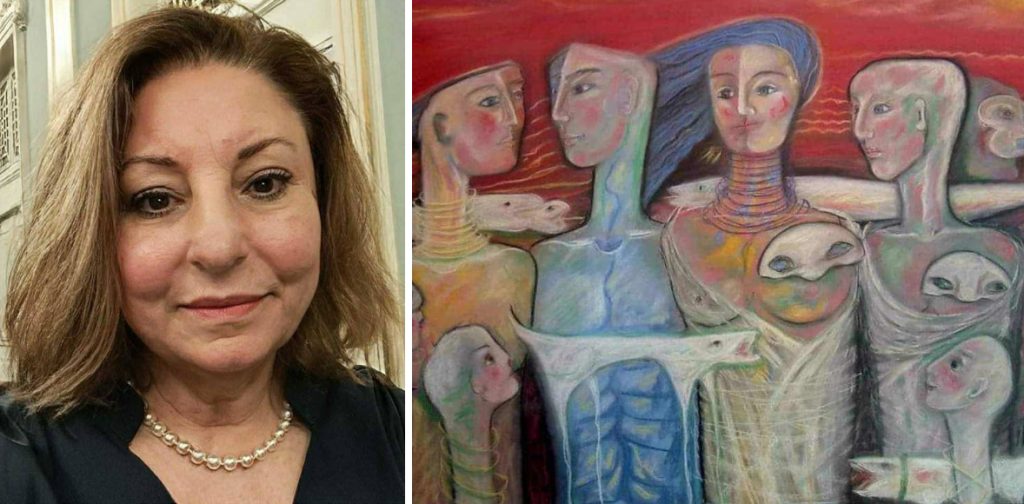
Elena Arsenidou

Exploring the Artistic Journey of Elena Arsenidou: A Fusion of Psychology and Creativity

Elena Arsenidou, a name synonymous with the intricate interplay of psychology and art, has carved a unique path that blends the realms of human emotions and creative expression.

Her journey commenced with an academic foundation in New York, where she earned her Master of Arts in psychology from the prestigious City University of New York (USA). Armed with this knowledge, Elena’s quest for deeper understanding led her to explore various facets of psychotherapy and methodology.

Diving into the realm of Gestalt Therapy, Elena honed her skills under the guidance of renowned institutions like Gestalt Associates Training in Los Angeles. This experience laid the foundation for her future endeavors, shaping her understanding of human behavior and emotions.

Elena’s pursuit of knowledge and mastery did not stop there. She embarked on a transformative journey, furthering her expertise in supervision and psychopathology through interactions with luminaries like Carmen Vazquez Bandin, Margherita Spagnuolo Lobb, Jean Marie Robine, and Gianni Francesetti. These interactions propelled her into a world of insightful observation and analysis.

The confluence of psychology and art became even more pronounced as Elena specialized in visual psychotherapy. Her participation in seminars across Europe and America deepened her understanding of the human psyche, shaping her unique approach to artistic expression.

Elena’s dedication to her craft and her desire to stay at the forefront of artistic exploration have made her an esteemed member of organizations like EAGT, EAP, and EEPSE. Her quest for knowledge took her beyond psychology, delving into the world of art history. She attended the Christie’s Liberal Studies Workshop on ‘Tendencies and Currents in Postwar Art,’ adding yet another layer to her multidimensional perspective.

With an insatiable thirst for creativity, Elena delved into various forms of artistic expression. She immersed herself in the art of Collage through seminars by Annette Laux Papadantonaki, expanding her artistic repertoire.

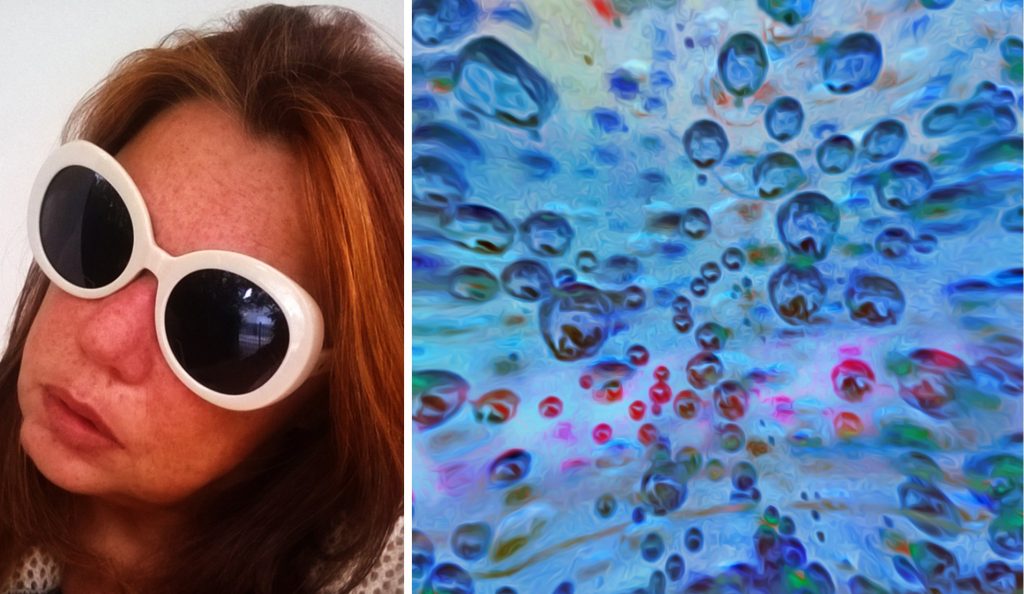
In recent times, Elena’s pursuit of artistic excellence has embraced the digital realm. Since 2007, she has been passionately engaged in digital art, with a specific focus on digital photomontage. Her creations come to life through the seamless integration of technology and creativity, reflecting the evolution of contemporary artistic expression.

Elena’s artistic journey has transcended boundaries, showcasing her works in exhibitions across the globe—Athens, Thessaloniki, Paris, Rome, New York, Istanbul, to name a few. Her pieces serve as windows into the human experience, inviting viewers to explore the intricacies of emotion, thought, and perception.

As a dedicated participant in the webinars on Art and Photography by the iconic MoMA (Museum Of Modern Art) in New York, Elena remains at the forefront of artistic evolution. Her commitment to growth and exploration continues to shape her unique artistic narrative.

Elena Arsenidou’s journey is a testament to the power of creativity to illuminate the human psyche and transcend cultural boundaries. Her fusion of psychology and art reminds us that every brushstroke, every image, is a reflection of the intricate tapestry of human existence.

Exploring the Artistic Journey of Elena Arsenidou: A Fusion of Psychology and Creativity Read More »

Premraj KK: A Journey from Corporate Heights to Literary Eminence

In the bustling city of Bengaluru, a remarkable individual has seamlessly transitioned from the corporate world to the realm of arts and literature. Meet Premraj KK, whose inspiring journey unfolds as a tapestry of creativity, passion, and literary excellence.

Formerly a seasoned professional in senior management roles within the corporate sphere, Premraj KK’s expertise revolved around business development and management. However, driven by an unwavering ardor for the arts, he embarked on a transformative path that led him to become a multifaceted creative force. His artistic voyage spans across film editing, short film making, graphics design, creative artistry, and photography, culminating in a rich blend of skills and experiences. With a deft hand in various editing software, Premraj KK effortlessly navigates the digital landscape of artistic expression.

As an author, Premraj KK has carved a niche for himself in the literary world. His literary prowess shines through in three acclaimed books, all of which are collections of short stories in the Malayalam language. “Chila Niragnal,” an early gem, intricately weaves tales set in the vibrant backdrop of Bangalore. Its resounding success led to a second edition, captivating readers anew. His latest offering, “Maanam Niraye varnangal,” has sparked a sensation in the short story domain and clinched the prestigious “Akbar Kakkattil Award 2023.”

Premraj KK’s narrative craftsmanship extends beyond the confines of books, with his evocative short stories finding a home in online magazines. His novel, “Kaayavum Eezhilam Paalayum,” resonated deeply with the public, highlighting his innate ability to connect with readers on an emotional level. His literary journey continues with the release of his recent work, a collection of short stories titled “Tulip Pushpangalude paadam,” setting a new benchmark for the genre.

The impact of Premraj KK’s literary contributions is underscored by a slew of accolades and recognition. His indelible mark earned him the esteemed “Indian Prime Icon Award 2022” for Best Author/Writer of the Year, along with a distinguished doctorate. He has been enshrined in the annals of literary history by the “India Books of Records” for the maximum number of Malayalam short stories authored and published by an individual. Additionally, the illustrious author was acknowledged by the “Harvard Books of Records (London)” for his eminence and contributions.

Premraj KK’s accolades extend globally, as he secures a spot in the “Asia Books of Records” for the Grand Master Award. His relentless dedication to self-designed, self-published, and self-marketed books earned him a place in the prestigious Universal Records and America Book of Records.

With a trailblazing spirit, Premraj KK’s journey is a testament to the transformative power of passion and perseverance. His contributions have not only enriched the literary landscape but have also inspired countless individuals to embark on their own creative odysseys. Among his many honors, the “National Excellence Award: Author of the Year 2022” and the “Youvakala Bharathi Award 2022” for Contribution to Arts & Literature stand as beacons of his enduring legacy. As the literary world continues to be enriched by his profound insights, Premraj KK’s name remains synonymous with excellence and inspiration.

Premraj KK: A Journey from Corporate Heights to Literary Eminence Read More »

Educating for Green: New Ethic for Universal Consciousness and Happiness

Orientation with the global economic development trend is just a piecemeal if green education is not applied in the education sector hence it’s the major revolutionary thingamajig and the need of hour due to several eschewed issues that are mandatory to take into consideration such as harmful climate change and avalanche in the psychological and mental health glitches in youth.

Unfortunately, deteriorated psychological and mental health leads to the frequent suicides cases heard hither and thither in various esteemed schools, institutions, and universities such as the Indian Institutes of Technology (IIT) at Bombay and Madras and in the cities like which are called educational hubs such as Kota and Delhi force us to be solicitous and enact. Pressure by parents, peers and teachers lead young learners towards anxiety, fear, stress and depression and further drastic action of killing themselves where they are suppose to live a happy life. Consequently it is a wake-up call about the solemn crisis that Indian youth faces.

The frightening regularity of suicides by youth portrays an austere veracity. The data stated by National Crime Records Bureau (NCRB) underlined that a student died by suicide every 42 minutes in 2020. According to the reports, student suicides were at a five-year high with more than 13,000 students dying by suicide in that year, an uptick from 12,500 in the previous year.

Though the statistics provided by NCRB were 37 per cent lower than the rates reported by Global Burden of Disease, denotation that only 63% cases are presented by NCRB data for every 100.

In an article entitled ‘The Mystery Behind Japan’s High Suicide Rates Among Kids’, Stephanie Lu writes that problems related to educational system are the main cause behind suicides and depression. It has also been noted in many countries like South Korea, UK, United States, China etc.

Education and Human Life

“Life is for the living.
Death is for the dead. Let life be like music. And death a note unsaid.” –
Langston Hughes

As we all know human life is extremely precious and we do need to understand human nature. In ‘The Art of Being’, Erich Fromm asks- “Can we not speak of a “nature of man,” and if so, does not an objectively definable nature of man lead to the assumption that its aim is the same as that of all living beings, namely, its most perfect functioning and the fullest realization of its potentialities?”

In the continuation, there are questions to ponder over- “If we had the power to mold our children into anything we want them to be, what top five qualities would we like to see in them by the age of 40? Would happiness be one of the top five qualities that you would like your children to have by the time they are adults? Why do we educate them? Is our educational system designed to teach our children to become happier people?”

Erich Fromm in his book ‘The Sane Society’ (1955) states- “high schools and colleges generally fail to imbue their students with character traits which correspond to the professed ideals of our civilization.”

Human-centered Education

In India, in ancient times, guru-chela concept (teacher-pupil) in Gurukulas and Ashrams was also targeted at uppermost progress of human potential resulting in Moksha or liberation from earthly sorrows and cycle of birth. The teaching of Buddha was based on ending sorrow and attaining joyful state. In times of Plato and Aristotle, goal of education was virtue and happiness. Educational philosophies and approaches of Montessori, Theosophy, Waldorf, Summerhill, and Krishnamurti were also based on understanding of human nature as well as the purpose and meaning of human life.

Gradually schools and institutions started positioning materialistic success at the top keeping aside true happiness. Regrettably academic organizations do not educate children/youth to become the well-rounded, mature persons. These aim to prepare young people for jobs, careers, and accumulation of wealth and physical facilities with a narrow view of life and education using methods that produce fear, resentment and stress in the young; cause unhappiness and neurosis; give rise to the rat race and the dog-eat-dog mentality (responsible for many social maladies); fail in the essential task of nurturing a wholesome personality and good character.

One of the cardinal sins is reductionism. Modern Education System reduces the integrity of the noble sector at all levels- vision, policy, planning, programming, delivery, assessment, outcome etc. It compromises the integrity of seats of learning, lower the expectations of the givers and the receivers and cheapens learning and does disservice to learner and to life.

Educators mainly focus on 3Rs—reading, riting (writing) and rithmetic (arithmetic) and don’t focus on teaching young generation to be happier and stress free. Educators must think of what the purpose of educating really is. Abraham Maslow (1993) in his book ‘The farther reaches of human nature’ states the purpose of education- “the function of education, the goal of education- the human goal, the humanistic goal, the goal so far as human beings are concerned- is ultimately the “self-actualization” of a person, the becoming fully human, the development of the fullest height that the human species can stand up to or that the particular individual can come to.”

“The state of any society is the reflection of the effectiveness or ineffectiveness of how the previous generation has brought up its children ethically. Crime, drugs, wars, injustice, interracial and inter-religious hostilities-these are but the symptoms of such deep-rooted inadequacies in education,” says Vicente Hao Chin Jr. in his book ‘Education Without Fear and Comparison’.

Diana Dunningham Chapotin, Former International Secretary, Theosophical Order of Service said that it would be wonderful for children and youth to be able to go through an education system that makes them into confident, serene, resilient adults- socially responsible and above all happy.

The objective of United States: “Our mission is to promote student achievement and preparation for global competitiveness by fostering educational excellence and ensuring equal access.” The Goal of UN: “By 2030, substantially increase the number of youth and adults who have relevant skills, including technical and vocational skills, for employment, decent jobs, and entrepreneurship…”

But there are several high happiness index countries in the world, including Norway, Finland, Denmark, Switzerland, Iceland, and Canada who have ensured happiness of youth through various measures such as high-quality education, affordable healthcare and mental health services, and support for youth with disabilities, social support for families and individuals in need, engagement of youth in their communities through various programs and initiatives, promotion of social connection, civic engagement, and sense of purpose, improvement in green spaces including water and air and focus on equity and inclusion creating a favorable ecosystem for all youth, regardless of their identity or background.

Norway is known for its high level of happiness and well-being among its citizens. The country has implemented various policies and initiatives that aim to foster a sense of community, equity, and opportunity for all its citizens and works to promote happiness and holistic growth including social welfare programs, work-life balance, good education, nature and outdoor activities.

Bhutan is also such an exemplar country that set its goals as Gross National Happiness rather than Gross National Product. King Jigme Singye Wangchuck enshrined it in the constitution- “The state shall strive to promote those conditions that will enable the pursuit of Gross National Happiness.”

Steps taken in India

India, a country known for diverse and rich cultural heritage is taking noteworthy steps towards holistic growth of youth and increase in the happiness index, including initiatives like Bharat Nirmaan, MGNREGA, and Ayushman Bharat. However, continued investment in these areas and the implementation of new policies that focus on sustainable development, community building, and access to healthcare and education is crucial for high happiness index and holistic growth of youth.

Few months back Education minister Anbil Mahesh Poyyamozhi had introduced the state’s first green school in Tiruvarur and Thanjavur and motivated to start various green actions including creation of vegetable gardens, acclimatizing rainwater harvesting and reutilizing wastewater at their schools doing it as a team delivering a message for others too to follow.

Ministry of Environment, Forest and Climate Change, Government of India in line with Skill India Mission also initiated a ‘Green Skill Development Programme’. Other major initiatives that have been taken by Indian Government in recent years are Swachh Bharat Abhiyan, Namai Gange Programme, Jal Jeevan Mission, National Clean Air Programme and Bhujal Atal Yojana etc.

National Education Policy (NEP-2020) stresses upon “recognizing, identifying, and fostering the unique capabilities of each student, by sensitizing teachers as well as parents to promote each student’s holistic development in both academic and non-academic spheres”.

National Education Policy (NEP 2020) also focuses on environmental awareness highlighting that in today’s rapidly changing world, specific subjects, skills, and capacities should be a part and parcel of curricula for the learners to become good, successful, innovative, adaptable, and productive human beings. NEP 2020 emphasizes on ‘the implementation of approaches and solutions that are not only informed by top-notch science and technology but are also rooted in a deep understanding of the social sciences and humanities and the various socio-cultural and environmental dimensions of the nation’. It emphasizes upon applicable integration of eco-friendly responsiveness and thoughtfulness towards its preservation and sustainable development.

Curricula and educational Objectives should be set and designed to meet national goals, be they economic development or nationalism. Therefore, in National Curriculum Framework for School Education (NCF), throughout the school education curriculum, emergent sensitivity for the green life and environment is a dominant leitmotif for sustainability and happiness. Additionally, NCERT has introduced the process of development of National Curriculum Frameworks where various stakeholders including various Ministries/Departments, States and UTs would be working for the best outputs squiggling from grass root levels.

Programmes such as Mission LiFE (Lifestyle for Environment) have been driven, which focus on sensible and meditative consumption of natural resources and promote sustainable lifestyles. As part of the activities undertaken in this Mission, CBSE and NCERT are conducting numerous events for young learners including quizzes, exhibitions, seminars, workshops and expert talks, poster/painting contests, and webinars, celebrating various important events such as World Environment Day, World Water Day, Earth Day, International Day of Forest, etc.  In various PM e-Vidya channels, LiFE Sessions are telecasted Live for spreading awareness.

Green School: A New Ethic of Education for Happiness

In today’s context green being a primary colour of nature and as a metaphor assumes a critical significance when sustainability of life has become a global concern; when youth is submerged in depression and stress and don’t know how to de-stress them. Green is also the organizing principle as we develop our cities, build our homes and offices and raise significance.

Thakur S Powdyel, in the book ‘My Green School: An Outline’ (2014) says: “My green school is green in more than colour. It is green because it begins with the love of life. My school affirms the primacy and preciousness of life. I am more than a pupil here- prized for my mental abilities and slotted into a performance category by what I produce at an examination, as important as it might be. This school takes as an entire, integral, complex being that I am and creates the necessary space for me to bloom to my fullness.”

Green Education may assist learners to discover nature’s beauty and take pride, ownership and responsibility for its care. Students naturally observe and explore things and various processes around them, and this will build on that natural ability and interest. This also helps to develops specific values e.g., dignity, appreciating diversity, respect for all living beings, respect for resources and their use, equitable distribution of available resources. While it is important that students acquire a conceptual understanding of environmental issues and challenges, as well as an appreciation of the magnitude of the problem, it is equally important to ensure they do not get discouraged or become sad for their future.

Contemporary education system being more inclined towards mechanical or technical skills for better employment opportunities rather than values, ‘soft’ or ‘green skills’ forgot about the main goal of life and paid less attention towards it. When an academic institution adopts green practices, it creates a ripple effect on Individual behaviour. Students are inspired to be more conscious of their environmental impact, and they become more proactive towards environmental sustainability which assists in de-stressing in their lives from the pressure of excelling in academics and grabbing jobs in MNCs. Consequently, students embrace eco-friendly practices into their daily lives and extend this consciousness beyond the academic environment.

In the Annual Seminar Bhutan 2023, on the theme ‘Transformative Education Post COVID-19 Pandemic: From Self-healing to Social Transformation’, Dr Craig Elevitch, Co-lead Developer for the Agroforestry Design Tool from Hawaii elaborated about ‘Regenerative Education’ saying that- “Human beings have an innate ability to connect with nature world physically, perceptually, emotionally and spiritually. We all know intuitively that wholesome connections with nature formed during childhood help create a foundation for happy, healthy humans.”

Jamyang Dolma, President, Academy of Himalayan Art and Children Development and Co-founder, Mama Food Forest said that healthy children come from healthy mothers including Mother Earth and they are exhausted being multi-tasking. She raised the questions- “How could a depleted land grow high quality food? How can an exhausted and unhappy mother bring up a healthy and happy child? The same situation in our schools, how could exhausted and unhappy teachers nurture and inspire our children who were entrusted to them by their families?” She further adds- “with deeper understanding of the true needs of nourishment to ourselves, our children and nature, we will be able to design our life and education to support the holistic development of our children.“

The world is changing and so is the way we do things. With the frequent and alarming climatic changes, it is essential that we take a step towards a greener future. Green academia is the way forward. It is the education and implementation of sustainable practices in academics. Thus green academia is also essential for the overall well-being and happiness of individuals. We tend to be happier when we engage in activities that reduce our environmental impact. Such activities involve being in a natural environment, reducing waste, and adopting eco-friendly practices.

Preeth Nambiar, President and CEO, Writers Capital Foundation and an excellent educationist, journalist and acclaimed author says – “Academia especially green academia, plays a crucial role in promoting holistic growth and ensuring the happiness of youth. By emphasizing interdisciplinary learning, sustainable practices, and personal well-being, academia creates an environment conducive to overall development. It provides opportunities for intellectual curiosity, critical thinking, and skill-building, which empower youth to explore their passions and develop a sense of purpose.”

He further adds- “Green academia specifically integrates environmental awareness and sustainability into the curriculum, fostering a sense of responsibility towards the planet. Additionally, academia can offer support systems such as counseling services and mentorship programs, addressing the mental health needs of students. By nurturing well-rounded individuals and fostering a sustainable mindset, academia contributes significantly to the holistic growth and happiness of youth.”

Green academia should be an essential part of our educational system. It is not just about implementing sustainable practices; it is about fostering a broader perspective on the relationship between humans and the environment. Such a perspective will ensure that future generations inherit a planet that is not only habitable but also healthy and sustainable. Thus, all academic institutions should prioritize green initiatives for holistic growth and happiness.

Need of the Hour: Sherig Mandala

In Hinduism, people who had attained highest level of happiness are called Mahatmas, Jivanmuktas or Rishi-Munis. In Buddhism such refined individuals are called Buddhas, Bodhisattvas or Arhats. Sigmund Freud called it ‘Oceanic Feeling’ and Abraham Maslow referred it as “peak experiences” or “self-transcendence”. When you are in happy and contented state leaving all materialism behind.

Now, to explore our ‘self’, consider what makes us who we are and to be happy is the need of the hour. Sherig Mandala is a good thing for the youth to know life better and to learn to be happy. Elements of learning included in it to ensure holistic growth and happiness of youth are- Natural Greenery, Social Greenery, Cultural Greenery, Intellectual Greenery, Academic Greenery, Aesthetic Greenery, Spiritual Greenery, and Moral Greenery.

Green is the colour of life and secret of our survival and Mother Earth both. We should make our earth plastic-free, drug-free, rubbish-free, junk-free, graffiti-free to ensure our true happiness.

Hence, green is symbolic for life therefore green education has many benefits to count but major benefits are: ensuring happiness and survival of humanity, sustainability, universal consciousness, and various environmental benefits.

Education for green from within and outside should be the slogan of the educational institutions, academicians, administrators, and students must adapt and use the methods and approaches, as well as eco-friendly construction and equipment in the teaching-learning process.

While the whole world went through environmental disasters and yet not recovered from the ordeal and debris of COVID-19, encouraging and educating youth to construct an understanding of the environment, cultivate sensitivity towards ensuring green in the surroundings and minds and discover techniques to express carefulness about nature is an extremely momentous responsibility for academia, parents, society and country to ensure happiness in true sense.

Dr Shalini Yadav
Writer, Editor & Professor

Educating for Green: New Ethic for Universal Consciousness and Happiness Read More »