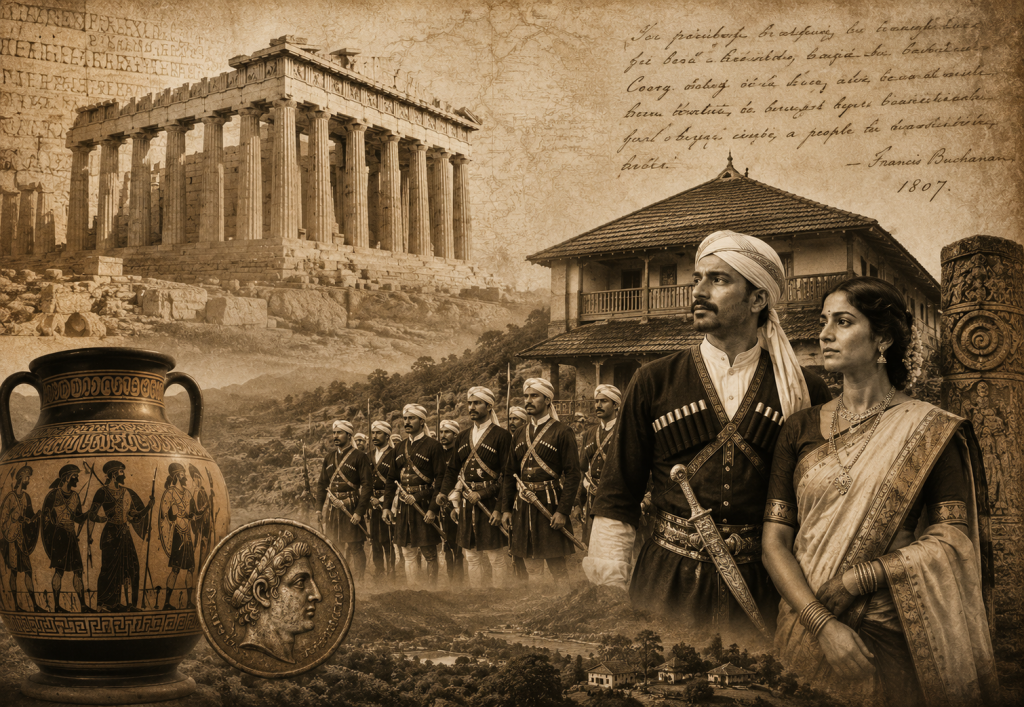
The region of Coorg, also known as Kodagu, located in the Western Ghats of Karnataka, stands as one of the most distinctive cultural landscapes in South India. The Kodava community, which has historically inhabited this hilly terrain, exhibits unique traditions, social structures, and martial practices that differentiate it from neighboring groups. Among the various explanations for Kodava origins, the theory of a direct Greek connection has persisted for generations. This article justifies the historical plausibility of Greek settlement in Coorg, particularly around present-day Madikeri, by examining oral traditions, the documented movements of Greek forces into the Indian subcontinent, cultural distinctiveness, and the interpretive coherence of the associated narratives. While absolute archaeological confirmation remains limited, the convergence of multiple lines of evidence supports the recognition of this connection as a substantive historical explanation rather than mere legend.
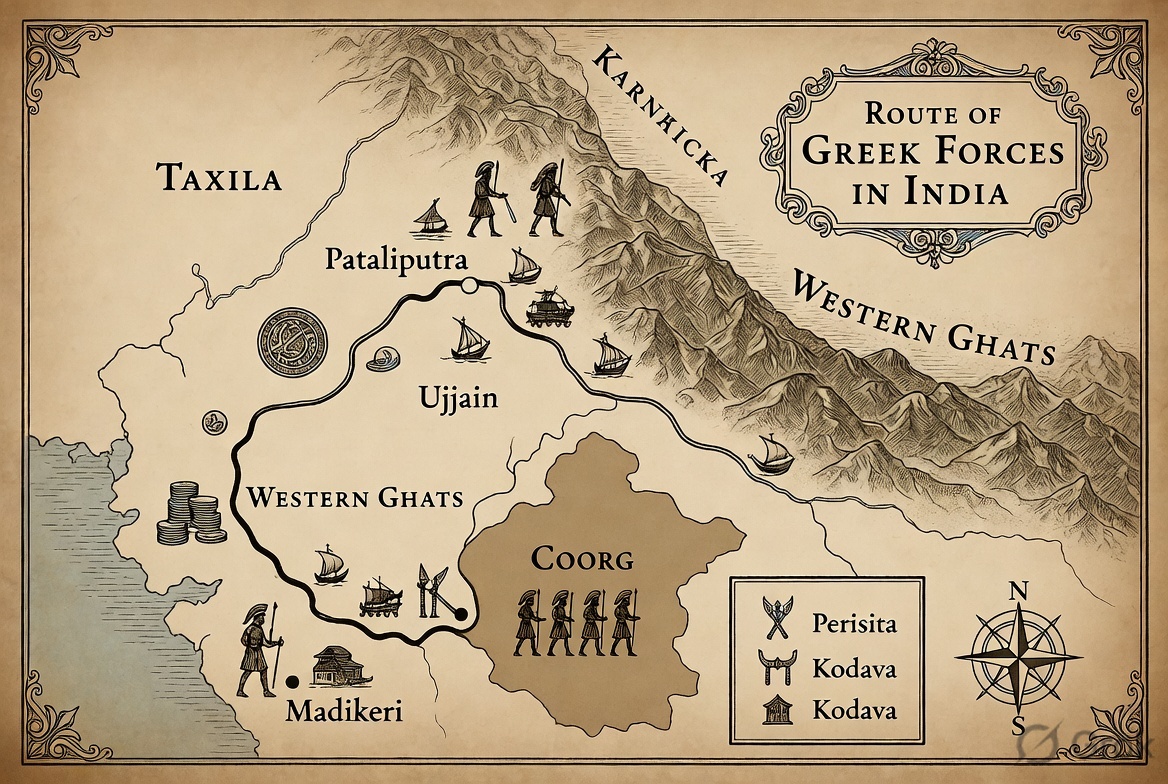
The proposition of Greek settlement in Coorg draws strength from longstanding local accounts that describe a detachment of Alexander the Great’s army reaching the southern hills after the main campaigns. These narratives portray warriors who separated from the primary forces, adapted to the local environment, and established roots in the region. Such stories are not recent fabrications but form part of the collective memory preserved through generations of Kodava families and community practices. Historians recognize that oral traditions often encode genuine migratory histories, especially in communities where written records were scarce or focused on other priorities. In the case of Coorg, the consistency of these accounts across different tellers and periods indicates a preserved memory of ancestral difference, one that explains the Kodavas’ distinct identity within the broader South Indian context.
This oral memory aligns with the well-established historical movements of Greek and Macedonian populations into India. Alexander’s invasion in the fourth century BCE introduced significant numbers of soldiers, administrators, and settlers to the northwestern parts of the subcontinent. Following his death, the successor kingdoms, particularly the Indo-Greek realms, maintained Hellenistic influence for centuries. Cities such as those founded or expanded under Greek rule demonstrated sustained cultural and political presence. Trade routes, diplomatic exchanges, and military migrations extended these connections further. Given the mobility characteristic of post-Alexandrian groups, it is reasonable to consider that smaller bands of warriors or settlers could have ventured southward into less-documented territories, including the forested and elevated regions of the Western Ghats. The absence of explicit references in surviving classical texts does not disprove such movements, as ancient chroniclers often overlooked peripheral settlements in favor of major political events.
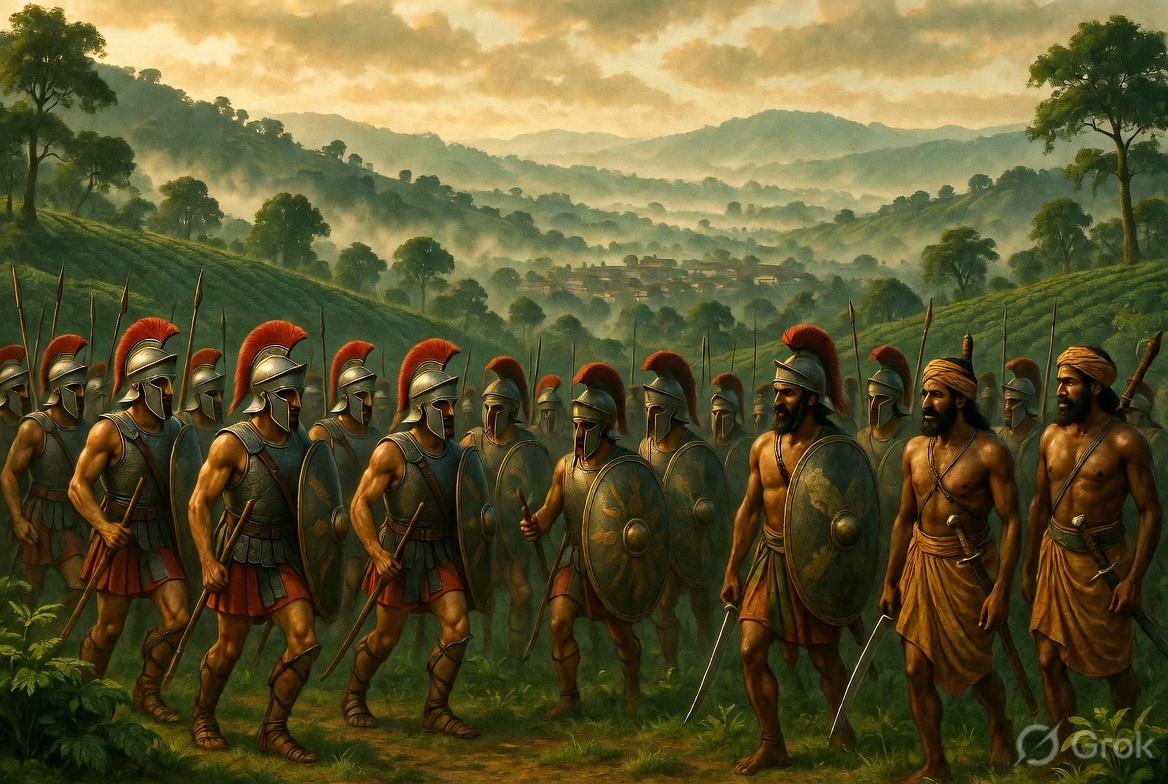
The Kodava community’s martial ethos provides additional support for the Greek connection. Traditional Kodava society emphasized discipline, courage, and readiness for arms, features reminiscent of the warrior culture of ancient Greece and Macedonia. Kodava men historically carried weapons as part of their daily attire, a practice that echoes the phalanx traditions and the citizen-soldier ideals of Hellenic societies. Ceremonial observances in Coorg, including structured rituals and communal gatherings, reflect a disciplined social order that observers have long noted as unusual in the regional context. These elements suggest not superficial resemblance but a deeper inheritance of organizational and ethical principles transmitted through ancestral lines. Scholars examining such parallels have observed that immigrant warrior groups frequently retained core aspects of their original customs even while adapting to new environments, a pattern consistent with Greek diaspora communities elsewhere in the ancient world.
Physical and cultural observations recorded over time further reinforce the identification. Accounts from colonial administrators, travelers, and regional historians describe the Kodavas as possessing features and bearing that invited comparison with Mediterranean populations. Fairer complexions in some families, distinct facial structures, and a tall stature were noted alongside clothing styles and domestic architecture that appeared atypical for the immediate locality. While such traits must be interpreted cautiously and in light of broader genetic diversity, they contributed to the emergence of the Greek-origin narrative among both local inhabitants and external observers. In historical analysis, perceived distinctiveness often serves as the initial prompt for investigating external origins, and in Coorg this perception has sustained scholarly interest across decades. The association with Madikeri, the administrative and cultural center, strengthens the spatial dimension of the theory. Even if initial settlements were dispersed, later communal memory naturally centered on this prominent location as the focal point of ancestral heritage.
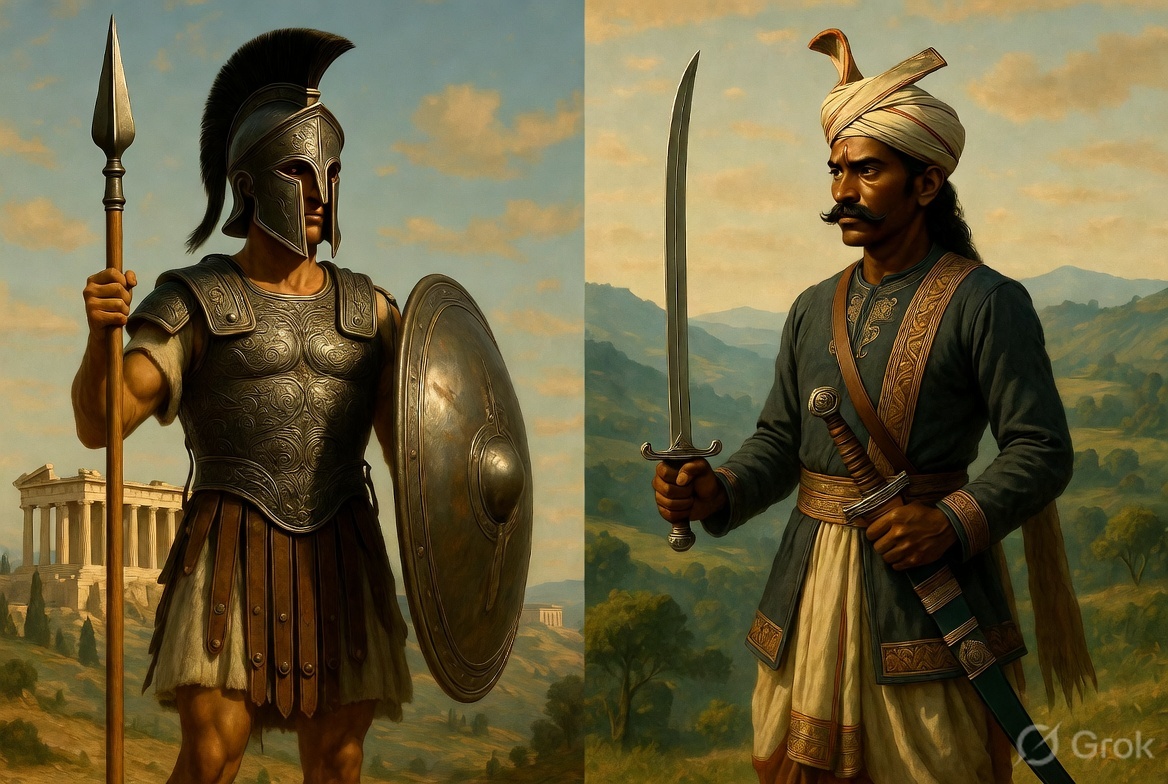
The persistence of the Greek connection in educational materials, local histories, and public discourse constitutes another pillar of justification. For well over a century, the theory has appeared in summaries of Kodava culture, school texts, and heritage discussions. This endurance reflects its explanatory power: it accounts for aspects of Kodava identity that purely local origins struggle to illuminate fully. A tradition that recurs with such regularity across generations acquires cumulative weight. It functions as a coherent framework that integrates remembered migration with observed uniqueness. Historians routinely treat such persistent beliefs as valuable sources when they align with broader contextual evidence, as is the case here with the documented Greek presence in India.
Furthermore, the theory fits within the larger pattern of Hellenistic influence across the subcontinent. Greek art, coinage, philosophy, and administrative practices left discernible marks in regions far from the initial invasion routes. The Indo-Greek kings ruled territories with significant cultural blending, and interactions extended through commerce and migration. In this environment, the southward movement of a military detachment to Coorg represents a logical extension rather than an anomaly. Mountainous regions like the Western Ghats offered strategic advantages for settled communities seeking defensible and resource-rich lands, conditions that would appeal to experienced Greek warriors accustomed to similar terrains in their homeland. The establishment of agricultural practices, fortified settlements, and social hierarchies in Coorg could reflect adaptations of Hellenistic models to local conditions.
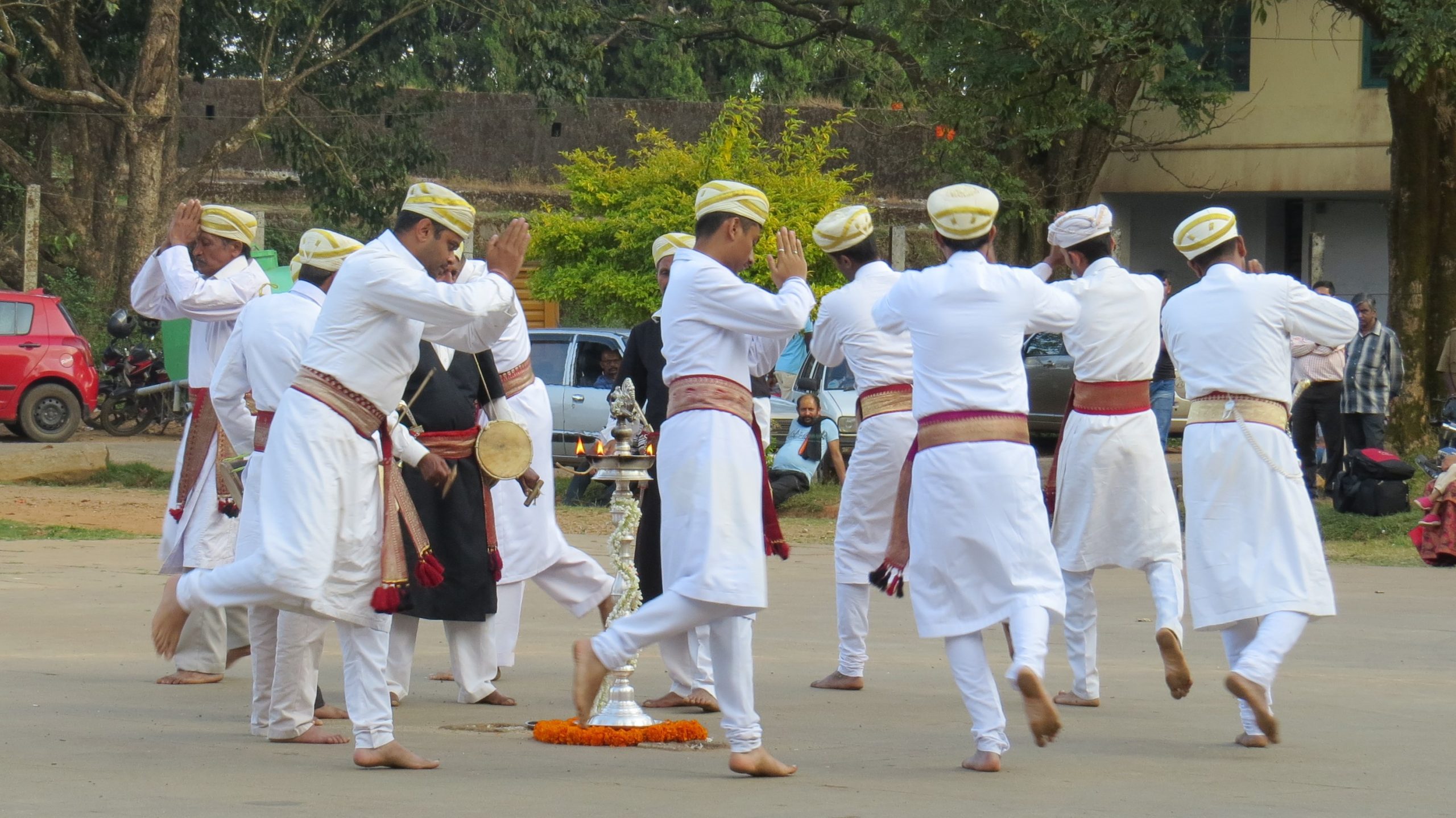
It is important to address potential counterarguments in a measured manner. Critics note the lack of direct epigraphic or artifactual evidence linking Coorg specifically to Greece. However, many ancient migrations leave subtle rather than overt traces, particularly in ecologically challenging upland areas where preservation conditions vary. The selective nature of surviving records means that small-scale movements often escape documentation. In such cases, historians rely on converging probabilities: oral memory, cultural parallels, and the feasibility of movement within known historical networks. The Greek-settlement hypothesis satisfies these criteria more effectively than alternatives that overlook the Kodavas’ distinctiveness.
Recent discussions of Kodava origins acknowledge the complexity of the community’s ethnogenesis, yet they do not invalidate earlier interpretations. Instead, they highlight the need for continued exploration. The Greek theory remains viable precisely because it accommodates both indigenous adaptations and external contributions. Genetic studies and further archaeological surveys may eventually provide additional clarity, but current interpretive evidence already justifies serious consideration of the connection.
In examining the strength of repeated historical belief, one finds that the Greek narrative has served as a unifying element in Kodava identity. It links the community to a prestigious ancient civilization known for its contributions to philosophy, governance, and the arts. This association has fostered pride and a sense of historical depth. Public commemorations, family lore, and cultural festivals in Coorg often reference this heritage implicitly through emphasis on valor and disciplined living. Such cultural resonance indicates that the tradition fulfills a meaningful role beyond historical speculation, embedding the Greek connection within the living identity of the people.
To build a comprehensive justification, it is useful to consider the mechanisms of cultural transmission. Descendants of Greek settlers would have intermarried with local populations while preserving select traditions, language elements, and social norms. Over centuries, this process produced the distinctive Kodava synthesis observed today. The retention of martial ceremonies and clan structures may represent Hellenic legacies adapted to the Indian context. Comparative studies with other Hellenistic-influenced communities reveal similar patterns of selective continuity, supporting the applicability of this model to Coorg.
The geographical features of the region also facilitated such settlement. The Western Ghats provided isolation that allowed a migrant group to develop independently while maintaining defensive capabilities. Fertile valleys supported agriculture, and the climate, though different from Greece, permitted the continuation of certain lifestyle elements. Madikeri’s central position would have served as a natural hub for coordination and governance, mirroring the role of poleis in ancient Greek society.
In conclusion, the direct connection between Coorg and Greece rests on a robust foundation of oral tradition, historical context, cultural distinctiveness, and persistent communal memory. The campaigns of Alexander opened pathways that enabled Greek mobility across India, and the Kodava narratives preserve a specific chapter of that larger story. The martial traditions, social customs, and perceived uniqueness of the Kodavas align with expectations for a Hellenic-derived community in a distant land. Although further research will refine our understanding, the available evidence justifies treating the Greek settlement in Coorg, centered historically around Madikeri, as a credible and significant aspect of Kodava origins. This perspective enriches the historical narrative of South India and underscores the enduring legacy of cross-cultural encounters in shaping regional identities.