Writers International Edition

Articles

NEED FOR A UNIVERSITY OF ETHICS TO GIVE A U-TURN TO CONTEMPORARY CIVILIZATION TOWARDS RE-HUMANIZATION

Humanity is not a race, it is a value.
And we have lost it in our blind
pursuit of success and prosperity.
Anand

In this age of falling moral standards and near-absolute absence of the sense of discrimination between good and evil, we find that the structures which imparted values to humanity have been erased out of existence, or distorted so that they stand only in form, while their essence is essentially lost. Let us look at religion. All the goodness that it preaches remains restricted to the holy pages, while what we see going on in society is utter lack of divinity even among the holiest of holy people. Religion has been reduced to a habit, a custom, a rite, and its spirit has been taken away. In the same way, the second structure which was supposed to maintain morality in the system was the teaching profession. It has been dropped from the list of ‘noble professions’. It is not a matter of choice with our youngsters. It is only a matter of employment, a dry attachment to a job from which we extract monthly salary to support the family. The systems which decide the content of teaching subjects want that there should be no literature in the syllabi, students should learn only how to write a letter, a quotation, and how to draft advertisements. The third structure that has fallen, absolutely, is the presence of the grand parents at home. Need I mention the broken family system, and the single-parent families where old people have been exiled from homes and quarantined old age homes? Who is there to teach the stories of Raja Harish Chander and Shakuntala, and even the Ramayana to the young minds? They have been replaced with the TV which has tumbled them into a world of consumerist culture, day and night telling them, eat this eat that, making them obese in body and mind too.

Man or a Perfect Manipulator

With all the moralizing structures gone with the wind, we are now in a helpless state, in which the modern generation is exposed to market values. It is commerce, success, wealth, power and fame that rule the minds of men. In fact, let us agree that in a society, what happens is decided by the government and these days, governments want smart men who look charming, and intelligent, and who can be masterminds. In other words, modern society needs manipulators, who have mastered the art of success, because ultimately, it is the success that matters in a competitive conglomerate to which our society has been reduced.

The culture of corruption that has made inroads into human society on a spectacular scale has increased the pace of humanity towards self-destruction. Philosophically, we appear to be at the end of the cycle of Kalyuga, and this being the last phase of the epoch, we can see signs of an imminent disaster waiting for us, when every value has been lost. Humanity is not a race, it is a value. And we have lost it in our pursuit of success and prosperity.

What do we require today?

We are opening universities, and colleges, and sending our kids abroad for education.
It is all a surcharged exercise to make money, and then, more money so that you can lead a life of comfort and luxury. I wonder if there is any other passion which works with our younger generations. I want to underline what makes India different from western cultures. India stands for a life which believes in God, in godliness, in religion, in scriptures like Ramayana and Mahabharata, in Guru Nanak, in Tulsi Das, in Rabindranath Tagore and in Mahatma Gandhi. There is no India if you drop even one person from your search. India never dwelt on BARE LIVING PRACTICES as we are now going to imbibe in our upcoming generations. Earning money or a job makes 20 per cent of a man’s life, the rest of it is leading a life in love, compassion, family, believing in goodness, working hard and praying.

And what we are now preaching is a lifestyle which is shorn of all values. Which has only money as the first and the last value. It is a destructive passion that we are teaching to our younger generations. How many old couples are now taking care of each other, because their kids have migrated to US or Canada? And how many when die, remain unattended by their sons at their funerals?

Man is not body, nor bones. Man is his emotions. His family. His love. His likes his dislikes.
His peace. His time. His vacant hours. His dreams. We deny all these things and force them to live on money and impractical dreams of a high life. If we remove our flesh from our bones, can we sustain ourselves? Where are emotions in our blood? In our flesh? Where are dreams in our minds? And visions in our eyes? We are much more than bare bones. No science can dissect us. Let these people who decide our fate know this fact.

THE COUNTER-BLAST

We, all those who wish well to this society, who want values to return to our younger generations, who want that we must rise above crass commercialism, and turn human again, need to join heads together. Certain things are clear. We cannot look for correction towards religion. Education has been destroyed by masters of commercialism. And family system has gone down the drain. Our worry is how to inculcate Humanism among our growing children, who are going to make our world tomorrow. How to bring them to realize that this society needs certain values of goodness, humanity, honesty and integrity. That wealth is not the last value. That fame, power are glittering illusions only.

We can do so if in each state, we have a University of Ethics, which should be beyond the pale of all religions, regions, and creeds. We need to teach literature and philosophy, and issue 6 month certificate courses in Moral Engineering and make them compulsory to pass Higher Secondary. No person who does not possess a degree can get into a job. A three year degree programme in Moral Engineering may give us Ethical Supervisors to be placed, one in ten schools in a cluster. In Universities too, we need to open Department of Ethics, and make the study compulsory in every department.

Let us take the cue from Shanti Niketan. That is a University with a different mindset. Let us in each state open a University of Ethics, so that the world knows we have taken the much needed U-turn. It will be India’s pioneering effort to push the world back from the brink of moral disaster.

Article by
Dr. JERNAIL SINGH ANAND
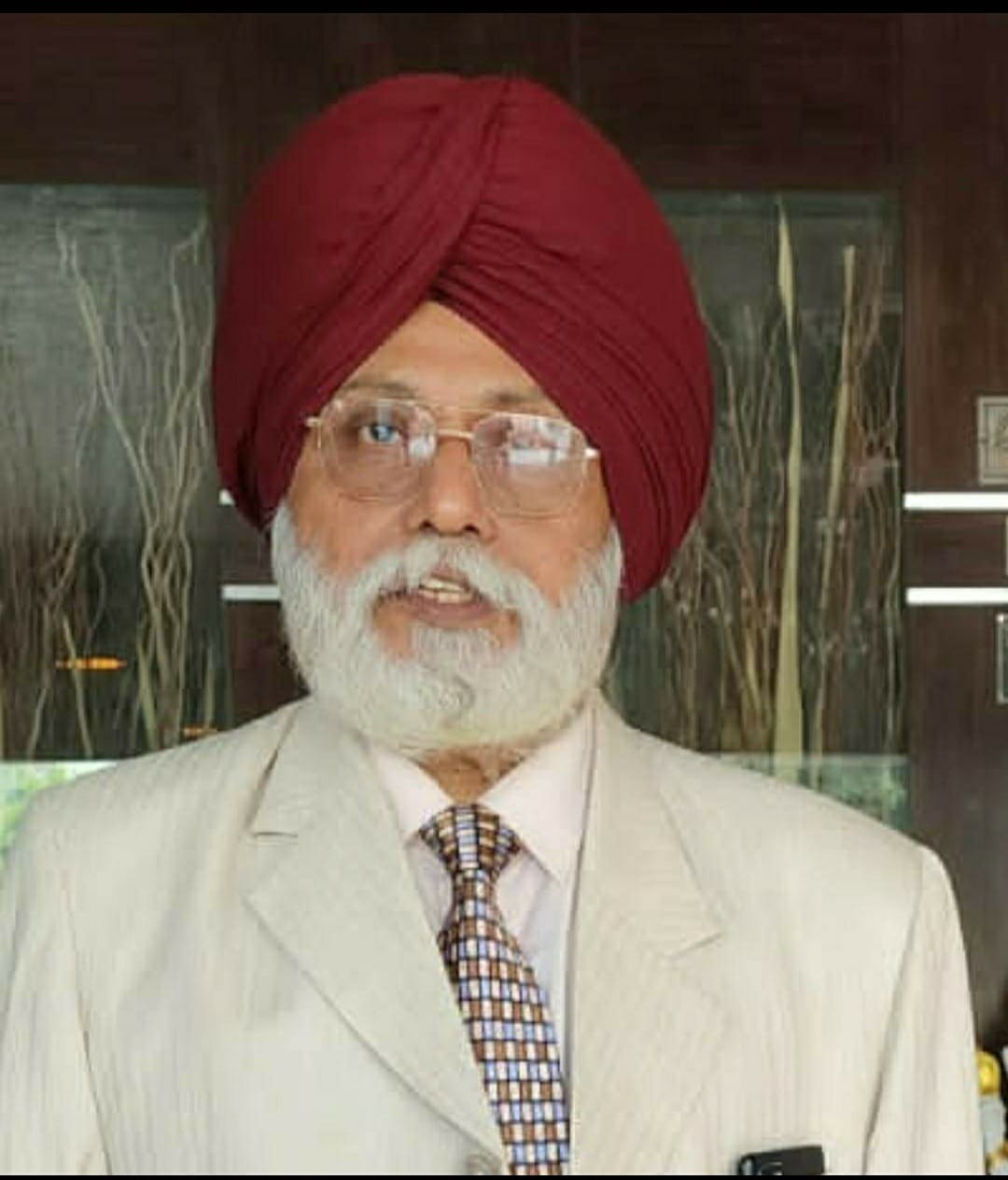
Jernail S AanandDr. Jernail Singh Anand is an Honorary Member of the Association of Serbian Writers. He is Prof. Emeritus in Indian Literature at The European Institute of the Roma Studies and Research Belgrade. Dr Anand has authored more than 150 books in English poetry, fiction, non-fiction, spirituality and philosophy. He is credited with the theory of Biotext in critical theory. His work has been translated into more than twenty world languages. Author of 9 epics which are regarded as modern classics, Anand has organized 4 International Literary Conferences, latest of them, in Chandigarh. He was conferred Franz Kafka Laureateship 2022 and International Aco Karamanov Poetry Award 2022 (Mecedonia).

More about the author: https://en.wikipedia.org/wiki/Jernail_Singh_Anand?

NEED FOR A UNIVERSITY OF ETHICS TO GIVE A U-TURN TO CONTEMPORARY CIVILIZATION TOWARDS RE-HUMANIZATION Read More »

dream

DREAM

Everyone has a dream in his life that they want to achieve when they grow up. Some kids want to become rich so that they can buy anything and some want to be a doctor, lawyers, or engineers. But only you know that for achieving these goals you have to work hard and stay attentive to them.

For turning a dream into reality the first thing that you need is determination. This will help you in a lot of ways. Firstly, it will help you decide the course of action for doing anything. Besides, it will also help you to plan the journey ahead. Also, it will help to take things slow and maintain a steady pace towards the dream.

Moreover, no matter how big my dream planning and setting short-term goals will always help. This is important because rushing toward your dream will not going to help you in any way. Besides, there is some dream that requires time and they follow a process without following it you cannot achieve that dream.

Lack of motivation is one of the main causes that force a person to leave his dream behind. So, staying motivated is also part of the goal. And if you can’t stay positive then you won’t be able to achieve the dream. There are many people out there that quit the journey of their dreams mid-way because they lack motivation.

For completing the dream you have to keep your dream in the mind. And remind this dream to yourself daily. There come hard times when you feel like quitting at those times just remember the goal it helps you stay positive. And if you feel like you messed up big times then start over with a fresh mind.

You don’t need to cover milestones to reward yourself. Set a small target towards your dream and on fulfilling them reward yourself.  These rewards can be anything from toffee to your favorite thing. Besides, this is a good way of self-motivation.

Working towards your goal does not mean that you work day and night without stopping. Apart from that, due to continuous efforts, people soon start to become de-motivated. So, taking a break will help your body and mind. For doing so, take a break in between your schedule for some time and engage yourself in other activities.

Your company affects you in a lot of ways than you can imagine. So, be with the people who appreciate you and stay away from people who distract and criticize you.

We human beings fear making mistakes but with it, we forget an important point that is a mistake helps us to learn. Whenever you make a mistake you face a tough time but these tough times help you to polish yourself and be more determined.

To sum it up, we can say that dreaming of a goal is far easier than achieving it. And for fulfilling your dream you need a lot of things and also have to sacrifice many things.

Above all, for fulfilling your dream plan and work according to it because it will lead you to the right path. And never forget to dream big because they help in overcoming every obstacle in life.


DREAM Read More »

MEMORIAL SERVICE IN ANAVYSSOS

MEMORIAL SERVICE IN ANAVYSSOS

This year is the centenary of the Asia Minor catastrophe of 1922. It is a time of remembrance for those whose lives changed from one minute to the next through no fault of theirs. A time of remembrance by their descendants, who are now the third generation of those first
refugees that came from all parts of Asia Minor Turkey: from far away Cappadocia,from  Ionia, from Thrace, and the Black Sea area. A time of remembrance for the cruel and planned genocide of first the Armenians and then the Greek population by the Turkish armed forces and the chetes irregulars that took place between 1914 and 1923.

Over one and a half million Greek Orthodox natives were forced to leave their ancestral homes that had been the home of the Greeks from ancient times, go on forced marches where many died along the way and cross turbulent seas to reach safety. Such memories can never be forgotten, and they have been passed down from generation to generation as is the case of the first refugees that came to Anavyssos and made it their new home.

On Wednesday 10th August a church service was held followed by the unveiling ceremony of the monument to commemorate the first Greek refugees from Asia Minor who settled in what was at first an arid and inhospitable area. The service took place in the small, restored church, which had formerly been a house. When it was first built as a church, it was given the name Agioi Theodori (Greek: Άγιοι Θεόδωροι) by one of the first settlers who also covered most of the building costs. The other settlers helped by offering their labor and their knowledge. The bell was made by a well-known bell maker from one of the villages of Cappadocia.

Today, the church is dedicated to the Assumption of the Virgin Mary (Greek: Κοίμηση της Θεοτόκου), whose Name Day we celebrate on 15th August. It is referred to as the Summer Easter of the Greek Orthodox Church to show the importance of the day and the dedication that the Greek people have towards the Virgin Mary. A panigiri (open-air local celebration) is held after the church service to celebrate this important day with local food and music. It is a time of reunion for those that have left their place of birth and who return for this special occasion.

Besides the clergy, the Metropolitan of the area Nicholaos was present as well as the Mayor of Saronicos and other officials. The honorary guest was Mr. Prokopios Pavlopoulos, the former President of the Greek Republic, who unveiled the monument to the first refugee settlers of Anavyssos. On one side of the monument are the names of the first refugees that settled in Anavyssos and on the other is a tree with its deep roots symbolizing the anchoring of the refugees in their new homeland.

Their determination and tenacity helped them overcome all difficulties and brought new life to the area, developing it both culturally and economically. The location that had been chosen for them was the famous ancient Greek Dimo of Anaphlysto. It was the homeland of Cleisthenes (Greek: Κλεισθένης, c. 570- after 506 BC), the ancient Athenian lawgiver, who is credited with reforming the constitution of ancient Athens and setting it along democratic lines in 508 BC. This new homeland has also been described in the book ‘Serenity’ (Greek: Γαλήνη) by the well-known author Ilias Venezis, also a refugee and one of the first settlers in the area. It describes the journey of a group of Greek refugees from their homeland in Asia Minor who settled in the summer of 1923 in a desolate corner of the coast near Athens.

Today, a time span of a hundred years from the first generation of refugees to the third generation of their descendants has passed. The unveiling of the monument dedicated to these first settlers in their new homeland is the torch that will keep alight the memories so
that their forced departure from their ancestral homes and their struggle in their new homeland will always be remembered by the generations to come.

The Asia Minor Cultural Museum ‘Makis Agkoutoglou’ in Anavissos houses the history of the refugee settlers and visitors can read excerpts relating their experience as well as see artifacts and other documents of the area.


Despena Dalmaris
©Despena Dalmaris


MEMORIAL SERVICE IN ANAVYSSOS Read More »

LIFE WITH A MOTHER IS A VITAL LAND

LIFE WITH A MOTHER IS A VITAL LAND

Which sea’s cry is not drowned in its silence, and which poem’s line can envision its color and love?

It is impossible to express in words the importance and sacrifice of a mother’s indispensable role in human life, every pen bows before the mother and accepts its defeat with a smile remaining in a vicious circle.

Mother is the heartbeat in the home; and without her, there seems to be no heartthrob.

Mother is life, the mother is breath, the mother is excitement; the blood flowing in the veins.
Sibling, sister, distant neighbor, close friend, the smiling face of the house, the only address to turn to in your sadness, truth, while shedding tears of conscience.

Mother, the pages of history are the extension of the letters of bright days and ages, as deep as the ocean. She is the prayer arising from flowing waters, the thyme in the mountains, a lush paradise in the forest!

Life without a mother is like a barren land. She is both an enslaved person and a lady in her own house, while her absence is the most severe punishment.

The mother carries her baby in her womb for 9 months. She is the ear, mouth, tongue, and mirror of the child in all kinds of problems from infancy to adulthood. She feeds her baby, she sings lullabies to them for hours; when they get sick, she waits for days at her children’s feet to see them back to health.

She is like a tree that bears fruit, she creates life from nothing! She is the shelter of love; the warmth of the sun that satiates hunger and illuminates the dark nights. Yes, a mother is her child’s first teacher as much as she is a mother. Like her own mother used to be for her too.

A mother’s love needs to be given unconditionally to establish trust and a firm foundation of emotional intimacy in a child’s life.
She is the only person who has no demands except for our best future.

A mother is what exists below God. For she offers unconditional love; love without measure. The labor of mothers while trying to raise their children cannot be compared with anything. For this reason, mothers are equated with heaven.
———————
These verses are my gift to all our mothers who have lived and are living in this universe.

Caroline Laurent Turunc
©Caroline Laurent Turunc

LIFE WITH A MOTHER IS A VITAL LAND Read More »

Dreams Come True

Dreams Come True: by Pilar López Amorelli

“This man does not “fly”, in the same way as his great-great-grandfather, Johann Sebastian Bach, did not “write music” either – he exhaled it!”. This is how the prelude of “Biplano”, one of the books by Richard Bach, who was one of her sources of inspiration, reflects the notion that the idea of the unattainable does not exist, since you can achieve anything with perseverance.

There are few people who stand out for having tried to follow their dreams and have been able to achieve them, though they had to go against mandates and prohibitions dictated both by the family and the society, especially in the case of extremely conventional ones. That is why it is our duty not to forget about them since it was those few people who paved the way for many others who followed in their footsteps. 

For this reason, when the objectives are really passionate and reach the point where they stop having a meaning other than that of fulfillment, the only thing that has significance is that desire to go further; without wishing to prove anything to anyone, as the sole thing that matters is the mere fact of dreaming.

In this way, in September 1973 there was officially named the first female pilot in the province of Salta, Argentine, despite the difficulties of the time. That woman is my mother, who against all odds has followed the ideals of her adventurous heart and has not allowed that fascination concerning the sky, the moon, the stars, and the planets to be silenced. Nor did she let her ardent wish fade away that led her to the realization of her adventures and to be able to travel high up in the skies, as she had always dreamt of.


Pilar López Amorelli
©Pilar López Amorelli

Dreams Come True: by Pilar López Amorelli Read More »

The Right to be Wrong (or a failure): Article by Nouli Tsagaraki

The Right to be Wrong (or a failure): Article by Nouli Tsagaraki

“Be careful or you will fall!
Watch out or you will fail!
Look out or you’ll get hurt…!”

One phrase – “be careful” – is constantly ringing in our ears filling us with fear; removing all confidence in ourselves, putting us in tight
patterns from an early age, evidently for our own sake, questioning our abilities to cope with any difficulties or misfortunes that befall us. Restricting us within barriers prevents us from learning how fast we can run. Because that “be careful” made us land before we even took off! It also deprived us of the opportunity to learn the lessons that failure also has to offer. To acquire the ability to acknowledge the danger, failure, and risk. To get in touch with our skills and desires and consciously, or not, assume the cost of our decision.

Since nothing is achieved by “being careful” while everything is conquered by “acting”. The amount of effort we will put into achieving our goal, or the ease with which we will give up will prove whether the choice was ours or was forced upon us.

Perhaps you will whisper, “parents warn us against acting out of interest and love…” Neither interest nor love is involved in clipping
feathers. It only reflects their own problem. This mostly is the case of parents who do not see their children as separate entities, but as a continuation of themselves, obliged to fulfill their own repressed dreams; obliged to make them feel proud of their achievements.

Children, however, are not “circus animals”, to perform tricks and demonstrate talents they may not have, in order to receive applause
and awards. They are autonomous beings born carrying their special characteristics. And if parents want them to be glorified, they must
help them develop their own talents. They must teach them how to fly instead! They must show them trust, so they can believe in
themselves.

In a rapidly changing society, where many things and choices seem long outdated, as if they belonged to a previous century, the attempt to impose their own right on them, seems funny or even absurd. Isn’t it much better if parents helped them find their own “right”? Instead of clipping their wings, they had better stand by them not as authorities and bright omniscient, but as supporters whenever they are needed.

Anyway, love should never suffocate anybody. It should only help one to find and develop their inclinations. Children should be let alone free to learn that error is entailed in life, just like a failure. They should also be taught that one single failure should not be the cause
for despair or mourning. Neither should that fact discourage them because we are all imperfect beings and life is a path we have to
walk in order for us to reach completion. These beliefs are the real“wings” that good parents must craft for their children.

After all, there are several cases of so-called “losers” whose careers eventually turned into success stories. For the record, Edison failed 1001 times before inventing the light bulb. Famous author Stephen King was rejected thirty times before publishing his first book. And the founder of the KFC company had been discarded 1,009 times before he succeeded. What did the three of them have in common?
Faith in themselves!
And this is the best legacy that parents can ever leave to their children.


Nouli Tsagaraki
©
Nouli Tsagaraki


The Right to be Wrong (or a failure): Article by Nouli Tsagaraki Read More »

EVERY END IS A NEW BEGINNING: Article by Nouli Tsagaraki

“How are you?” I asked happily the acquaintance I met by chance.

“Don’t you see?” she replied sadly. Although I hadn’t seen her for a long time, she seemed well-groomed and elegant, as always. “I am wearing black clothes, I lost my husband” she added, while a tear was hovering in the corner of her eye… The smile faded at once from my lips. “Ah! We don’t see people! We look at them, but we don’t see them!” I got angry with myself. “Everything takes its time,” I finally stuttered, “and the loss, the most.” She looked at me so intensely that I shuddered. “I’m not used to it,” she muttered… I left with my thought hooked on her last sentence, wondering “how is it possible?”

How is it possible? Since loss is interwoven with humans and stars from the very moment of our birth! With a cry, we come to life. With a lament for the safety of the nest that we forcibly abandon. But who can imagine staying there forever! Safe, but doomed to eternal immobility. Like some decommissioned boats I see rotting in secluded moorages. But these have, at least, travelled before retiring. They fulfilled their purpose, they lived! Immobility, on the contrary, resembles death and then, what is the reason for our existence! Since life is a long journey into the unknown, a perpetual movement, a change of level!

Unfortunately, humans are easily comfortable, easily contented, and easily let themselves loose. So comes the loss which forces us to move on. To redefine the meaning of our lives. We are in need of meaning in order to feel good and that meaning is defined by our choices. Anything we choose and bond with, anything we love or value, gives value to our lives. And when we lose it…, it hurts! Along with the pain comes the mourning, which signifies – nothing more or less than – our process of adapting to the new situation.

If we think about it thoroughly, we will discover that our lives are connected to a series of losses, that occur without our even realizing it. “The loss, big or small, is always a death,” they say, but is it really? Or we have limited ourselves to this perspective? Because the unknown – the new situation in which we are forced to move to – scares us. As we have learned to associate it with the possibility of insurmountable obstacles, rather than developing skills that can lead us to higher levels. Regrettably, we are used to thinking of loss only as an end, never as a beginning. We have not yet consolidated that nothing, nothing at all, is stable, unchanging, eternal. That there is nothing we can essentially control. So, what all remains is to enjoy everything offered to us, for as long as we are here…

Or else, we have to wonder, are we really mourning for what we lost, or for what we didn’t allow ourselves to live?

Article by Nouli Tsagaraki
© Nouli Tsagaraki

About the author

Nouli Tsagaraki is a short story writer and chronicler, as well as a poetess. Her articles have been published in various magazines & blogs, while she maintains a stable cooperation with the Greek-language newspaper of Canada “Evdomada Greek Weekly News” & the web page “authoring melodies”. She has two collections of short stories to her credit, “One of us” & “Fire & Hope”, while she has participated in several publications in order to support vulnerable social groups. Recently she was elected executive secretary of the Panhellenic Writers’ Union.

EVERY END IS A NEW BEGINNING: Article by Nouli Tsagaraki Read More »

A MILESTONE IN OUR JOURNEY

I have immense pleasure to address you all to express my sincere gratitude for accepting the magazine close to your hearts. The number of responses that we receive from every nuke and corner of the world itself proves how well our attempt is appreciated. Thank you all for supporting us! Sincere gratitude to the directors of Writers Capital International Foundation (WCIF) from across the world, whose enthusiasm has been a great motivation for our efforts.

Although Internet is the vastest resource in today’s world, there is still a scarcity of a platform where we can find all genres of literature under a single roof. When there are some websites that offer good content, they fail to present them in an attractive way; if someone successfully brings a good design, they fail to bring the best of the content; if everything happens, they lack simplicity in accessing the content. It is considering all these aspects we have conceived the idea of a complete magazine – The Litterateur. All that we offer is a venue where under the shades of the trees we can sit for a while and fill our souls with the nectar of literature to our hearts’ content, in the best digital ambience.

The evolution of the idea of Litterateur Online was not an abrupt process! It came out of a strong drive to bring something powerful and meaningful media to bring quality works into mainstream literature. Writers, fundamentally, are innocent creatures and are often tend to be carried away by false promises by people they trust. When the selfish motives of a few self-proclaimed masters and leaders in social media work, it is often the innocence of those sensitive and sensible writers being deceived. The moment when we realise this, it would be too late and we find ourselves shattered upon the understanding of the world and its deception.

It is time to wake-up to reality and to identify what is good and sustainable for the future as a writer. For the very same we need formal platforms beyond the virtual world where certificates evolved out of the imagination of graphic designers has nothing to offer but a few hours or days of excitement. All that we need to do is to seek opportunities to refine our skills in writing, to invite more experiences in life for rich content in the works and to further expand vision globally. Who on earth, would not wish his or her name famed across the world? However, I earnestly believe that the same should not be the only aim of writing. The very moment we complete a workbrings the greatest reward of it and a great work, even if you hide it in your shelf, will come out to the limelight one or the other day.

“When you aim for perfection, you discover it’s a moving target.” Thus says George Fisher andI understand we have a long way to go before we translate the concept of a complete magazine into reality. On this occasion, I am glad to inform you all that we are ready with the print edition of Litterateur Online named The Litterateur. We have a panel of editors who would select the best works from Litterateur Online, however we regret that we are unable to publish all works in the print edition due to limited pages in it. Primary responses show that the magazine will have extensive reach across the globe and I am sure this will take your name and fame beyond the political barriers.

We have one country known as earth, we have one religion known as love and we stand for those mighty values of humanity! Let us all dedicate ourselves for the noble causes of humanity that would turn earth a better place to live!

Warm Regards,

Editor-in-Chief

A MILESTONE IN OUR JOURNEY Read More »

AUTHOR BIOGRAPHY: WILLIAM WORDSWORTH

William Wordsworth was born in 1770, in Cockermouth, Cumbria, to a middle-class family. He loved the beauty of the Lake District, and was close to his four siblings, particularly his sister Dorothy. But when William was seven, his mother died and the Wordsworth children were separated and lived with different relatives. William’s father then died five years later. The death of both parents at a young age had a huge impact on William, who recalled feeling lonely as a child.

While studying at Cambridge University, William spent one summer vacation travelling through the Alps, and was overwhelmed by the beauty of the mountains. He returned to France again the following year, and fell in love with a French woman, Annette Vallon. They had a daughter together, Caroline. But tensions between France and Britain meant William had to return home. He continued to support Annette and Caroline throughout his life, but his guilt at leaving them featured in many of his poems.

In 1795, William inherited some money from a friend, which helped to fund his work as a poet. He also moved to Somerset with his sister Dorothy. Dorothy was a poet, too, and wrote many diaries. She was said to have a great influence on William’s writing.

The poet Samuel Taylor Coleridge lived close by in Somerset and became great friends with William. Together they created Lyrical Ballads (1798) – featuring poems such as Coleridge’s Rime of the Ancient Mariner and Wordsworth’s Tintern Abbey. Many consider this to be the start of the Romantic era in English literature.
In autumn 1798, William, Dorothy and Coleridge travelled to Germany. William was homesick and began working on a poem about his life. The Prelude is now regarded as his greatest work – an epic poem (written in 14 books), created over several years. It deals with the experiences that shaped William’s life, and rather fittingly was only published after his death.

In 1799, William and Dorothy moved back to the Lake District, and Coleridge relocated nearby. Some of William’s best work was written in the decade that followed, including one of his most popular poems I Wandered Lonely as a Cloud (commonly called Daffodils).

In 1802, William and Dorothy returned to France. William wanted to tell Annette about his forthcoming marriage to a childhood friend, Mary Hutchinson. He and Mary had five children together, and continued to live with Dorothy who never married.

William was devastated when his brother, John, died in a shipwreck in 1805. Seven years later, tragedy struck again when two of William’s young children passed away. Many of his poems reflect these losses, but when another daughter died in 1847, aged 42, the grief caused William to give up writing completely.

William became the UK’s Poet Laureate in 1843, a position he kept until his death, aged 80, from a lung disease. Although Wordsworth wrote no poetry during this time, his work had already touched the lives of ordinary people, reflecting their everyday experiences as well as their deepest emotions.

AUTHOR BIOGRAPHY: WILLIAM WORDSWORTH Read More »

THE THREE LITTLE PIGS

Once upon a time there was an old mother pig who had three little pigs and not enough food to feed them. So when they were old enough, she sent them out into the world to seek their fortunes.

The first little pig was very lazy. He didn’t want to work at all and he built his house out of straw. The second little pig worked a little bit harder but he was somewhat lazy too and he built his house out of sticks. Then, they sang and danced and played together the rest of the day.

The third little pig worked hard all day and built his house with bricks. It was a sturdy house complete with a fine fireplace and chimney. It looked like it could withstand the strongest winds.

The next day, a wolf happened to pass by the lane where the three little pigs lived; and he saw the straw house, and he smelled the pig inside. He thought the pig would make a mighty fine meal and his mouth began to water.
So he knocked on the door and said.

THE THREE LITTLE PIGS Read More »