Writers International Edition

Art & Culture

Dr. Müberra Bülbül: A Luminary in Art and Academia

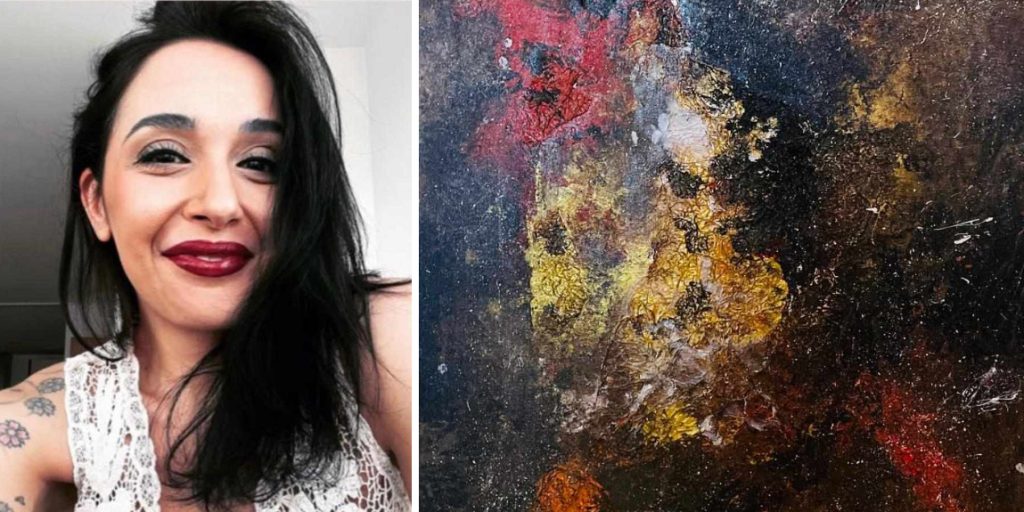
Dr. Müberra Bülbül is a remarkable figure in the world of art and academia, renowned for her profound contributions to visual arts and education. Based in Istanbul, Turkey, and Zagreb, Croatia, Dr. Bülbül has successfully woven her artistic talents in painting, graphic design, and art criticism with a passionate commitment to teaching and scholarly research.

Born on July 27, 1984, Dr. Bülbül embarked on her academic path with a solid foundation in Painting and Craft Teaching at Marmara University’s Faculty of Fine Arts Education, graduating in 2006. Her relentless pursuit of knowledge propelled her to earn a Master’s degree in Graphic Design from Istanbul Arel University’s Art and Design Institute in 2014. Not content with just one postgraduate achievement, she secured a Doctorate in Art & Design from Yıldız Technical University in 2015 and later completed a Ph.D. in Graphic Design from Istanbul Arel University in 2023. Her commitment to academic excellence culminated in a Post-Doctorate in Graphic Design from Zagreb University’s Academy of Fine Arts in 2024.

Dr. Bülbül’s illustrious career in both education and professional practice showcases her versatility and dedication. Currently, she serves as an Associate Professor and Researcher at Zagreb University in Croatia, where she continues to inspire the next generation of artists with her innovative teaching methods. Her previous roles include a Visual Arts Teacher and Expert in Graphic Design for the Ministry of Education in Turkey from 2012 to 2023, and a Lecturer in Art & Design at Istanbul Yeni Yuzyil University in 2016. Her professional journey began as a Graphic and Web Designer at Marmara University IT Center and as a Visual Arts Professional for the Municipality of Istanbul, experiences that have enriched her artistic practice with practical insights.

Throughout her distinguished career, Dr. Bülbül has received numerous accolades that testify to her artistic and academic achievements. In 2023, she was awarded a Post-Doctorate Scholarship from Erasmus and the Republic of Croatia, alongside securing second place in the Miss Art Painting Competition in the Netherlands-London. Her creative prowess was further recognized when her poster design for the Year of the Dragon 2024 won an award at the Chinese University Zodiac Competition. Other notable honors include a Certificate of Excellence from the Kocaeli Kandıra District Governorship in Turkey (2022) and the International Jury Prize from the Sri Dharshini Kalai Koodam Art Competition in India (2020).

Dr. Bülbül’s intellectual contributions are as extensive as her artistic endeavors. She authored Silüet, a poetry book published by Göl Publishing in 2020, and The Place of the Portrait in Art Movements, published by LAP Lambert Academic Publishing in 2017. Her research articles, published in prestigious international journals, delve into a wide range of topics, including art and design, digital and AI art, and the intersection of art history and contemporary practices. Her 2023 paper on “Research & Interpretation on the Creation & Exhibition of Digital & AI” and her 2022 article “Does Artificial Intelligence Make Art?” have sparked significant discussions in academic circles.

A prolific artist, Dr. Bülbül has held numerous solo exhibitions worldwide, showcasing her unique artistic vision. Her recent solo exhibitions include a show at the Kocaeli Fine Arts Gallery in Turkey (2023) and the Namazgah Cultural Center in Kocaeli, Turkey (2022). Her work has also been featured in international exhibitions such as the World Wide Art Movement in India (2020) and the Artikare Art Center in Turkey (2016). Additionally, she has participated in numerous group exhibitions and art fairs, including the Imagination Exhibition at Mason Gallery in the US (2024) and the PHENOMENA International Online Art Exhibition at Berryboy Art Gallery in Poland (2023).

Dr. Bülbül has spearheaded and participated in various innovative projects that bridge art, education, and social impact. Her 2024 project, “Multi Layered Creation,” with the British Council in the UK, exemplifies her commitment to fostering cross-cultural artistic exchange. As a jury member of the Phenomen Art Biennale in Poland (2024) and an organizer of the “Art for the Future International Art Competition” in Turkey (2022), she has played a pivotal role in nurturing artistic talent on an international scale.

Her multifaceted expertise encompasses art criticism, art history, color theory, composition, drawing, painting, printmaking, and sculpture. Her skills in communication, leadership, and organization complement her creative prowess, making her a respected figure in both academic and artistic communities.

As the coordinator for Turkey for the Panorama International Arts Festival 2024, Dr. Bülbül brings her vast experience and visionary leadership to the festival. Her role involves overseeing the artistic direction, ensuring the festival’s theme of ‘Fire’ is eloquently represented through various artistic expressions. Dr. Bülbül’s curatorial eye and ability to foster collaborative artistic environments are crucial in creating a festival that celebrates the transformative power of art and encourages cross-cultural dialogue among artists from around the globe.

Dr. Müberra Bülbül’s career is a testament to her dedication to the arts and education. Her ability to intertwine her academic pursuits with her artistic endeavors has positioned her as a leading figure in the global art community. As she continues to explore new frontiers in art and design, her work inspires and challenges audiences worldwide, solidifying her legacy as a luminary in her field.

Dr. Müberra Bülbül: A Luminary in Art and Academia Read More »

MORPHEUS: The God of Dreams

The ancient Greeks expressed their view of the origin and nature of the world through their mythology. It referred to the lives and activities of the deities, heroes, and mythological creatures as well as the origins and significance of the ancient Greeks’ cult and ritual practices.

Morpheus (Greek: Μορφέας) is one such mythological figure. His name means ‘Fashioner’, from the Greek ‘μορφή’, meaning ‘form, shape’. He is the god of sleep and dreams; a god associated with a third of our life. He appears in dreams in human form bearing messages from the gods as well as appearing to the Olympian gods. He is the son of Hypnos (Greek: Ύπνος – God of Sleep) and Pasithea (Greek: – Goddess of relaxation and rest). His grandmother was Nyx (Greek: Νυξ) the fearsome deity of Night. His uncle was Thanatos (Greek: Θάνατος), the god of death. Only the Olympian Gods could visit Morpheus and his family in the land of dreams.

Morpheus painted by Jean Bernard Restout (Paris – 1771)

His brothers were Icelus (meaning ‘like’), who made the dreams seem real; Phobetor was responsible for phobic or terrifying dreams, and Phantasus created fantastic and surreal dreams. Morpheus was their leader, and he alone was able to oversee the dreams of Gods, kings, and heroes. This is what set him apart from his brothers. They emerged each night like a flock of bats from Erebos, their cavernous home, the land of eternal darkness in the West, where the sun sets (Greek: Δύση). They would pass through two gates: one made of horn and the other of ivory. Morpheus would pass through the gate made of horn, which represented true or divine dreams. His brothers would pass through the ivory gate, which represented dreams without true meaning. These gates were guarded by two monsters to prevent anyone from entering. Beyond the gates were the River of Forgetfulness and the River of Oblivion.

Morpheus was a winged being. He had two wings on his back, which allowed him to travel noiselessly great distances and at great speed. He is also depicted with a winged ear, symbolizing his listening to, and delivering of dreams. He listens through his normal ear and uses his winged ear to deliver the messages to the receiver, whether it be the Gods or mortals. The Greek gods used him as their messenger to appear in the dreams of the mortals and in this way, to liberate the desires, hopes, and imaginations of the sleeper. However, dreams can also portray false realities, and so betray the receiver to act in an unforeseeable way.

Morpheus is used in such a way in Homer’s Iliad to deliver a message from Zeus to King Agamemnon, king of Mycenae and the leader of the Greek army in the war against Troy. This false dream was sent by Zeus to Agamemnon in the guise of Nestor, a trusted comrade, to persuade him that if he launched a full-scale assault on Troy, he would be successful. Zeus is misleading Agamemnon because he owes a favour to Achille’s mother, the goddess Thetis, who supports Troy and wants the defeat of the Greeks, but also wants to show the importance of Achilles participation in the war. After several days of fighting, the Achaeans are pushed back to their fortifications around their ships. The defeat of the Greek forces wanted to show Agamemnon that he was not the greatest of leaders and that it was Achilles who deserves to be the leader. Achilles had not taken part in this attack due to the disagreement between Agamemnon and Achilles over Briseis, a Trojan captive. Achilles was forced to give her to Agamemnon as compensation for the freeing of Chryseis, the daughter of one of Apollo’s priests, who had been taken as a war prize by Agamemnon.

Briseis – Wall painting: Achille’s surrender of Briseis to
Agamemnon from the house of the tragic poet in Pompei –
Fresco 1st c. A.D. now in the National Archaeological Museum, Naples

The reference to Morpheus to express the state of dreaming and as a messenger has been used by many poets from antiquity up to the present times. One such poet is Ovid, the Roman poet (43 BC – 17/18 AD), who lived during the reign of the emperor Augustus. He uses Morpheus in his poetic work Metamorphoses to tell the story of Ceyx and his wife Alcyone, the king and queen of Trachis in Thessaly, who were transformed into birds after provoking the wrath of Zeus. Morpheus appears to Alcyone in a dream as her husband Ceyx to tell her of his death.
Besides works of literature, there are many works of art as well as sculptures showing Morpheus in a state of sleep and as a messenger of the gods. The word ‘Morpheus’ is also used in figurative speech in sayings such as in the arms of Morpheus to express the idea of someone sleeping deeply. We also have the medical term ‘morphine’, which is connected to the poppy seeds that Morpheus had in his cave and is used for those in severe pain. Poppies have also been used to treat insomnia due to their hypnotic properties. In the film world, Morpheus is one of the main characters in the Matrix films.

Next time you dream, think as to whether Morpheus had anything to do with it!!

Despena Dalmaris


MORPHEUS: The God of Dreams Read More »

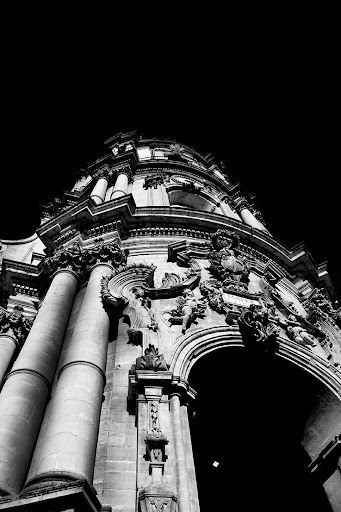
Chiesa Badia di Sant’Agata, Catania, Italia. Foto di Filippo Papa, Titolo: Nel Barocco, 2011

La Magia del Barocco Siciliano Un Viaggio Affascinante tra Arte, Storia e Bellezza

Il Barocco, uno stile artistico che affonda le sue radici nei secoli passati, continua ad incantare e stupire il mondo con la sua straordinaria bellezza e maestria. Tra tutte le manifestazioni del Barocco, quella siciliana si distingue come una delle più affascinanti ed eclettiche. Questo movimento artistico, nato tra il XVI e il XVII secolo, si è fuso con la cultura e la storia unica dell’isola, dando vita a una meravigliosa espressione artistica, che è tutt’oggi una testimonianza straordinaria del passato.

I monumenti barocchi siciliani sono tra i più affascinanti al mondo. Le città di Palermo, Catania, Ragusa, e Noto sono famose per i loro esempi di architettura barocca. Chiese, palazzi e fontane decorati con dettagli intricati, colonne e sculture sontuose caratterizzano questi luoghi e si possono ammirare passeggiando tra le vie delle città. Una delle chiese più iconiche è la Cattedrale di San Giorgio a Ragusa, un vero e proprio capolavoro con la sua simbolica e imponente facciata a torre.

Il Barocco nelle varie arti

Duomo di Noto, Italia. 2011. Foto di Filippo Papa

La scultura barocca siciliana è altrettanto spettacolare. Le opere di artisti come Giacomo Serpotta e Antonello Gagini sono celebri per la loro grazia e la loro abilità tecnica. Le sculture barocche decorano chiese e palazzi, portando la loro bellezza nell’ambiente urbano. L’uso di marmo e stucco per creare dettagli intricati è una caratteristica distintiva di questa forma d’arte.

La pittura barocca in Sicilia è celebrata per la sua espressività e drammaticità. I pittori come Mattia Preti e Anton Van Dyck hanno lasciato un’eredità di opere d’arte che raccontano storie complesse e coinvolgenti. Queste opere sono spesso caratterizzate da un uso audace del colore e da un forte contrasto tra luci e ombre, creando un effetto visivo accattivante.

Anche la musica barocca ha prosperato in Sicilia, con compositori come Alessandro Scarlatti che hanno contribuito a questo movimento. Le opere musicali barocche spesso catturano lo spirito dell’epoca, con melodie elaborate e ornamentazioni musicali che affascinano l’ascoltatore.

Il Barocco siciliano è una testimonianza della creatività e della maestria artistica di un’epoca passata. Oggi, i visitatori provenienti da tutto il mondo possono ammirare questa bellezza senza tempo che si è preservata attraverso i secoli. Un viaggio nell’isola siciliana è un’opportunità unica per immergersi nella magia del Barocco e nell’arte che continua a incantare e ispirare chiunque abbia la fortuna di osservarla.
La magia del Barocco siciliano è una fusione di culture e influenze artistiche. La Sicilia, con la sua storia e la sua bellezza senza tempo, ci invita a un viaggio straordinario tra arte, storia e cultura.

La Perdurante Influenza del Barocco Siciliano

La bellezza e l’influenza del Barocco siciliano non si limitano solamente all’architettura e alle opere d’arte, ma si estendono anche alla cultura, alla tradizione e alla vita quotidiana dell’isola. Questo stile ha lasciato un’impronta indelebile, plasmando l’identità culturale della Sicilia in modi straordinari.

Una delle manifestazioni più affascinanti del Barocco siciliano è la sua influenza sulle feste religiose. Ogni anno, molte città e paesi celebrano le proprie feste patronali con processioni religiose che sfoggiano imponenti statue di santi barocchi. Questi eventi coinvolgono comunità intere, portando in vita l’arte e la spiritualità in un’unica esperienza straordinaria. La Settimana Santa in Sicilia, con le sue intense rappresentazioni delle stazioni della Via Crucis, è un esempio notevole di come il Barocco ha plasmato la fede e la cultura locali.

Nonostante il passare dei secoli, il Barocco siciliano è stato accuratamente preservato e restaurato per le generazioni future. L’impegno costante nel mantenere intatte queste opere d’arte è testimone dell’importanza e del rispetto che il popolo siciliano nutre per il suo patrimonio culturale. Numerosi siti barocchi sono stati riconosciuti come Patrimonio dell’Umanità dall’UNESCO, contribuendo a proteggerli e condividerli con il mondo intero.

Il termine “Barocco” viene anche utilizzato come aggettivo per rappresentare concetti di ricchezza, abbondanza per gli occhi, ecletticità e stravaganza.

Si può affermare quindi che la Sicilia in sé è tutta “BAROCCA” un tripudio per gli occhi e per il palato perché esplorando le sue città e i paesi, visitando chiese e palazzi e assaporando la cucina locale i visitatori vengono letteralmente immersi nelle sue tradizioni, una celebrazione della cultura che ha prosperato in questo angolo del mondo.

Un Futuro Radicato nel Passato

Chiesa Badia di Sant’Agata, Catania, Italia. Foto di Filippo Papa, Titolo: Faith #1, 2011

Mentre celebriamo la magia del Barocco siciliano, è importante riflettere anche sul suo significato per il futuro. Questo stile artistico ha dimostrato la sua eterna rilevanza e influenza, ma cosa ci può insegnare oggi?

Il Barocco ci ricorda che l’arte e la creatività possono essere forze unificanti e trasformative. L’isola siciliana, attraverso il suo patrimonio artistico, ci insegna che la fusione di culture e influenze può portare a opere di straordinaria bellezza e significato. Questo messaggio continua a essere rilevante in un mondo in cui la diversità culturale è una risorsa da valorizzare e preservare.

Inoltre, il Barocco ci insegna che bisogna continuare a proteggere il nostro patrimonio culturale per le future generazioni. La dedizione dei siciliani nel mantenere intatto questa straordinaria eredità artistica ci ricorda l’importanza di conservare e restaurare opere d’arte e monumenti storici in tutto il mondo.

Duomo di San Giorgio, Modica, Italia. Foto di Filippo Papa.

Infine, la magia del Barocco siciliano ci insegna ad apprezzare la bellezza in ogni dettaglio. L’arte barocca è caratterizzata da una cura meticolosa per i dettagli e un impegno per l’eccellenza. Questo è un insegnamento atemporale: che ogni dettaglio, ogni sfumatura di colore, ogni scultura intricata, è un’opportunità per esprimere la bellezza.

Mentre esploriamo la magia del Barocco siciliano, possiamo anche riflettere sulla sua forza continuativa nell’arte, nella cultura e nella nostra comprensione del passato. La Sicilia, con il suo patrimonio barocco, offre un’esperienza che va oltre il viaggio fisico, diventando una celebrazione dell’arte, della storia e della bellezza umana.

Questo stile artistico eclettico e affascinante continua a incantare, a preservare e a trasformare, offrendoci una finestra nel passato e un promemoria dell’importanza dell’arte, della cultura e della bellezza nella nostra vita. La Sicilia, con il suo Barocco, ci invita a un’esperienza profonda e straordinaria, un viaggio attraverso il tempo che celebra la maestria artistica e l’eterna bellezza.

Duomo di San Giorgio, Modica, Italia. Foto di Filippo Papa.

Feature by
Filippo Papa
Editor, Writers International Edition
Italy

La Magia del Barocco Siciliano Un Viaggio Affascinante tra Arte, Storia e Bellezza Read More »

sathya shenoy

Celebrating the Artistry of Sathya Shenoy S: A Journey of Rediscovery

In a world where careers often dictate our life’s path, there are those who break free to follow their heart’s deepest desires. Meet Sathya Shenoy S, a full-fledged realistic and impressionistic artist, whose journey from engineering to teaching eventually led her back to her true passion – art.

Sathya’s artistic odyssey is a testament to the power of resilience and the enduring call of creativity. Her affair with art began as a child but was momentarily eclipsed by the demands of a career in engineering and later, the rigors of teaching. However, destiny had other plans. A brief illness granted her the gift of time – time she eagerly spent with a palette, brushes, and an easel.

This newfound connection with colors breathed fresh life into her world. Sathya found that her eclectic interests in writing, reading, music, and learning languages all converged on the canvas, adding depth and meaning to her art.

For Sathya Shenoy S, the pursuit of art is not a destination but an ongoing voyage filled with delightful discoveries. She dedicates herself to this journey, painting daily even amidst a demanding job. To her, art is more than a hobby; it’s the very air she breathes, a meditative practice that nurtures her soul.

Exploring various mediums, watercolor has become her favorite, allowing her to express her thoughts and emotions in delicate hues and flowing strokes. She believes that each artwork tells a story, and the process of creation is a story in itself.

Sathya is not alone on her artistic expedition. She is an active member of several art groups, including Wet Pallet, Urban Sketchers Kochi, Aquarelle Kerala, In Art World, Meraki, Akansha, and Varnam. These communities provide her with the inspiration, support, and camaraderie essential for an artist’s growth.

Sathya Shenoy S has honed her skills under the tutelage of renowned artists such as Sunil Linus De, Sajeev KS, and Sunija, particularly in the domain of murals. Her dedication and talent have been recognized on both national and international stages through her participation in numerous online and offline exhibitions.

The pinnacle of her achievements in the art world came in 2023 when she was awarded the prestigious Best Artist Award by BMFAC, India. This accolade is a testament to her unwavering commitment to her craft and her unceasing exploration of the world of art.

Sathya Shenoy S’s journey is an inspiration to all aspiring artists and a reminder that the pursuit of passion knows no bounds. As she continues to breathe life into her canvas, she invites us all to embark on this artistic voyage with her, where every stroke is a story waiting to be told.

Celebrating the Artistry of Sathya Shenoy S: A Journey of Rediscovery Read More »

Ofelia Hutul

Ofelia Hutul: The Artist Whose Paintings Bridge Realities

When one steps into the world of Ofelia Hutul’s art, they are immediately struck by a dizzying array of proposals and attitudes. On one hand, there are the stern, monumental architectures, reminiscent of the cold ribs of a Gothic cathedral, and on the other, the incredible detail within stillness. In Hutul’s paintings, there exists a perpetual oscillation between the real and the imaginary, the decency of one character contrasting with the unnatural hardness, seemingly unmotivated, of another.

At times, Hutul’s work flirts with the mirage of childhood, manifesting a “phenomenon of transparency” where the child reveals the invisible. It’s as if she doesn’t paint what she sees, but rather what she knows. Many of her paintings contain these transparencies, especially in the case of nudes.

Nature appears “en abîme,” as in heraldic “ebouchon,” certifying that human nature can successfully compete with the natural world. Here, windows become a metaphor for the human body, a wall, a fortress that preserves its history, not merely the circumstances of the moment.

The interplay between the abstract and the concrete is a constant theme. In one work, figures seem to be captured in a choir, a ritual dance, or a procession. Above them, a triumphal arch, concave, and another convex, like a lens. The third is not the arch of a cathedral, but the arch of eyebrows. Beneath it, an eye behind bars. But from the corner of the eye, a bird emerges. Is it a pigeon, heralding the Fiat luxury? Or an eagle, symbolizing freedom? Hutul leaves the choice, the selection, the interpretation to us.

In another painting, a quintet assembles. Judging by the instruments, one might expect them to prepare for chamber music, perhaps a pre-classical concert. However, one of the characters holds a sorcery book, leading us to imagine they are a group of singers.

One of the most enigmatic images is a study in stillness. An empty frame, perhaps a mirror, a bunch of blue flowers in a vase, everything in shades of ultramarine and ochre, softened by hints of brown.

Hutul’s landscapes challenge perspective not by altering relationships or sections, but by appearing stretched or condensed, like in a painting by El Greco, a “condensation nucleus.” In one almost monochromatic blue landscape, the house looms above, with steps suspended like a crossing over a precipice. The house has just one window or door, spanning its entire wall. Three trees, seemingly neutral, but one leans toward the center of interest, participating in the mystery. A metaphysical turmoil courses through the painting, a wind that stirs nothing tangible but is felt through a change in temperature.

Another elemental and metaphysical wind is reminiscent of a famous medieval engraving, with three witches betrayed by the positions of their long hair, which we find in another emblematic painting.

Then there are three figures, one of them unmistakably a woman, the others androgynous or ephebic. They appear to be startled by a collapse, beams falling like scaffolding. But these beams could be crosses, and the characters are unsure if they are saints, evil, or merely unfortunate souls tormented by a malevolent spirit. On the right, three leaves, which could be three eyes, and beneath the characters, a fantastic and unmotivated shadow, as there’s no apparent light source.

One more painting depicts the lake’s heroine, innocent as a Botticelli virgin, but with half her hair braided in locks or possibly lawnmower cords. Or perhaps the cords are snakes, akin to the Gorgon. In her right hand, the female character (fairy, spirit, muse, siren, desired or painful memory – who knows?) holds an object that could be a blue star, a creation of the sea, a mining flower, or a blue flower symbolizing nostalgia and/or solitude.

Hutul’s vibrational paintings also feature a still life, devoid of flowers but filled with empty or inhaled vases in a cosmic, circular trajectory, like planets. A central pot, unadorned clay, then a supporting vase or mortar (we’re uncertain whether brushes rest inside), a teapot, a cup, a crucible. Ochre and Prussian blue, dirty white in the folds, akin to Chagrin’s paintings. It’s a story that hasn’t yet begun. A sea with turbulent waves like a rebellious sky (or vice versa!), an unnatural rainbow that announces nothing, least of all silence. A fantastic slit is provided by a triangular eye, the sole oasis of light. Naturally, it’s a blue orgy.

Urban landscapes are equally enigmatic and ghostly. A gate, perhaps that of a cemetery, invites us into a city where the eye can hardly find anything. Only a cleverly tempered gray rhythm.

And when you least expect it, in a painting called “Summer Colors,” two trees engage in a chromatic dialogue, from lemon yellow to vermilion, from permanent red to chrome green, all set against a blue that has become personal and customized.

Hutul’s openness to childhood is apparent through her posters, book illustrations, and especially her ability to view the world with awe, candor, and curiosity. For her, painting is compensation, intensive therapy, and a sublime refuge.

If Hutul had to choose between being a scientist (she holds a Ph.D. in Aesthetics/Philosophy from “Al. I. Cuza” University, Iaşi, along with postgraduate studies in Pedagogy and Psychology, a graduate of the “G. Enescu” Academy of Fine Arts, Decorative and Design in Iaşi, a professor of visual arts, LT” DC “Iaşi holder, mentor, coordinator of student pedagogical practice at the” George Enescu “University of Arts, Iaşi; training, symposiums, festivals, competitions, project management, author of specialist books, methodological guides, regulations, methodologies, programs, and scientific articles) and a visual artist, she chose art with her heart. Her works have been exhibited in over 75 solo exhibitions in the country, from Iaşi to Galaţi, Vaslui, Cluj-napoca, Bârlad, Caraş-Severin, Câmpulung Moldovenesc, Botoşani, Suceava, Oneşti, Brăila, Ploiesti, Piatra-Neamt, and Bucharest, as well as abroad: Ukraine (Odessa), the Republic of Moldova (Chisinau and Edinet), Belgium (Brussels), the United States (Hagerstown, Maryland), Italy (Portogruaro), France (Saint-Pierre les Elbeuf), and Bulgaria (Balchik).

Hutul has consistently grappled with time and, at times, emerged victorious. Each of her paintings serves as a gateway to a new universe, an unmistakable blend of utmost clarity and creative fantasy, shaped by an extraordinary sensibility.

Her originality knows no bounds. She doesn’t aim to seduce the viewer with easy solutions; rather, she challenges them, making them complicit in vast aesthetic and transcendental challenges. Thus, she possesses a unique

Ofelia Hutul: The Artist Whose Paintings Bridge Realities Read More »

Florin Preda-Dochinoiu

Florin Preda-Dochinoiu: A Journey Through Artistry and Creativity

Florin Preda-Dochinoiu, born on December 15, 1970, in the picturesque town of Damian-Sadova in Dolj County, is a name that resonates in the world of visual arts. With a Master’s degree in Visual Arts, specializing in Conservation and Restoration from the University of Craiova, he has carved a remarkable path through the realm of creativity. His current residence is in Motru city, within the Gorj sector.

A Prolific Portfolio of Group Exhibitions

Preda-Dochinoiu’s artistic journey has been punctuated by numerous group and collective exhibitions, both within Romania and abroad. These exhibitions have served as a canvas for him to showcase his talent and creativity:

International and National Exhibitions

  • In May 2023, he participated in the “Istverna Art Camp” exhibition held at the Teodor Costescu Palace.
  • From April to May 2023, his artwork was featured in the collective art exhibition at Portile de Fier Museum in Dr. Tr. Severin.
  • In February 2023, he contributed to the Brăila National Small Plastic Exhibition.
  • His artistry was also part of the “Shades of Love” International Exhibition’s third edition held at the Multifunctional Cultural Center of Iași Seniors.
  • In January 2023, he showcased his work at the “Ștefan Luchian” Biennale of Painting and Graphics in Botoșani.
  • His participation extended internationally, including exhibitions in Chisinau, Republic of Moldova, such as “EMINESCIANA” and “EMPATHY ON ONE SIDE AND ON THE OTHER OF PRUTUL.”
  • Preda-Dochinoiu’s artistry was also featured in national events like the “Constantin Găvănea” National Graphics Biennale in Tulcea and the “Moldova Salons” in Bacău.

These exhibitions not only underline his diverse talent but also demonstrate his ability to create art that transcends boundaries and cultures.

Personal Exhibitions

In addition to group exhibitions, Florin Preda-Dochinoiu has held several personal exhibitions. These displays offer viewers a deeper insight into his creative mind and artistic journey:

  • In August 2022, he held a personal art exhibition titled “DE(SEMN)!” at the “Constantin Brâncuși” Art Galleries in Tg-Jiu.
  • In February 2022, his artwork was on display at the “FLIGHTS IN THE RIGHT POSITION!” painting exhibition held at the Palace of Culture Teodor Costescu in Dr. Tr. Severin.
  • In January 2022, he presented a personal fine art exhibition titled “SYLLABLES IN READING” at the Nicolae Tonitza Art Gallery in Iasi.
  • From December 2021 to January 2022, his paintings adorned the “I DREAM FOR FREE” personal exhibition at the Constantin Brâncusi National Museum in Tg-Jiu.
  • In October 2021, he unveiled “SENTIMENTAL DISCRETIONS” at a personal art exhibition hosted by the UMF Iași Museum.
  • His personal graphic exhibition “Drawings in Romanian” was a significant event at the Constantin Brâncuși Tg-Jiu National Museum in February 2021.
  • “Painting with… memories” marked another personal painting exhibition in August 2020 at the “Florin Isuf” Hall of CJCPCT Gorj.

Creative Camps and More

Florin Preda-Dochinoiu’s artistic journey doesn’t stop at exhibitions. He has also been an active participant in various creative camps and has engaged in other forms of artistic activity, including book illustrations and organizing painting salons. His participation in these endeavors showcases his dedication to the arts and his contribution to the broader artistic community.

Awards and Distinctions

Preda-Dochinoiu’s artistic contributions haven’t gone unnoticed. He has been recognized with numerous awards, distinctions, and scholarships for his outstanding work, including “PRIZE FOR PAINTING,” “PAINTING AWARD,” and “AWARD FOR MIXED TECHNIQUE.” These accolades reflect the high regard in which his art is held within the artistic community.

Illustrating the World with His Art

Beyond his exhibitions and accolades, Florin Preda-Dochinoiu’s artistic journey continues to unfold. His illustrations in various books and albums add another layer to his artistic repertoire. Whether it’s evoking emotions through paintings or illustrating the world with his art, Preda-Dochinoiu’s creative endeavors captivate and inspire art enthusiasts across the globe.

Florin Preda-Dochinoiu is undoubtedly an artist whose journey through the world of art has left an indelible mark, and his future promises even more artistic brilliance.

Florin Preda-Dochinoiu: A Journey Through Artistry and Creativity Read More »

Kim Moon Tae

Kim Moon Tae: Unveiling the World of Childlike-Heart Painting

Kim Moon Tae, often referred to as Meongseog, is a renowned artist hailing from Korea. His journey through the realm of art is one marked by innovation, creativity, and a deep connection to the essence of childlike wonder.

Childlike-Heart Painting

Kim Moon Tae is the inventor and chief proponent of the Childlike-Heart Painting style. This unique approach to art taps into the pure, unadulterated spirit of childhood, resulting in creations that are not only visually stunning but also emotionally resonant.

Global Presence

Meongseog’s art has transcended borders. His work has been exhibited in prestigious venues across the world, including France, Germany, the USA, Switzerland, Turkey, Ukraine, Japan, China, Mongolia, and the Philippines. The Korean Culture Center in Washington, D.C., also had the honor of hosting his captivating pieces.

Published Author

Beyond his canvas, Kim Moon Tae is also a published author. His book, Childlike-Heart Painting Essay <Just…> is a testament to his profound connection with art. Published in 2015, this book delves into the heart and mind of the artist, offering readers a glimpse into the world of Childlike-Heart Painting.

Artistic Achievements

Meongseog’s accolades are a testament to his artistic prowess. He has been part of international art projects and exhibitions, including the Genuine Art Projects International (GAPI) and Art NIGDE International (ANI) in 2021. His online exhibitions, spanning 30 countries, have been captivating audiences since 2019.

Distinguished Roles

Kim Moon Tae’s contributions extend beyond his artistry. He has served as a Visiting Professor at Induk University and has been commissioned as a member of organizing and judging panels for various competitions.

Prolific Portfolio

Over the years, Kim Moon Tae has showcased his art in an impressive 25 individual exhibitions and around 450 group and invited exhibitions.

Kim Moon Tae’s work is a celebration of the childlike wonder that resides within all of us. It invites viewers to reconnect with the innocent joy of youth, reminding us that art has the power to touch our hearts and souls.

Kim Moon Tae’s art is a testament to the enduring power of creativity and the universal language of the heart.

Kim Moon Tae: Unveiling the World of Childlike-Heart Painting Read More »

Dr. Meenakshi Mohan: A Multifaceted Creative Force

In the realm of academia, art, and literature, the name Dr. Meenakshi Mohan stands as a testament to the power of creative versatility. An accomplished editor, academic, art critic, children’s writer, painter, and poet, her journey through various artistic domains is nothing short of awe-inspiring.

Born with a passion for knowledge and creativity, Dr. Mohan has shared her wisdom and artistic flair across multiple platforms. Her academic career has seen her teaching at esteemed institutions such as universities in Chicago, Boston, and Towson University in Maryland. Her expertise lies in Early Childhood Leadership and Advocacy, and she has made significant contributions to this field through a wide array of publications and workshops.

But Dr. Mohan’s creative spirit doesn’t stop at academia. She seamlessly transitions between roles, captivating audiences as an art critic, children’s writer, painter, and poet. Her written work, including book reviews, art critiques, interviews, and poems, regularly graces the pages of journals and anthologies. This extensive body of work has earned her recognition in the form of listings in the Who’s Who Among American Teachers—not once, but twice.

In the realm of children’s literature, Dr. Mohan has authored three delightful picture books: “The Rainbow in My Room,” “The Gift,” and “The Rebirth of the Demon.” These books enchant young readers with engaging stories and vibrant illustrations. She has also co-edited a book of poetry designed especially for children.

Dr. Mohan’s talents extend to the world of editing and curation. She edited “Tamam Shud poems of Kshitij Mohan” and “Tapestry of Women in Indian Mythology,” showcasing her prowess in bringing literary works to life.

Art is yet another canvas where Dr. Mohan’s creativity shines brilliantly. Her solo art exhibit in Potomac, Maryland, left spectators in awe, a testament to her mastery of visual expression.

Further cementing her status as a respected authority in the world of literature, Dr. Mohan serves on the Editorial Team for “Inquiry in Education,” a peer-reviewed journal published by National Louis University, Chicago, Illinois. She also lends her expertise as an advisory editor for “Confluence,” a prestigious literary platform based in the UK.

Her artistic and literary achievements have not gone unnoticed. Dr. Mohan was honored with The Panorama International Literature Festival Award in 2022 and the Setu Bilingual Journal Award for Excellence in the same year. Her writings and art have graced the pages of local journals in the Maryland area, further solidifying her reputation as a creative force to be reckoned with.

Dr. Meenakshi Mohan’s journey through academia, art, and literature is a remarkable one. Her ability to seamlessly transition between these domains, leaving her mark in each, showcases the boundless potential of a creative mind. As she continues to inspire through her work, we eagerly await the next chapter in her artistic odyssey.

To learn more about Dr. Meenakshi Mohan and explore her multifaceted talents, visit her website at www.meenakshimohan.com.

Dr. Meenakshi Mohan: A Multifaceted Creative Force Read More »

Marika Grassano

Marika Grassano: A Rising Star in The Field of Art

Marika Grassano, born on December 30, 1989, in San Severo, Italy, and now residing in London for over a decade, is making waves in the world of art. Splitting her time between her home country, the UK, and Cologne, where her grandparents live, she embarked on a unique journey from volleyball to art.

After discontinuing her volleyball career at the age of twenty-three, Marika relocated to the United Kingdom, where she now lives and works. In parallel, she continued to express herself through drawing and painting, ranging from pencil and Bic pen comics to abstract experimentation.

A recent turn of events led Marika to participate in public events after her paintings had already adorned the homes of acquaintances and friends.

Collective Recognitions

In a significant recognition of her talent, Marika’s painting titled “Fire” was selected for the International Art Prize “Dante Alighieri” on July 7, 2021. It was exhibited at the Palazzo Borghese in Florence and featured in the artistic catalog “Art Now” number 3 for that year. She received the artistic plaque “Dante Alighieri.”

  1. In 2021, Marika’s painting “Inferno” was chosen for the 1st Visual Art Review “Lucera Città d’Arte,” organized by the cultural association Daunia&Sannio, held at the municipal library of Lucera (FG) from September 12 to 18, 2021.
  2. On June 4, 2022, her painting “Fire” secured third place at the Literature, Photography, and Fine Arts Prize “Creatività Itinerante” in Rodi Garganico, FG.
  3. In 2022, Marika was among the selected artists for the exhibition project “Darteweek” in Lecce, from July 7 to 14. Three of her works, “This is the war,” “Fire,” and “I giardini di marzo,” participated in the “Imago” Exhibition, held at the prestigious Palazzo Turrisi. Her works received acclaim from art critics Claudia Presicce (Gruppo Il Messaggero) and Antonio Viannei. These works and the critical reviews are featured in the “Darteweek” Art Catalog.
  4. In 2022, her painting “The war” was part of the Collective Exhibition “Biennale delle Arti visive Terra d’Otranto,” curated by the Academy “Italia in Arte nel Mondo.” The exhibition took place in Lecce at L’Antica Galleria “E. Maccagnini” from December 1 to 10, 2022.
  5. On September 23, 2023, at the invitation of the critical commission of Artexpò Gallery Milano, Marika will participate with four paintings in the Collective Exhibition in Montecarlo, Principality of Monaco, at the Sincerity Congress Hall of Hotel Montecarlo Bay. She will receive the Oscar of Creativity – Montecarlo 2023, and two of her works will be included in the printed catalog.

Publishing

Marika’s painting “Come in cielo così in terra” became the cover image for the book “Torneremo a guardare il mare – Pensieri riversi in posizione fetale,” published by Oceano Edizioni in 2021 and authored by Maria Teresa Infante.

Her painting “Fire” graced the cover of the poetic collection “Fulmine a ciel sereno,” published by Oceano Edizioni in 2021 and authored by Raffaele Buccino.

Three of her works, “Etnie – Gradazioni d’esistenze,” “Eden,” and “Nebulose esistenziali,” are part of the art-literary project “Parole che non conoscevo,” published by Oceano Edizioni in collaboration with the SOS Oncology Association, aiming to improve the care conditions for oncology patients. All proceeds will be donated to the San Marco Hospital in Zingonia and the San Pietro Hospital in Ponte San Pietro (BG).

Critique

Marika’s art, as noted by Prof. Mauro Paolo Pietro Montacchiesi, honorary academician of the “G. Gioachino Belli” Academy (Rome) and the Pontifical Tiberina Academy (Rome), is a totalizing form of art akin to the abstractionism of Vasilij Kandinskij. It resonates with Kandinskij’s “Primo Acquerello Astratto.”

Marika Grassano’s art is a manifestation of her perceptions, sensations, and spontaneity, springing from the emotions of her inner universe.

Note: The text includes excerpts from the critical note by Prof. Mauro Paolo Pietro Montacchiesi.

Marika Grassano: A Rising Star in The Field of Art Read More »

Llorenç Vidal: The Artistic Journey from Santanyí to the World

Llorenç Vidal, born in Garrit Santanyí in 1981, is a versatile artist with a profound passion for both illustration and fine arts. He holds a degree in Fine Arts and Design, specializing in illustration, from the School of Art and Design in the Balearic Islands.

With over a decade dedicated to the world of art, Llorenç Vidal’s artistic odyssey began with his initial foray into the realm of illustration and fine arts. His early works made their debut at the School of Art in Palma de Mallorca in 2002, marking the commencement of a prolific and enduring artistic career.

Llorenç Vidal’s artistic journey has been nothing short of remarkable. His creations have graced renowned venues and galleries across the globe. From La Misericordia in Palma de Mallorca to the Vivere Arte gallery in Wiesloch, Germany, and even the Ward-Nasse gallery in New York-New Jersey, USA, his work has captivated audiences in diverse corners of the world.

But what truly sets Llorenç Vidal apart is his deep connection to his roots. His studio is nestled in his hometown of Santanyí, Mallorca. It is here, amidst the serene beauty of this Mediterranean haven, that he crafts his art every single day. What makes his studio even more special is its openness to the public. Visitors are not only welcomed to explore his captivating works but also to witness the artist in action, adding an extra layer of depth to the artistic experience.

Llorenç Vidal’s work is a testament to his unwavering dedication to the world of art. His ability to seamlessly navigate between illustration and fine arts has garnered him a well-deserved reputation in the art community.

If you find yourself in the picturesque Santanyí, Mallorca, be sure to pay a visit to Llorenç Vidal’s studio. It’s not just a place to view art; it’s an opportunity to immerse yourself in the creative process of an artist whose journey began in a small town but has since left a significant mark on the global art scene.

Llorenç Vidal: The Artistic Journey from Santanyí to the World Read More »