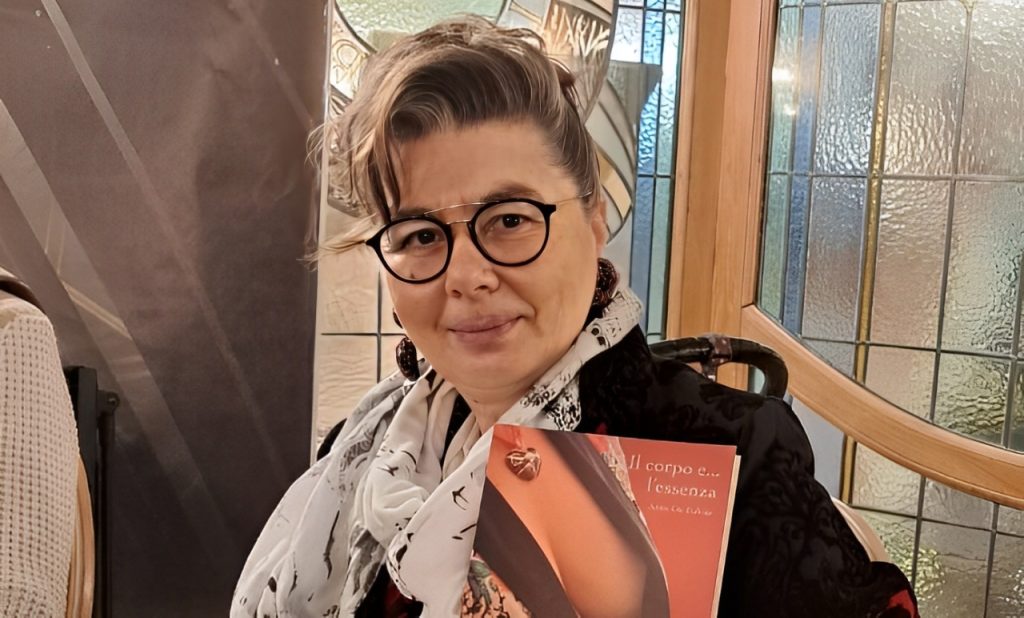
Il corpo e l’essenza (The Body and the Essence), Anna Rita De Fulviis’ evocative poetry collection, published in October 2023 by Imago Comunicazione srl, is a vibrant tapestry of sensory imagery, emotional depth, and cosmic reflection. Comprising 66 poems across 94 pages, this Italian-language collection explores themes of love, nature, loss, and spiritual transcendence, rooted in the poet’s Abruzzo heritage and universal human experiences. Dedicated to her son, Davide, and framed by Seneca’s stoic wisdom, the book is a synesthetic journey that engages the senses, as noted in the preface by On.le Pino Bicchielli. While its vivid metaphors, musicality, and emotional sincerity captivate, minor editorial inconsistencies and occasional overreliance on familiar imagery slightly temper its impact. Nevertheless, Il corpo e l’essenza is a luminous celebration of life’s beauty and pain, ideal for readers of lyrical poetry and those seeking a profound connection with the natural and divine.
Overview and Structure
Il corpo e l’essenza (ISBN: 978-88-945764-6-7) is a compact paperback featuring 66 poems, a preface by On.le Pino Bicchielli, a presentation by the author, and a biographical note. The collection, edited by De Fulviis herself, includes a table of contents (pages 90–91) listing poems alphabetically, such as Armonia, Estate, Il fuoco dell’amore, and Nascita della luna. The book’s design, handled by Imago Comunicazione srl, incorporates photographs by Diego Pomanti and Microsoft Bing-generated images inspired by selected poems. Published in October 2023 with a first reprint in March 2024, it reflects De Fulviis’ prior accolades, including awards from Piramide (1990) and Oltre Aniene (1997/1998).
The poems are untethered by rigid sections, flowing freely between themes: love (Il fuoco dell’amore, Respiri dell’anima), nature (Il bosco, Oceano), loss (Fiumi di sangue, L’angelo della morte), and spiritual unity (Armonia, Il silenzio della terra). Seneca’s epigraphs, such as “È grande chi sa essere povero nella ricchezza” (It is great to know how to be poor in wealth), set a contemplative tone, while the dedication to Davide anchors the work in personal intimacy. The preface praises the poems’ sensory power, likening them to melodies that awaken touch, smell, and sight, while the presentation compares De Fulviis to poets like Alda Merini, Pablo Neruda, and Emily Dickinson for her raw, passionate voice.
Strengths
1. Sensory and Synesthetic Imagery
De Fulviis’ poetry is a sensory feast, as Bicchielli notes, inviting readers to “listen, touch, and smell” her words. In Armonia, she paints nature as a Monet-like canvas: “Armonia / è il colore dei fiori, della natura / che colora con il suo pennello / il campo dalle mille sfumature” (Harmony / is the color of flowers, of nature / that paints with its brush / the field of a thousand shades). The poem’s invocation of Fibonacci’s golden ratio ties earthly beauty to cosmic order, showcasing her ability to blend the tangible and metaphysical. Similarly, A24 captures a starry night on the Rome-L’Aquila highway, where “mani s’intrecciano, si stringono / bocche si congiungono, si baciano” (hands intertwine, clasp / mouths join, kiss) under the Milky Way’s arc, evoking a timeless romance.
Her synesthetic approach—merging sound, sight, and touch—shines in Il bosco: “Nel carezzevole / profumo di bosco / tutto prende coscienza: / versi, canti, suoni” (In the caressing / scent of the forest / everything gains awareness: / verses, songs, sounds). This sensory fusion creates vivid, immersive experiences, making the collection a standout in contemporary Italian poetry.
2. Emotional and Spiritual Depth
De Fulviis writes with unguarded vulnerability, exposing her heart, as the presentation notes: “Anna non si nasconde dietro le parole, ma si espone, si confessa, si dona” (Anna does not hide behind words, but exposes, confesses, gives herself). In Argentea luna, she grapples with unrequited love: “Silenzi colmi di un amore illusorio… Non devi mai sapere che in quelle notti… che solo io ti ami” (Silences filled with an illusory love… You must never know that in those nights… only I love you). The poem’s tender secrecy resonates universally, capturing love’s quiet ache.
Spirituality permeates the collection, blending Christian, pantheistic, and cosmic elements. Dominus envisions four kings at the world’s poles, lamenting human idolatry: “Umanità sconvolta / presi dall’idolatria… senza la Croce al centro del Cuore” (Humanity distraught / caught in idolatry… without the Cross at the heart’s center). Meanwhile, Il silenzio della terra elevates silence to a cosmic melody: “Il silenzio delle stelle / diventa: luce, vita” (The silence of the stars / becomes: light, life). This spiritual breadth, rooted in her Abruzzo upbringing, offers solace and invites reflection on life’s mysteries.
3. Celebration of Nature and Love
Nature is a vibrant protagonist, from the “profumo di bosco” (forest scent) in Il bosco to the “oasi di bellezza” (oasis of beauty) in Oceano. In Estate, summer’s harmony bridges heaven and earth: “La tua armonia / è un ponte: tra cielo e terra” (Your harmony / is a bridge: between sky and earth). De Fulviis’ eco-conscious reverence recalls Neruda’s elemental odes, grounding her work in the physical world while aspiring to the divine.
Love, both human and universal, is the collection’s heartbeat. Il fuoco dell’amore ignites passion: “Ti guardo negli occhi: / sento il fuoco dell’amore / si accende e si diffonde / nell’essenza del mio cuore” (I look into your eyes: / I feel the fire of love / ignite and spread / in the essence of my heart). The poem’s sensory progression—from eyes to embrace to kiss—culminates in a cosmic “urlo eterno” (eternal cry), blending physical and spiritual ecstasy. This intensity, paired with tender dedications to family (Flash back, Rinti pastore tedesco), makes love a unifying force.
4. Musicality and Lyrical Flow
De Fulviis’ language is melodic, with a rhythm that mirrors nature’s pulse. In Respiri dell’anima, the repetition of “Le lingue… Le bocche… Le mani” (The tongues… The mouths… The hands) mimics lovers’ synchronized breaths, creating a hypnotic cadence. Her use of anaphora, as in Diverrei: “Diverrei… Luna, stelle… Sole… lago” (I would become… Moon, stars… Sun… lake), builds emotional momentum, echoing the Cantico dei Cantici’s ardent repetition. The presentation likens her words to “note per comporre melodie armoniose” (notes to compose harmonious melodies), a fitting description of her lyrical craft.
5. Personal and Cultural Authenticity
Born in Abruzzo to a devout family, De Fulviis infuses her poetry with regional and personal resonance. Poems like A24 and Rinti pastore tedesco evoke Abruzzo’s landscapes and her childhood, while Flash back honors her mother’s nurturing presence: “Voce gentile… arrive delicatamente / il mattino, per un dolce risveglio” (Gentle voice… arrives delicately / in the morning, for a sweet awakening). Her awards from Roman literary circles underscore her established voice in Italian poetry, while her comparison to Merini and Leopardi situates her within a rich tradition of introspective lyricism.
Areas for Improvement
1. Editorial and Formatting Issues
The collection suffers from minor editorial oversights, likely due to its small-press production. Stray characters like “$1$” and “$2$” appear on pages 2, 3, 9, 12, 31, 33, 39, 43, 51, 57, 73, 83, 90, and 93, disrupting the reading flow. Typographical errors, such as “antrice” for “autrice” (page 5) and “Mepuro” for “Mapuro” (page 92), and inconsistencies in pagination (e.g., page 94’s fragmented text) suggest a need for rigorous proofreading. Blank pages (e.g., 21, 53, 61, 85) and misaligned page numbers further detract from the book’s polish.
2. Repetition of Themes and Imagery
While love and nature are central, their frequent recurrence—moons, stars, fires, seas—can feel repetitive. Poems like Argentea luna, Luna blu, and Nascita della luna revisit lunar imagery, while Il fuoco dell’amore and Respiri dell’anima echo similar erotic motifs. Greater thematic variety, perhaps exploring urban life or historical narratives, could diversify the collection’s scope and showcase De Fulviis’ range.
3. Overreliance on Conventional Metaphors
De Fulviis’ metaphors, though vivid, often lean on familiar tropes: “fuoco dell’amore” (fire of love), “luna argentea” (silvery moon), “cuore dolente” (aching heart). These can feel predictable, slightly diminishing originality. Incorporating regional Abruzzese idioms or experimental imagery could enhance distinctiveness, especially given her unique perspective.
4. Limited Formal Experimentation
The poems predominantly use free verse with short, declarative lines, creating a consistent but occasionally monotonous rhythm. For example, L’alba and Notte follow similar structures, with minimal enjambment or stanza variation. Exploring forms like villanelles, sonnets, or prose poetry could add dynamism, particularly since her awards suggest formal versatility.
5. Underdeveloped Narratives in Some Poems
Certain poems introduce compelling ideas but lack closure or depth. In Io lo so, the anticipated reunion—“un giorno accadrà / che io e te avvinghiati” (one day it will happen / that you and I, entwined)—remains abstract, leaving readers wanting context. Similarly, Nell’hic et nunc evokes a transcendent flight but ends abruptly: “Cielo e Terra si sfiorano” (Sky and Earth touch). Subtle narrative hints or stronger resolutions could deepen emotional impact.
Personal and Cultural Insights
De Fulviis’ Abruzzo roots ground her work in a rugged, spiritual landscape, evident in references to starry skies (A24) and pastoral memories (Rinti pastore tedesco). Her Catholic upbringing informs poems like Dominus, which critiques human greed through biblical imagery, while her pantheistic reverence in Armonia and Il silenzio della terra reflects Abruzzo’s nature-centric ethos. Her comparison to Merini and Neruda highlights her passionate, feminine voice, while echoes of Leopardi’s melancholic hope resonate in poems like Orme. Personal tributes to her son, parents, and childhood friend Giuseppe add intimacy, making the collection a bridge between individual and collective experience.
Impact and Audience
Il corpo e l’essenza will captivate readers of lyrical poetry, such as fans of Merini, Neruda, or Mary Oliver, for its sensory richness and emotional depth. Its accessible language and short poems suit poetry enthusiasts, students, and those exploring Italian literature. The Abruzzo setting offers a fresh perspective in contemporary poetry, while universal themes of love, loss, and nature resonate globally. The collection’s meditative quality makes it ideal for mindfulness practices or literary discussions on eco-spirituality and human connection.
De Fulviis’ awards and Bicchielli’s endorsement enhance her credibility, positioning the book as a notable indie publication. Its call to embrace love and harmony aligns with modern quests for meaning, amplifying its relevance.
Conclusion
Il corpo e l’essenza by Anna Rita De Fulviis is a radiant ode to the body’s passions and the soul’s essence, weaving love, nature, and spirituality into a sensory symphony. Its vivid imagery, emotional sincerity, and Abruzzese authenticity create a compelling read, despite minor editorial flaws and repetitive motifs. De Fulviis’ voice—ardent, melodic, and unguarded—invites readers to feel the pulse of life and the cosmos. For those seeking poetry that ignites the senses and stirs the heart, this collection is a luminous, eternal embrace worth savoring.