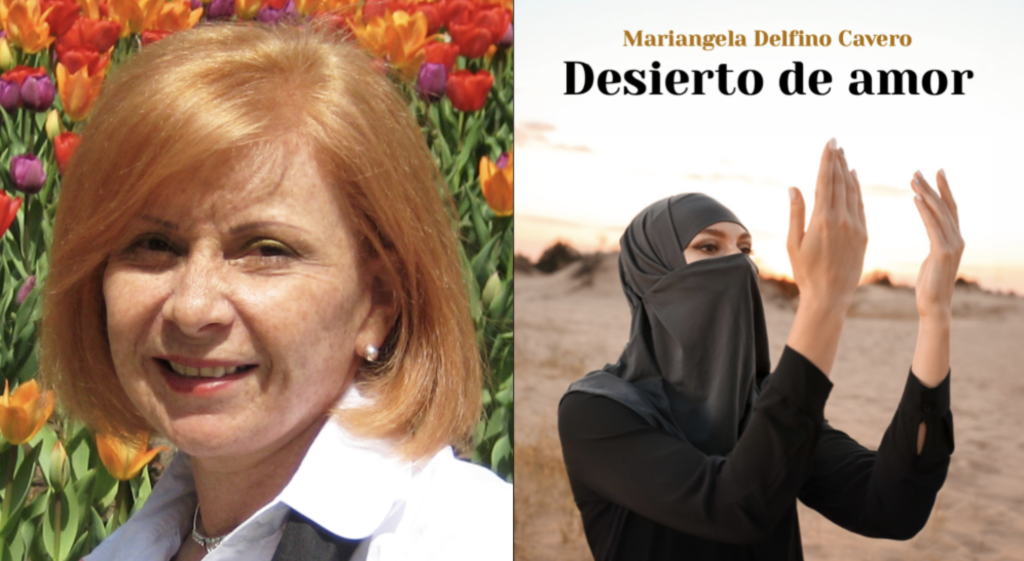
Desierto de amor, a debut Spanish-language novel by Mariangela Delfino Cavero, transports readers to the sun-drenched dunes of Morocco’s Merzouga Desert and the vibrant streets of Málaga and Granada. Published in 2024 by Letrame Editorial, this romantic tale weaves love, loss, and cultural exploration into a heartfelt narrative inspired by the author’s travels. While its vivid settings and emotional depth captivate, the novel occasionally falters with pacing and editorial polish. Ideal for fans of cross-cultural romance, Desierto de amor offers a dreamy escape with a rich cultural tapestry.
Overview and Structure
The novel centers on Hassna, a young Berber girl of Arab descent living in Málaga, Spain. After losing her parents in a tragic plane crash at age eleven, Hassna navigates grief, displacement, and adolescence under the care of her uncle Manssur and his wife Lalla in Granada. Her journey takes her from a boarding school, where she bonds with her friend Rania, to a romantic connection with Hamid, a Berber guide inspired by Cavero’s real-life encounter in Morocco. Their love story, set against the Sahara’s golden sands, culminates in a traditional wedding, symbolizing a “desert of love.”
Structured chronologically, the novel blends Hassna’s personal growth with detailed cultural insights. Cavero’s preface outlines her inspiration from travels across Málaga, Granada, Fez, Chefchaouen, and Merzouga, grounding the fiction in real locations and customs. The narrative incorporates Moroccan wedding rituals, Berber-Arab cultural dynamics, and a fictionalized subplot based on a real tragedy in Imlil, adding depth but occasionally disrupting the romantic tone.
Strengths
1. Vivid Cultural Immersion
Cavero’s firsthand experiences infuse the novel with lush, authentic descriptions. The Sahara’s “golden sand” and “star-speckled nights” create a dreamy backdrop, while Málaga’s Malagueta beach and Granada’s Alhambra evoke Mediterranean charm. Detailed portrayals of Moroccan customs—such as the hotoba (engagement ceremony), henna rituals, and the exchange of milk and dates—offer an educational glimpse into Arab and Berber cultures. These elements double as a travelogue, fulfilling Cavero’s goal to inspire cultural exploration.
2. Emotional Depth
Hassna’s evolution from a grieving child to a resilient woman forms the novel’s emotional core. Cavero captures raw pain, as seen in Hassna’s reaction to her parents’ death: “Her small being drowned in an avalanche of uncontrollable feelings.” The complex dynamics between Hassna, Rania, and Hamid, particularly Rania’s poignant confession of love, add layers of sensitivity and depth, handled with restraint and authenticity.
3. Romantic Narrative
The romance between Hassna and Hamid is a classic love story with a cultural twist. Their chemistry, sparked in the desert and tested by misunderstandings, builds to a satisfying climax during their traditional wedding. Cavero’s lyrical prose shines in scenes like their Sahara honeymoon: “They rode for hours on dromedaries through the golden sands, where kisses and caresses melted into the lunar reflections.”
4. Personal Touch
Cavero’s preface and acknowledgments lend warmth and authenticity, grounding the fiction in her real-life inspirations. Her gratitude to her Moroccan guide, Hamid Tagchloui, and her daughter-in-law for designing the cover reflects the novel’s personal significance. This transparency enhances its appeal as a labor of love.
Areas for Improvement
1. Pacing and Length
Spanning over 200 pages, the novel suffers from uneven pacing. Early chapters dwell on Hassna’s grief and boarding school life, slowing the narrative, while romantic developments later feel rushed. Tangential details, such as lengthy descriptions of minor settings or customs, disrupt the flow. Streamlining these sections could sharpen the focus on the central romance.
2. Editorial Issues
Typographical errors, inconsistent formatting (e.g., repeated phrases like “Hermano mio” on page 188), and awkward phrasing—likely from OCR or proofreading oversights—detract from the experience. Terms like “pron+-” and “economics” (instead of “emerging”) suggest editing lapses. A revised edition could address these issues for a smoother read.
3. Character Development
While Hassna and Hamid are well-developed, secondary characters like Manssur and Lalla lack depth. Manssur’s abusive behavior toward Lalla is introduced but unresolved, and Rania’s complex feelings for Hassna emerge late, limiting their impact. Greater focus on these characters could elevate the emotional stakes.
4. Limited Accessibility
The novel’s reliance on Spanish and Arabic terminology, while immersive, may challenge readers unfamiliar with these cultures. A glossary or footnotes could enhance accessibility without compromising authenticity.
Personal and Cultural Insights
Cavero’s passion for travel enriches the narrative with meticulous details about Berber hospitality, the historical Arab-Berber interplay, and Moroccan landmarks like the Atlas Mountains. Social dynamics, such as the stigma faced by Hassna’s mother, Izza, for marrying above her class, and Lalla’s patriarchal constraints, ground the romance in a broader context, though these themes are underexplored. The inclusion of a real-life tragedy (the Imlil murders, fictionalized) feels jarring against the romantic tone, blurring the line between fiction and memoir.
Impact and Audience
Desierto de amor appeals to readers who enjoy romantic novels with strong cultural settings, such as fans of Paulo Coelho’s The Alchemist or Khaled Hosseini’s A Thousand Splendid Suns. Its travelogue-romance blend suits those interested in Moroccan culture or cross-cultural love stories. However, language-specific nuances and editorial flaws may limit its international reach unless addressed in translation. The novel entertains while educating, achieving Cavero’s aim to inspire cultural curiosity.
Conclusion
Desierto de amor is a heartfelt debut that marries a tender love story with a vibrant portrayal of Moroccan and Spanish culture. Mariangela Delfino Cavero’s evocative prose and personal connection to the settings create an immersive experience, despite pacing and editorial hiccups. Hassna’s journey from loss to love, set against the Sahara’s timeless beauty, resonates as a testament to human connection. With refinement, this novel could shine brighter, but it remains a compelling read for romantics and cultural enthusiasts.