Writers International Edition

weadmin

A Review of ‘An Encounter with Death’ by Bhawani Shankar Nial

Death, like Eros, is one of the themes privileged by literature, which describes it, places it in a complex system, invests it with ethical and symbolic values. In contemporary poetry, it often happens to cross the vision of man as a being in transience, as a being in provisionality, for whom existence is not obvious. In the West, facing the theme of death is still taboo, because it is constantly removed. Of all the types of fear, the most subtle and stubborn is that of death. Overcoming it means freeing oneself from all the others. We are made of matter, we have a body, but it is only a tool, a means of expression, it is not our “I”. When we will realize that we are a spirit that guides the mind, uses the body and lives regardless of it, death will no longer be a cause of great fear. In the origin of Christianity, the rebirth of the soul was an important part and represented an essential piece of the Christian faith, but later the Fathers of the Church, in the Synod of 543, decreed that all those who spoke of the transmigration of souls from one body to another would be excommunicated. If there is a direction that contemporary poetry should take, it is undoubtedly that of a reconstruction of a lost humanism, in order to help man to ask himself questions, redesign himself, self-transcend, seek a “beyond” and to re-comprehend the relationship between life and death. In the anthology An Encounter with Death edited by Bhawani Shankar Nial, the poem speaks of death not as a theme, but with the awareness that man is a being for death and therefore cannot undress this possibility, indeed this is the truly human possibility because man can or cannot make use of the other possibilities, but death is support to him and therefore it is a possibility that man cannot shake off. And therefore, thinking about death does not trivialize life. Because when you trivialize death, you trivialize life. And death can be trivialized when it is seen as a random event (one dies by chance); when it is seen as a public event (everyone dies); or when it becomes a biological process (cells no longer reproduce, therefore one dies). The sacred text of the Bardo Thodol known as the Tibetan Book of the Dead, invites us to reflect on the value of death which is not the end of life but only a crossing into another dimension where nothing ends but everything continues, is transformed and reborn. The word Bardo takes on the meaning of passage, transition, we could define it as a door of passage. In this Tibet, together with ancient Egypt with the Book of the Dead, is the only country in the world to have dedicated itself to interior exploration, to the search for that treasure chest that is hidden in the human being. St. Augustine in his 4th century letter 263 to Sapida will say:

Death is nothing. I have only passed
on the other side: it is as if I were hidden in the
next room.
I am always me and you are always you. What we
we were before for each other we still are.
Call me by the name you have always given me,
that is familiar to you; talk to me in the same
Affectionate as you have always used.

Thinking about death opens man to the most authentic human life, as it takes him away from despair and brings him back to unity; the man who at every moment knows that he may fail does not disengage, but tries to live an authentic life, instead of despairing, of letting himself be absorbed by things, by the facts that happen, he tries instead to dominate them. The poet who digs with the word, will sense that the thought of death opens man to the most concrete life, taking him away from the immediate and inauthentic possibilities, such as following what he likes, the childish teasing of many, living lightly. I believe that this is the ultimate goal of the anthology and that the poet is a voice along with others who fights for the things he believes in without trivializing life whenever he lives anonymously and politically.

Anita Piscazzi
Paris, France

Anita Piscazzi, poeta, pianista e ricercatrice. Si occupa di studi etnomusicologici e didattico-musicali, in questo settore ha pubblicato due monografie e numerosi saggi su riviste scientifiche italiane ed estere. Sue sono le raccolte poetiche: Amal (Palomar,2007), Maremàje (Campanotto,2012), Alba che non so (CartaCanta,2018) eFerma l’Ali, cd poetico-musicale (desuonatori, 2020). È in “Ossigeno Nascente” (Atlante dei poeti contemporanei italiani a cura del Dipartimento di Filologia Classica e Italianistica Alma Mater Studiorum – Università di Bologna), in Almanacco dei poeti e della poesia contemporanea (Raffaelli,2018), in diverse antologie tra cui Umana, troppo umana (Aragno, 2016),in blog letterari e sulle piattaforme di registrazioni fonetiche dei poeti contemporanei nel mondo, come “PoetrySoundLibrary” di Londra e “Voices of Italian Poets” dell’Università di Torino. Tradotta in varie lingue e in spagnolo da Emilio Coco in Poesìa de ida y vuelta/Poesie di andata e ritorno, (Prosa Amerian Editores, Argentina 2013). In georgiano da Nunu Geladze in Quando i paesi dormono, (La vita felice,2019). Impegnata in festival letterari, poetico musicali sia in Italia che all’estero, è stata ospite al Tblisi International Festival of Literature 2019 in Georgia. È premio Isabella Morra 2017 e premio InediTO 2017. Sue poesie sono state interpretate da Lella Costa al Salone del libro di Torino nel 2017, su SanMarinoRTV e su RaiRadio3. Ha collaborato ai progetti poetico-musicali : “Alda e il soldato rock” con Eugenio Finardi e Cosimo Damiano Damato, “Ferma l’Ali” con Michel Godard e al progetto teatrale: “Miss Kilimangiaro” in Kenya per “Avis for Children” con Lidia Pentassuglia.Collabora per diverse riviste poetico-letterarie e cura la rubrica di musica e dipoesia del “SimposioItaliano”, revue culturelle française bilingue.

A Review of ‘An Encounter with Death’ by Bhawani Shankar Nial Read More »

A brief look at a famous phrase ‘Every man ends up killing what he loves’

The phrase was used by Oscar Wilde in his poem “The Ballad of Reading Gaol” and is an allusion to Shakespeare’s “Merchant of Venice”, in a paraphrase in Wilde’s typical and ironic way. In this work, Bassiano asks “Do all men kill what they love?” and Oscar Wilde made it his most famous and contradictory verse.
 
If we want to analyze this phrase, we must read the rest of the poem or at least the central stanza:
“… However, each man kills what he loves […].
Some do it with a sour look
Some with a flattering word.
The coward does it with a kiss;
The brave man with a sword…. ”
It is obvious that the poet wants to link love – in its most extreme meaning, painful and perhaps desperate and forbidden – with a dangerous potential that can drive a man to madness, or worse, to death. And be it himself or the person he loves. The reference to Othello perhaps who killed his adored wife, or to the cowardice of Judas who denounced Jesus with that kiss of the most notorious betrayal, which without equal has righteously been considered as the most horrendous betrayal of all history; Romeo’s bitter gaze at his lover and at the whole world when he saw the dead body Juliet right before he drank the poison to be together with her, and the same kind of antemortem gaze of hers that saw nothing alive around her after her precious Romeo had died, ending up killing herself with his own dagger to follow him into eternity.
 
Of course, there are cases in which someone begins by expressing his love, towards his adoration, and ends up destroying the thing, the person or the adored idea. Nietzsche, for example, the German philosopher, wanted to elaborate on the phenomenon of Jesus, his miracles, his love for all humanity and ended after so much analysis by declaring that God does not exist or is dead, surprising negatively in addition to his religious and conservative family, the entire society of his time, the church, and the world of literature and philosophy. And he keeps doing it!
 
When it comes to love within a couple, everything can start as an omen for a miraculous, unconditional and eternal love, but over time it can turn into a nightmare due to selfishness, lack of communication and respect, simply because of daily problems or routine. That means the end of love, i.e. its death, at the hands of the lovers or at least by one of the two. Because pride, arrogance and arrogance lead to alienation and ultimate breakup.
 
Finally, there is the path that leads to the end, and that is the death of oneself, that is by means of suicide. It is the way to end the greatest gift that God or the universe has given to man, that is, one’s own life. It may be that one does it out of disappointment, out of despair, or to free oneself from a tormenting situation; out of the desire to escape from a tragic and unbearable life equaling to bodily torture. Regardless of the objective or the cause, the person who points the weapon, the sword or the dagger against oneself, ends up killing what he probably loves the most – or in the end hates the most – that is, one’s own life. Because according to the same famous and popular poet, Oscar Wilde, only great loves are of short duration, killed at last for their fullness; while superficial loves, like superficial sorrows too, are of long duration.
The man had killed the thing he loved
  And so he had to die.
Yet each man kills the thing he loves
  By each let this be heard,
Some do it with a bitter look,
  Some with a flattering word,
The coward does it with a kiss,
  The brave man with a sword!
Some kill their love when they are young,
  And some when they are old;
Some strangle with the hands of Lust,
  Some with the hands of Gold:
The kindest use a knife, because
  The dead so soon grow cold.
Some love too little, some too long,
  Some sell, and others buy;
Some do the deed with many tears,
  And some without a sigh:
For each man kills the thing he loves;
Yet each man does not die.

The Ballad of Reading Gaol
Oscar Wilde – 1854-1900

Short Biography

Oscar Wilde was born in Dublin, Ireland, on October 16, 1854. He attended Trinity College, Dublin, from 1871 to 1874 and Magdalen College, Oxford, from 1874 to 1878. At Oxford, he received the Newdigate Prize for his long poem Ravenna (T. Shrimpton and Son, 1878). He also became involved in the aesthetic movement, advocating for the value of beauty in art.
 
Article by Irene Doura-Kavadia
© Irene Doura-Kavadia
Linguist-Author-Educationist
Editor-in-Chief, Writers Edition


A brief look at a famous phrase ‘Every man ends up killing what he loves’ Read More »

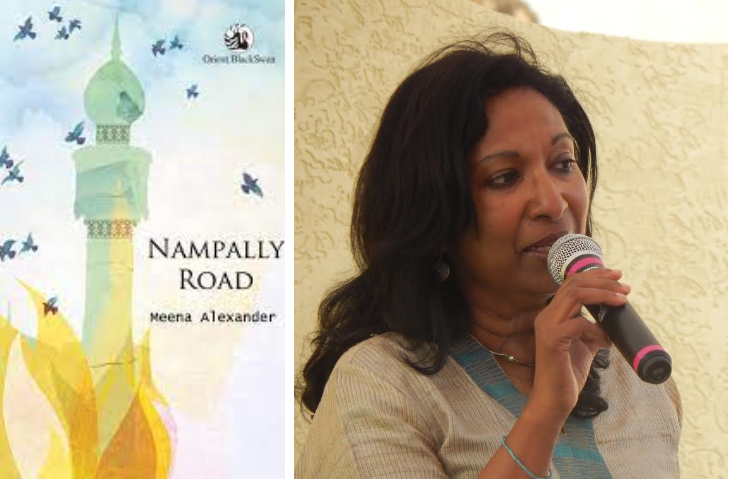
Sense and Sensibility of Women in Meena Alexander’s ‘Nampally Road’

Women in the patriarchal society are subjugated and pulled towards the periphery by male chauvinistic writers. Feminist writing challenges the dominant literary tradition through negotiating power and marginalises women’s experiences and identities. Many feminist writings are focused on women’s experiences in their family, society and relationship. If a woman writer paints her own portrait by her it appears to be looking into the mirror to see her where the images she sees provoke her to contrastic and unpredictable responses to her own body and face. A woman is very much concerned about her appearance which brings the feeling of uncomfortable and security because that is the way they are judged by others. As a writer, Alexander strives for freedom within the world of patriarchal society through her writings. She tries to break down the existing patriarchal society and creates a space for herself in the world of male chauvinism. In her works, Alexander presents multi faces of women as mothers, political activists and victims of patriarchal society. She has also presented the social and political sense of women which provides the rules and regulations for women. 

Alexander brings out strong female characters in her novel Nampally Road, such as Mira, Durgabai, Raniamma, Laura, Maitreyi and Rameeza Be. These women characters represent the different sensibility of women in different classes. Alexander portrays Mira as a sensitive college teacher, Durgabai as a compassionate doctor, Maitreyi as a courageous sweeper and Rosamma as a communist worker. Through the strong and independent feminine images, Alexander tries to discover the place of women in society by altering the traditional boundaries drawn by patriarchy. Alexander explores the significance of women through the character Durgabai, who is a kind, loveable, sympathetic and compassionate widow. She has a son who lives abroad for his education. Formerly she was the head of Hyderabad Center for Children’s Diseases where she has served for thirty long years. Even in her old age, she is not free, “she scarcely had time to rest” (Nampally 18) which reveals her enormous power of work. She is running her clinic under “a tin roof in one of the poorest parts of town” (Nampally 17) but she does her service for nothing. For instance, once a man, who is a widower from the hill region, brings a boy, who is attacked by a leopard on the hill to treat his wound. He is so poor, the wound in the boy’s forehead is so huge and it is like a hole which reaches the brain and maggots are crawling over the tissues of knowledge. Durgabai knows that the child will not survive because the brain has been damaged a lot but she is so sympathetic towards the boy. Sometimes her job is to deliver babies from unwanted pregnancies where she is compassionate towards the “Woman in trouble, rapped or saddled with an unwanted pregnancy” (Nampally 16). She is sympathetic towards them and builds up the spirit of those women by saying “Shame doesn’t last” (Nampally 16). Hence Alexander wishes for the transformation of India, through the character of Durgabai, and so significantly claims, “A new India is being born” (Nampally 16). The protagonist, Mira, a twenty-five-year-old young girl, lives with Durgabai in her house, as a paying guest. She treats her as if she is her own daughter and Mira adopts her as a surrogate mother. Mira calls Durgabai “Little Mother” (Nampally 16) and shares everything with her. Like a mother, Durgabai loves Mira and takes care of her and also she gives shape to her valuable ideas. So Durgabai not only appears to be a mother of Mira but of the entire people of India. Alexander tries to explore the significance of the attachment of female characters in her novel. Mira’s relationship with Durgabai helps her a lot in times of distress. Mira seeks emotional refuge and “guidance in her attempts to assimilate this new experience – this ‘poetics of dislocation’” (Dutt 225). As Mira is loved and taken care by the little mother, Durgabai, cultivates values within her. Little mother’s motherly affection is explicit through the small boys in the bicycle shop who sleeps on the pavement. Little mother wraps themselves with rags and feels happy in treating the ailments of these boys. Like a mother, she also feels about the amount of food which they used to take and she says, “They eat so poorly. A bit of rice, or roti and some dal if they’re lucky” (Nampally 19). This brings out her sympathy and concern for the poor child. According to Sasikanth, “the little mother, perhaps, is symbolic of Mother India. The symbolism is made evident when Durgabai suffers from illness as the city goes through commotions and atrocities carried out in the name of politics” (141).

Like Alexander, Mira writes poems, but she has never published them. Ramu, who is her friend, lover and colleague of Mira mocks her writing. He says that there is no use in writing poetry at this juncture of trouble in the society, instead advises her to be a woman of action. Here Alexander focuses on thinking about women think about gender. Thereby she introduces the idea that the women’s question is structurally necessary to our society and politics. The critic Joseph points out that, “she attributes all the vandalism and crime against women and other subalterns to the corrupt system” (59).

After the colonization, native women are marginalized by their sex as well as by virtue of their relative economic oppression and gender subordination. In every aspect, women are dominating and they are easily dehumanized, exploited and sexually abused by the male. Indian women still liver under the shadow of patriarchal tradition that women should be subordinate to the male and this develops violence against women. Rameeza Be is another woman character, who attains sympathy and concern from the readers. Here Alexander gives a fictional form to a true episode of the rape of a Muslim woman, Rameeza Be. On March 30, !978, at night when they return from celebrating Isak Katha in Sagar Talkies, a gang of drunkard policemen has raped her and her husband is beaten to death. They killed him because he refuses to pay four hundred rupees to the police. The drunkard policemen drag her to the police station and rape her. They also beat her for the whole night. The dead body of her husband is, later, found in a nearby well. She is raped by the policemen, who are the custodians of law and order in society.  Apart from Maitreyi, the portrait of Gandhiji and Nehru, the great freedom fighters of India are the only silent witnesses of this brutal incident in the prison cell. Though she is beaten cruelly to death, she is still alive miraculously. She is rescued by the infuriated community from the cell and they set fire to Gowliguda police station. Even though they have tortured her heartlessly, the radio news declared her a “source of turbulence” and “rewards were announced for finding her” (Nampally 59). Maitreyi rescues her and helps her to get into her normal life gradually. Durgabai, Mira and Maitreyi console the bleeding Rameeza Be Mentally and physically.

Maitreyi is the cleft-lipped sweeper woman, who rescues Rameeza Be from the police station and treats her in a safe place. Maiitreyi herself is a victim of society’s insatiable greed and abuse of power. She is the daughter of Pithulbai and an unmarried woman whose family has had a peacock garden earlier, which is attracted by Nizam of Hyderabad. As they don’t have the physical power to protest against Nizam taking all their land and property. Now she leads her life in poverty in a small hut near King Koti. Apart from being a sweeper, she is a snake keeper who knows to extract poison from snakes and helps her in times of distrust and poverty in her life. Though she belongs to the upper class, she suffers from poverty. Even though she is poor, she hasn’t afraid of being a witness to this shameful incident of Rameeza Be.

Rosamma is a memorable character in Nampally Road, who is a  Marxist leader from the hill country. She attends a meeting which is arranged to take revenge on Rameeza Be’s attackers. Through this, she tries to instigate the furious nature of the people and cries out: “overcome oppression, down with chains” (Nampally 89). Further, she teaches them to take the knife of justice and the value of resistance to injustice and tries to attain it through revolution.

On the one side, women are suffering under the patriarchal society whereas on the other side women try to happy life imposed on themselves. Alexander represents it through the character of Laura and Rani. Laura is the neighbour to Durgabai and Rani is Durgabai’s servant. Both of them have spent their time in talking about film stars and movies in Sagar Talkies. Laura’s husband Henry is a drunkard who has used to beat her. This reveals that women are still in the clutches of a male-dominated society. Again an old woman, who is a cobbler suffering from leukoderma, has been doing her work without bothering about the birthday celebrations of Limca Gowda. Though she does not harm anybody, she is threatened by an Ever Ready man. But she doesn’t mind him and is sincerely concentrating on meeting the broken chappals of Mira. Finally, a policeman stares at her and “kicked some of her leather scraps into the gutter and then walked away, lathi in hand” (Nampally 102). But the old woman is calm and continues to do her work. Her attitude towards the policemen, makes Mira realises her inability.

Finally, Mira, as an educated woman, drives her strength for action from the subaltern voices. She also accepts the words of Rosamma that “You must not be afraid to use knives. How else should we reach the new world?” (Nampally 90). The words of Rosamma have boosted her to raise her voice for the subaltern people. Mira understands that the marginalized have to sustain their anger and one day they will reap justice, liberty and equality. Alexander makes great use of the dreams of women in her writings. Little mother is acquainting Mira with a dream in which she stands as both a trap as well as a liberating force. Through the dream of Mira Alexander explicates the insecurity of female existence in the oppressive male-dominated society. Mira narrates her horrible dream to Little mother:

‘I had a dream last. I was clutching the edge of a great pyramid made of bricks. The bricks were all jagged, all askew as if the pyramid were immensely old, or had been made by an unskilled labourer. But the bricks were not really bricks. I realized this as I held on for dear life. There was black water rushing all around me, and the water was climbing higher and higher. The bricks were alive. They were made of flesh. Human flesh. And they had voices that cried out in a tumult of tongues. As the water rose bit by bit, I struggled to climb higher. And far away as the eye could see was water, black water. Until to the right, all of a sudden I saw a small fire, rocking in that water. And then the fire grew and it invaded the water, and took dominion over it, and approached the pyramid where I still clung with all those crying voices of flesh. I couldn’t bear it. I tried to wake up (Nampally 65)

The bricks in the dream are not bricks but human flesh. They are a highly evocative symbol of suffering women who try to build their life, but on every side, they are battered and overcome by the black waters of patriarchal hegemonic force. The saving grace is the fire, which invades the black waters which is all-consuming, but it glows in the darkness and signifies the awakening spirit of women.

Alexander questions the value of the non-violence of Gandhi because it almost fails to bring a change in the lives of the poor and the subdued as seen in the life of the cobbler woman. Unless the woman takes up the “knife of justice”, (Nampally 90) there is little chance for freedom and justice. The subaltern must speak and then they must go for action, like the women from a village, Rosamma and Maitreyi. Basu writes that “Alexander suggests a path of recovery and healing through female solidarity and friendship” (11). Through the woman characters, Alexander defies the patriarchal society and motivates them to forbid a particular place in society. As a feminist, alexander “aims at liberation of women from male domination and at the promotion of their rights” (Pandey 12). Further she “demands a humanistic attitude towards women” (2). Hence women can get over the shackles of patriarchal society through friendship and hand in others’ problems.

Works Cited

Alexander, Meena. Nampally Road. Chennai: Orient Blackswan, 1992. Print.

Basu, Lopamudra and Cynthia Leenarts. Passage to Manhattan: Critical Essays on Meena Alexander. UK: Cambridge Scholars Publishing, 2009. Print.

Dutt, P. Kiranmai. “A Reader Odyssey into Meena Alexander’s Nampally Road.Indian Women Novelists: Set III: Vol.3. Ed. R. K. Dhawan. New Delhi: Prestige Books, 1995.225-28. Print.

Joseph, Mariam Kuruvilla. The Diasporic and Feminist Consciousness in Meena Alexander. Kerala: Comparative Literature Research and Study Centre, 2002. Print.

Pandey, Miti. Feminism in Contemporary British and Indian English Fiction. New Delhi: Sarup and Sons, 2003.Print.

Sasikanth, K. John Wesley. “The Plight of Women in Post Colonial India as Portrayed in Meena Alexander’s Nampally Road.” Research Journal of English Language and Literature 1.1 (2013): 139-42. Print.


Subitha K
Research Scholar, Scott Christian College, Nagercoil – 3
Affiliated to Manonmaniam Sundaranar University
Abishekapatti, Tirunelveli-627 012

Dr.J. Chitta
Assistant Professor of English
Research Scholar, Scott Christian College, Nagercoil – 3
Affiliated to Manonmaniam Sundaranar University
Abishekapatti, Tirunelveli-627 012

Sense and Sensibility of Women in Meena Alexander’s ‘Nampally Road’ Read More »

Countdown begins for Panorama International Literature Awards 2022

While just a few hours are left for announcing Panorama International Literature Awards, suspense is in the air as writers and literary enthusiasts eagerly await the year’s grandiose event honouring writers. The awards instituted by the Writers Capital Foundation are dedicated to the best entries during the Panorama International Literature Festival held from 1-31 January this year.

“Compared to previous years, the competition was tough this year, and so was the selection process,” said the jury. “There were more than four hundred participants from across the world where most of the works exhibited superior quality with reference to the theme ‘Shoonya: The Celestial Void’,” the jury added.

Along with Panorama International Literary awards, Writers Capital Foundation Global Icon of Literature and winners of Panorama Golden Book Awards will also be declared.

The awards are instituted in 4 categories – Panorama Golden Award for the best presentation, Panorama Literary for the best 15 entries, Panorama International Youth Awards for  10 writers from the youth category, Special Jury Awards for 10 writers and Panorama International Prodigy Award for the best in children’s category. Along with Panorama International Literary awards, Writers Capital Foundation Global Icon of Literature and winners of Panorama Golden Book Awards will also be declared.

The Panorama International Literature Festival and Panorama International Arts and Sculpture Festival (PIAF) are signature programmes of the Writers Capital Foundation to help spread humanitarian values across the globe. PIAF 2022 will be conducted from 1-31 of July with the theme War & Peace, said the organisers.


Countdown begins for Panorama International Literature Awards 2022 Read More »

The 11th International Archaeological Film Festival kickstarts in Athens

Athens (Greece): The 11th International Archaeological Film Festival of Games with the theme ‘Ecumenical Community’ is being held in Athens. The programme that started on May 10 will continue till May 16. As many as 58 Films from 15 countries will compete for the established prizes of the 11th International Games of Archaeological Film Festival.

The event was inspired and established by the director Memi Spyratou and is implemented by the Urban Non-Profit Culture Company Odyssey in collaboration with the Movie of Greece and the International Council of Moulimos. The screenings will take place at the Lais cinema of the Greek Film Archive from 10 to 15 May 2022 while the Awards will be declared at the Olympia Municipal Music Theater ‘Maria Callas’ on May 16, 2022.

The 11th International Festival of Archaeological Film AGON is under the highest auspices of SA . of the President of the Republic Mrs. Katerina Sakellaropoulou and of His Excellency the President of the Republic of Cyprus Mr. Nikos Anastasiadis. It is carried out with the financial support of the Ministry of Culture, EOT of the Attica Region and the Municipality of Athens.

The lifetime achievement award will be presented to Greek director Costas Gavras for his overall contribution to the cinema. The festival will also honour Mikis Theodorakis. During the Festival, works by Kaiti Mavrommati entitled Alexandria – Athens is being exhibited in the foyer of the Greek Film Archive.

The 11th International Archaeological Film Festival kickstarts in Athens Read More »

Caring: Painting by Anika Gupta

Anika Gupta is 8 Years old, in 2nd grade. She lives in USA. She is a brilliant student (throughout A+). She loves art, reading, and is very curious to know and learn about new things. She has participated in many countries- Azerbaijan, Brazil, Dominican Republic, India, USA, Iran, Ecuador, Egypt, Mexico, Peru, Tunisia, Turkey, UK, Ukraine etc. Recently she participated in many international online art events/ exhibitions like Guinness Book of World record event.

Caring: Painting by Anika Gupta

Caring: Painting by Anika Gupta Read More »

Language of Silence: Painting by Dr. Mahima Gupta

Dr. Mahima Gupta, a Guinness World Record Holder, High Range Book of World Records Holder, Kalam’s World Records, Extraordinaire World Record Holder, Marvelous Book of Records Holder, India Records Holder, a freelance artist, curator is originally from India, now based in Florida, USA for almost 2 decades. She has a Ph.D. in Drawing & Painting from the University of Rajasthan. Jaipur, India. Her topic for Dissertation was, “Leisure in the Arts through the Ages: A comparative study of the themes on Leisure in Indian and European Painting with special reference to 16-19th century” (2006). She did her M.A. in Drawing & Painting, where she was the University Topper and Gold Medalist, with First Division & First Position (1997-1999). She also holds a degree in B.F.A. (Painting), from Rajasthan School of Arts, Jaipur, India (1993-1997). Mahima was a proud recipient of the prestigious University Grants Commission of India (UGC) Junior & Senior Fellowship for Doctoral work (2000-2005). She was also awarded the Rajasthan Lalit Kala Akademi Student Scholarship (1998-1999). Mahima was awarded at the 10th Kala Mela organized by the Rajasthan Lalit Kala Akademi, Jaipur, India (2002). Also awarded at the All India Exhibition of Arts, by Indian Academy of Fine Arts, Amritsar, India (2001). Mahima is a proud recipient of the Bhoor Singh Shekhawat Memorial Padamshree Kripal Singh Shekhawat Award (1998).
She was also awarded the Akhil Bhartiya Vidyarthi Parishad’s appreciation award (1999). Dr. Mahima’s article, “Mapping Leisure Across Borders Through the Art in Painting”, was published in the book, ‘Mapping Leisure Across Borders, published by Cambridge Scholars Publishing, UK (2013). She was invited for the presentation of the paper at the xvii World Congress of Sociology of the International Sociological Association, Gothenburg, Sweden, (July 10-17, 2010). She also participated in the Indian Sociological Society’s xxviii All India Sociological Conference, Main Theme ‘Globalization and the Indian Society’, held at IIT Kanpur, India (Dec 18-20, 2002), and presented her paper entitled, ‘Leisure in the Arts: A Socio Aesthetic Analysis of the themes on Leisure in Painting’. Mahima also participated in the WLRA World Congress on the theme ‘Leisure, Tourism and Environment: Issues for Human Development’ organized by World Leisure and Recreation Association in collaboration with Indian Leisure Studies Association and UNESCO at Jaipur, India (1993). Her fibreglass installation “Azure Delight” was displayed in Harrisburg, Pennsylvania-USA, for over a year & was sponsored by the PNC bank for the Kite Fest (2006). She recently had a solo virtual art exhibition, Joy Story, ‘Splashes of happiness’, New Delhi, India (2021). Artraaga, India another online solo show, Euphoria. Her paintings have been printed on the covers of several national and international books and magazines, prominent among these are L’Archive des Origins (2008), France and new books catalogue, Transaction Publishers (1962-2003), Rutgers University, NJ, USA, “Human Values & Social Change”, (2000) Rawat publications Jaipur, India. Mahima has participated in many art exhibitions in more than 45 countries, to name some, Argentina, Austria, Australia, Azerbaijan, Bangladesh, Bhutan, Bolivia, Canada, Chile, China, Costa Rica, Cuba, Ecuador, Egypt, Germany, Guatemala, Honduras, Hungary, India, Iran, Jordan, Kosovo, Korea, Libya, Malaysia, Mexico, Morocco, Nepal, Nigeria, Norway, Pakistan, Palestine, Panama, Paris, Peru, Philippines, Russia, Slovakia, Syria, Thailand, Taiwan, Tunisia, Turkey, UK, Uruguay, USA & Venezuela. Her private collections are in India, Canada, Egypt France, Jordan, Peru, Mexico, Turkey, USA, and The Netherlands. She has worked in many different art styles/mediums. She has also received many awards from National and International art exhibitions. Her artworks & articles have been published in many art magazines, journals & books.

Mahima is a nature lover and loves travelling, dancing and is fascinated by the Primitive and Folk/Tribal art of India. Mahima’s artworks have been published widely in many international books magazines, to name a few, Arthole- Issue 7 & 8 (UK), Revista Coup (Mexico), Revista Escafandra, Mexico, Revista Rito (3 times) Mexico, Periodico Poetico: Issue 17, South East Asian Artists Magazine Vol 2 Issue No 5 (Phillipines), Contemporanea Un Rosso (Italy), 21 Expressions magazine- Faculty of Fine Art ASWAR (Malaysia), Creativity Unquarantined-By Speaking Art Foundation (India), Revista Doblevoz.

Painting: CARE by Dr. Mahima Gupta
Painting: Language of Silence by Dr. Mahima Gupta


Language of Silence: Painting by Dr. Mahima Gupta Read More »

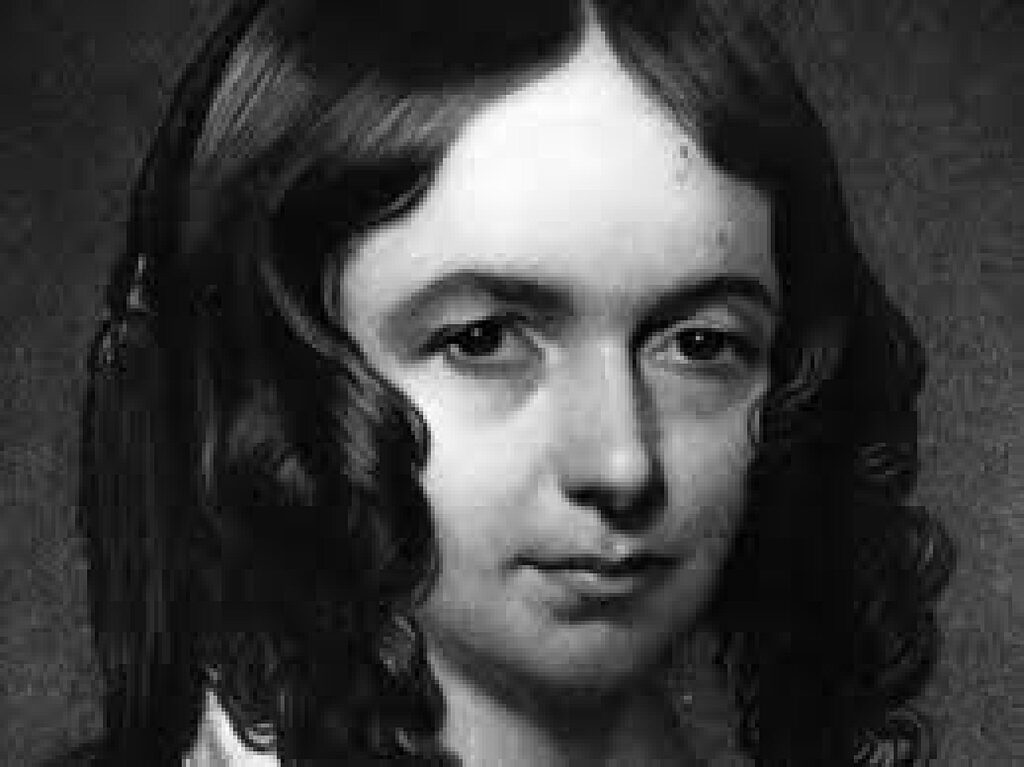
Elizabeth Barrett Browning

‘DARLING, PLEASE DON’T LEAVE ME ANYMORE’

Leading Victorian writer Elizabeth Barrett Browning is as known for her enduring love for Robert Browning (immortalised in their letters to each other) as she is for her lyrical Romantic poetry. After her mother’s death in 1828, Barrett Browning moved with her father from the family estate in Herefordshire, first to Devon and then to London. There, her cousin, John Kenyon, introduced her to many of the leading writers of the day, including Coleridge, Wordsworth and Tennyson. For her mid-teens, Barrett Browning had suffered from a mysterious illness that resulted in severe headaches and limited mobility, but she directed all of her energy in writing the outstandingly beautiful poems for which she became famous. In 1844, Barrett Brownings’collection Poems brought her public acclaim and also to the notice of Robert Browning, a young poet, who began corresponding with her. The couple finally met in 1845 and their courtship began in earnest, although it was carried out secretly.

The couple had a profound influence on each other’s writing and their love for each other is revealed in the lovely letters they exchanged with each other, even after their marriage. They honeymooned in Paris and then made their home in Italy, where they resided until Barrett Browning’s death on 29 June 1861. She died in her husband’s arms.

‘I have no words for you, my dearest … You are mine, I am yours’


Sunday.

I have no words for you, my dearest, – I shall never have – You are mine, I am yours. Now, here is one sign of what I said: that I must love you more than at first… a little sign, and to be looked narrowly for or it escapes me, but then the increase it shows can only be little, so very little now…

At first I only thought of being happy in you, – in your happiness: now I most think of you in the dark hours that must come – I shall grow old with you, and die with you – as far as I can look into the night I see the light with me: and surely with that provision of comfort one should turn with fresh joy and renewed sense of security to the sunny middle of the day, – I am in the full sunshine now, – and after, all seems cared for – is it too homely an illustration if I say the day’s visit is not crossed by uncertainties as to the return thro’ the wild country at nightfall?

Now Keats speaks of “Beauty – that must die – and Joy whose hand is ever at his lips, bidding farewell.” And who spoke of – looking up into the eyes and asking “And how long will you love us”? – There is a Beauty that will not die, a Joy that bids no farewell, dear dearest eyes that will love forever! And I – am to love no longer than I can – Well, dear – and when I can no longer – you will not blame me? – you will do only as ever, kindly and justly, – hardly more: I do not pretend to say I have chosen to put my fancy to such an experiment, and consider how that is to happen, and what measures ought to be taken in the emergency – because in the “universality of my sympathies” I certainly number a very lively one with my own heart and soul, and cannot amuse myself by such a spectacle as their supposed extinction or paralysis, – there is no doubt I should be an object for the deepest commiseration of you or any more fortunate human being: – and I hope that because such a calamity does not obtrude itself on me as a thing to be prayed against, it is no less duly implied with all the other visitations from which no humanity can be altogether exempt – just as God bids us ask for the continuance of the “daily bread”, – “battle, murder and sudden death” lie behind doubtless – I repeat, and perhaps in so doing, only give one more example of the instantaneous conversion of that indignation we bestow in another’s case, into wonderful lenity when it becomes our own, … that I only contemplate the possibility you make me recognize, with pity, and fear … no anger at all, – and imprecations of vengeance, for what? – Observe, I only speak of cases possible; of sudden impotency of mind, – that is possible – there are other ways of “changing”, “ceasing to love” &c which it is safest not to think of nor believe in…

And now, love, dear heart of my heart, my own, only Ba – see no more – see what I am, what God in his constant mercy ordinarily grants to those who have, as I, received already so much, – much, past expression! It is but … if you will so please – at worst, forestalling the one or two years, for my sake; for you will be as sure of me one day as I can be now of myself – and why not now be sure? See, love – a year is gone by – we were in one relation when you wrote at the end of a letter “Do not say I do not tire you” (by writing) – “I am sure I do” – A year has gone by – Did you tire me then? Now, you tell me what is told; for my sake, sweet, let the few years go by, – we are married – and my arms are round you, and my face touches yours, and I am asking you, “Were you not to me, in that dim beginning of 1846, a joy beyond all joys, a life added to and transforming mine, the good I choose from all the possible gifts of God on this earth, for which I seem to have lived, – which accepting, I thankfully step aside and let the rest get what they can, – of what, it is very likely, they esteem more – for why should my eye be evil because God’s is good, – why should I grudge that, giving them, I do believe, infinitely less, he gives them a content in the inferior good and belief in its worth – I should have wished that further concession, that illusion as I believe it, for their sakes – but I cannot undervalue my own treasure and so scant the only tribute of mere gratitude which is in my power to pay.” – Hear this said now before the few years, and believe in it now, for then, dearest!”

‘DARLING, PLEASE DON’T LEAVE ME ANYMORE’ Read More »

HERMANN THE IRASCIBLE

It was in the second decade of the Twentieth Century, after the Great Plague had devastated England, that Hermann the Irascible, nicknamed also the Wise, sat on the British throne. The Mortal Sickness had swept away the entire Royal Family, unto the third and fourth generations, and thus it came to pass that Hermann the Fourteenth of Saxe-Drachsen-Wachtelstein, who had stood thirtieth in the order of succession, found himself one day ruler of the British dominions within and beyond the seas. He was one of the unexpected things that happen in politics, and he happened with great thoroughness. In many ways he was the most progressive monarch who had sat on an important throne; before people knew where they were, they were somewhere else. Even his Ministers, progressive though they were by tradition, found it difficult to keep pace with his legislative suggestions.

“As a matter of fact,” admitted the Prime Minister, “we are hampered by these votes-for-women creatures; they disturb our meetings throughout the country, and they try to turn Downing Street into a sort of political picnic-ground.”

“They must be dealt with” said Hermann.

“Dealt with,” said the Prime Minister; “exactly, just so; but how?”

“I will draft you a Bill,” said the King, sitting down at his type-writing machine, “enacting that women shall vote at all future elections. Shall vote, you observe; or, to put it plainer, must. Voting will remain optional, as before, for male electors; but every woman between the ages of twenty-one and seventy will be obliged to vote, not only at elections for Parliament, county councils, district boards, parish-councils, and municipalities, but for coroners, school inspectors, churchwardens, curators of museums, sanitary authorities, police-court interpreters, swimming-bath instructors, contractors, choir-masters, market superintendents, art-school teachers, cathedral vergers, and other local functionaries whose names I will add as they occur to me. All these offices will become elective, and failure to vote at any election falling within her area of residence will involve the female elector in a penalty of 10 pounds. Absence, unsupported by an adequate medical certificate, will not be accepted as an excuse. Pass this Bill through the two Houses of Parliament and bring it to me for signature the day after tomorrow.”

From the very outset the Compulsory Female Franchise produced little or no elation even in circles which had been loudest in demanding the vote. The bulk of the women of the country had been indifferent or hostile to the franchise agitation, and the most fanatical Suffragettes began to wonder what they had found so attractive in the prospect of putting ballot-papers into a box. In the country districts the task of carrying out the provisions of the new Act was irksome enough; in the towns and cities it became an incubus. There seemed no end to the elections. Laundresses and seamstresses had to hurry away from their work to vote, often for a candidate whose name they hadn’t heard before, and whom they selected at haphazard; female clerks and waitresses got up extra early to get their voting done before starting off to their places of business. Society women found their arrangements impeded and upset by the continual necessity for attending the polling stations, and week-end parties and summer holidays became gradually a masculine luxury. As for Cairo and the Riviera, they were possible only for genuine invalids or people of enormous wealth, for the accumulation of 10 pound fines during a prolonged absence was a contingency that even ordinarily wealthy folk could hardly afford to risk.

It was not wonderful that the female disfranchisement agitation became a formidable movement. The No-Votes-for-Women League numbered its feminine adherents by the million; its colours, citron and old Dutch-madder, were flaunted everywhere, and its battle hymn, “We Don’t Want to Vote,” became a popular refrain. As the Government showed no signs of being impressed by peaceful persuasion, more violent methods came into vogue. Meetings were disturbed, Ministers were mobbed, policemen were bitten, and ordinary prison fare rejected, and on the eve of the anniversary of Trafalgar women bound themselves in tiers up the entire length of the Nelson column so that its customary floral decoration had to be abandoned. Still the Government obstinately adhered to its conviction that women ought to have the vote.

Then, as a last resort, some woman wit hit upon an expedient which it was strange that no one had thought of before. The Great Weep was organized. Relays of women, ten thousand at a time, wept continuously in the public places of the Metropolis. They wept in railway stations, in tubes and omnibuses, in the National Gallery, at the Army and Navy Stores, in St. James’s Park, at ballad concerts, at Prince’s and in the Burlington Arcade. The hitherto unbroken success of the brilliant farcical comedy “Henry’s Rabbit” was imperilled by the presence of drearily weeping women in stalls and circle and gallery, and one of the brightest divorce cases that had been tried for many years was robbed of much of its sparkle by the lachrymose behaviour of a section of the audience.

“What are we to do?” asked the Prime Minister, whose cook had wept into all the breakfast dishes and whose nursemaid had gone out, crying quietly and miserably, to take the children for a walk in the Park.

“There is a time for everything,” said the King; “there is a time to yield. Pass a measure through the two Houses depriving women of the right to vote, and bring it to me for the Royal assent the day after tomorrow.”

As the Minister withdrew, Hermann the Irascible, who was also nicknamed the Wise, gave a profound chuckle.

“There are more ways of killing a cat than by choking it with cream,” he quoted, “but I’m not sure,” he added “that it’s not the best way.”

HERMANN THE IRASCIBLE Read More »

EX OBLIVIONE

When the last days were upon me, and the ugly trifles of existence began to drive me to madness like the small drops of water that torturers let fall ceaselessly upon one spot of their victims body, I loved the irradiate refuge of sleep. In my dreams I found a little of the beauty I had vainly sought in life, and wandered through old gardens and enchanted woods.

Once when the wind was soft and scented I heard the south calling, and sailed endlessly and languorously under strange stars.

Once when the gentle rain fell I glided in a barge down a sunless stream under the earth till I reached another world of purple twilight, iridescent arbours, and undying roses.

And once I walked through a golden valley that led to shadowy groves and ruins, and ended in a mighty wall green with antique vines, and pierced by a little gate of bronze.

Many times I walked through that valley, and longer and longer would I pause in the spectral half-light where the giant trees squirmed and twisted grotesquely, and the grey ground stretched damply from trunk to trunk, some times disclosing the mould-stained stones of buried temples. And alway the goal of my fancies was the mighty vine-grown wall with the little gate of bronze therein.

After a while, as the days of waking became less and less bearable from their greyness and sameness, I would often drift in opiate peace through the valley and the shadowy groves, and wonder how I might seize them for my eternal dwelling-place, so that I need no more crawl back to a dull world stript of interest and new colours. And as I looked upon the little gate in the mighty wall, I felt that beyond it lay a dream-country from which, once it was entered, there would be no return.

So each night in sleep I strove to find the hidden latch of the gate in the ivied antique wall, though it was exceedingly well hidden. And I would tell myself that the realm beyond the wall was not more lasting merely, but more lovely and radiant as well.

Then one night in the dream-city of Zakarion I found a yellowed papyrus filled with the thoughts of dream-sages who dwelt of old in that city, and who were too wise ever to be born in the waking world. Therein were written many things concerning the world of dream, and among them was lore of a golden valley and a sacred grove with temples, and a high wall pierced by a little bronze gate. When I saw this lore, I knew that it touched on the scenes I had haunted, and I therefore read long in the yellowed papyrus.

Some of the dream-sages wrote gorgeously of the wonders beyond the irrepassable gate, but others told of horror and disappointment. I knew not which to believe, yet longed more and more to cross for ever into the unknown land; for doubt and secrecy are the lure of lures, and no new horror can be more terrible than the daily torture of the commonplace. So when I learned of the drug which would unlock the gate and drive me through, I resolved to take it when next I awaked.

Last night I swallowed the drug and floated dreamily into the golden valley and the shadowy groves; and when I came this time to the antique wall, I saw that the small gate of bronze was ajar. From beyond came a glow that weirdly lit the giant twisted trees and the tops of the buried temples, and I drifted on songfully, expectant of the glories of the land from whence I should never return.

But as the gate swung wider and the sorcery of the drug and the dream pushed me through, I knew that all sights and glories were at an end; for in that new realm was neither land nor sea, but only the white void of unpeopled and illimitable space. So, happier than I had ever dared hope to be, I dissolved again into that native infinity of crystal oblivion from which the daemon Life had called me for one brief and desolate hour.

EX OBLIVIONE Read More »