
Writers International Edition

Anant Ram Bharati

Death Is Not the End: Finding Peace After Loss

Death Is Not the End: Finding Peace After Loss

There are moments in life that arrive without warning, moments that do not ask whether we are ready, and when they come, they do not leave anything unchanged. The loss of someone we love is one such moment, where a presence that once felt inseparable from our life suddenly becomes unreachable, and what remains is not silence alone, but a space filled with memories that continue to speak.

It is in this space that grief begins, not as a single emotion, but as a movement that touches every part of our being, where the mind struggles to accept, and the heart struggles to release what it has held so closely. There are times when it feels as though the person is still here, where a voice, a gesture, or a familiar place brings them back so vividly that for a brief moment, nothing seems to have changed. And then, in the very next moment, reality returns, and the absence becomes more intense, because it reminds us that what we are holding cannot be reached again in the same way.

This is the nature of grief, where love continues, yet the form through which it was expressed is no longer present. The pain that arises in such moments does not stand apart from love, but extends from it, because we grieve deeply only when we have loved deeply. It is not weakness, and it is not something to be dismissed or hurried, because it carries within it the truth of what was shared.

Within this space, questions begin to arise, often without clear answers. The mind seeks to understand where they have gone, whether something of them continues, and why something so meaningful could come to an end. These questions have moved through generations, not because they can be resolved easily, but because they emerge from a depth that seeks to understand what lies beyond what we can see.

If we pause and look carefully, something begins to reveal itself. What we loved was never limited to the physical form alone. It was not merely the body, but the presence that animated it, the awareness that expressed itself through it, and the way that presence entered and shaped our life. When the body is no longer here, it creates a sense of finality, yet the question remains whether what we truly loved can be reduced to something that simply ends.

Life itself offers a quiet reflection. What we call death is not something that occurs only once at the end of life. It exists within every moment, where countless cells within the body come to an end while new ones arise. This process unfolds continuously, not as loss, but as renewal, where what appears to end at one level continues at another. Life moves through this constant transformation without interruption.

Seen in this way, death does not stand apart from life, but is woven into its movement, where forms dissolve and re-emerge in ways that are not always visible. When this is understood, even in a simple way, the idea of death as a sudden and absolute ending begins to soften, because it becomes clear that life has always included this silent transformation within it.

Across many traditions, life is not understood as something that begins at birth and concludes at death, but as a continuous movement where forms arise and dissolve while something deeper remains beyond these changes. This cannot be proven in the same manner as material facts, yet it has been reflected upon across centuries as a lived possibility.

When this possibility is allowed, even gently, the nature of death begins to change. It is no longer seen as a complete ending, but as a transition that is not fully understood, where what was once visible moves into a dimension that is no longer accessible in the same way. This does not remove the pain, because the heart continues to long for what it has known, yet it introduces a different quality into grief, where sorrow is accompanied by a quiet openness.

Within that openness, something begins to soften. The need to hold on begins to loosen, and the resistance to what has happened begins to diminish, not because the loss becomes smaller, but because the relationship with it begins to change. It becomes clear that holding them in pain does not bring them closer, and resisting their departure does not alter what has already unfolded.

In this recognition, a different way of relating becomes possible. One begins to remember not only through sorrow, but through gratitude, where each memory carries the essence of what was shared. Their presence is no longer felt as something that has vanished, but as something that has moved beyond the form that was once familiar.

Slowly, a deeper understanding begins to take shape. Just as they have moved forward in this movement of life, we too are moving in the same direction, moment by moment. What feels distant now is part of a journey that we are also travelling, not as an idea that creates fear, but as a recognition that life is shared in its entirety, including its transitions.

When this is seen, even gently, the sense of separation begins to shift. Loss does not disappear, yet it begins to carry within it a quiet continuity. From this space, a different kind of farewell becomes possible. Instead of holding with sorrow alone, one begins to release with peace, wishing them well in whatever lies beyond, allowing them to move forward without the weight of our grief.

If there is any continuation beyond what we see, then what we hold within our heart matters. To hold them in pain deepens our suffering, yet to release them with love creates a space where both the one who has departed and the one who remains can rest in a certain quietness.

Perhaps this is the most graceful way to say goodbye. Not through resistance, not through the feeling that something has been taken away, but through a quiet acceptance that carries both love and understanding, where what was is honoured, what is is accepted, and what will be is allowed to unfold.

Because death does not erase what has been lived. It does not take away what has been shared. It does not end what was real. It simply changes the way it continues.

And in that understanding, grief does not disappear, but transforms, where sorrow and love begin to exist together, not as opposing forces, but as expressions of the same connection that remains, even when the form is no longer present.


Topics Explored in This Article

This article reflects on the experience of loss and the nature of grief as it unfolds within the human heart. It explores the emotional movement that follows the absence of a loved one and examines the deeper questions that arise concerning life, death, and continuity.

The reflection extends into the nature of existence itself, observing how transformation is already present within life, and how death may be understood not as a complete ending but as part of a continuous movement. It also considers the role of memory, gratitude, and inner acceptance in reshaping the way grief is experienced, allowing a quiet transition from pain toward a more peaceful understanding.


Keywords

death is not the end, finding peace after loss, grief and healing, coping with loss, life after death understanding, spiritual view on death, overcoming grief naturally, meaning of death and life, dealing with loss of loved one, inner peace after loss

Death Is Not the End: Finding Peace After Loss Read More »
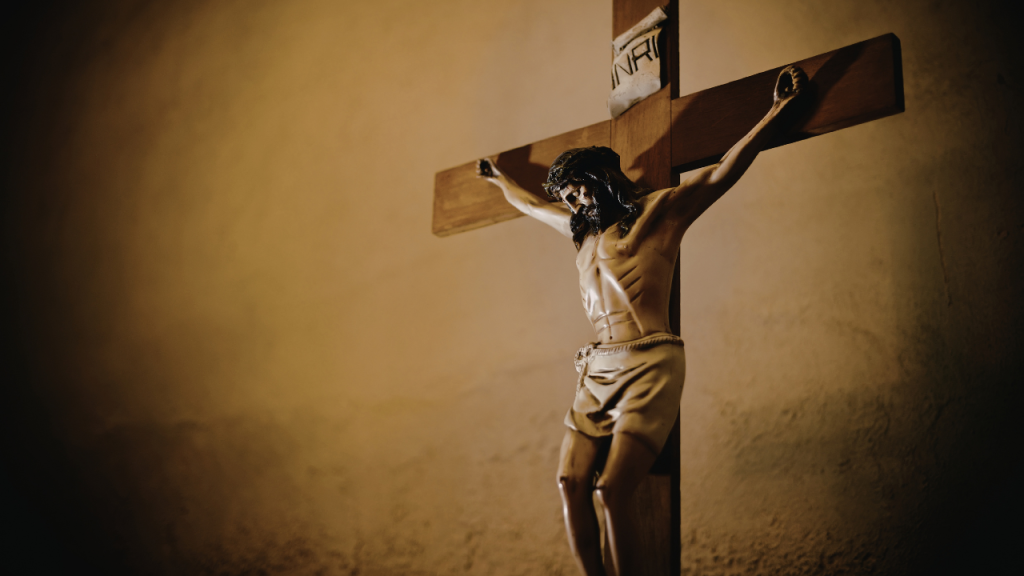
Was Jesus in India? The Hidden Story They Never Told You

Was Jesus in India? The Hidden Story They Never Told You

There are questions that do not belong to the surface of history but remain suspended within its silences, returning again and again with a quiet persistence, not because they seek sensation, but because they touch something unresolved in the way we understand the past. One such question concerns the life of Jesus, not within the familiar contours of his birth and ministry, but within the long, unspoken years that stand between them, and within the possibility that his journey may not have remained confined to the lands we have long associated with his story.

The narrative that is widely accepted offers a structure that appears complete, yet it carries within it an absence that invites inquiry. The years between his early life and the beginning of his public presence remain largely undocumented, and it is within this absence that alternative possibilities begin to emerge, not as assertions that demand immediate acceptance, but as openings that call for careful attention.

In recent times, scientific examination of the Shroud of Turin has introduced a dimension that extends beyond theological reflection into the realm of material investigation. Studies associated with the University of Padova have suggested the presence of genetic traces that indicate connections extending toward regions of the Indian subcontinent. These findings do not establish a definitive narrative, yet they disturb the assumption that the life of Jesus unfolded entirely within a limited geography, and in doing so, they create space for questions that were once set aside.

Alongside these scientific considerations, there exists a narrative that has persisted across decades, one that moves beyond implication into a direct and controversial claim. In Srinagar, within the valley of Kashmir, there stands a site known as the Roza Bal Shrine, associated with a figure called Yuz Asaf. Certain interpretations identify this figure with Jesus, proposing that he survived the crucifixion and journeyed eastward, eventually living and dying in India. This idea has been articulated by figures such as Mirza Ghulam Ahmad and later explored by authors like Holger Kersten, who sought to assemble historical references and cultural parallels into a coherent argument.

Mainstream historical scholarship does not accept this identification, and it approaches such claims with skepticism, often regarding them as speculative. Yet the persistence of the narrative invites attention, not because repetition establishes truth, but because endurance suggests that something within the idea continues to resonate. Claims that lack depth tend to dissolve with time, while those that endure often carry within them a question that remains unresolved.

To approach this inquiry with clarity, one must move beyond the immediacy of physical claims and enter the domain of teaching, where the essence of a spiritual figure reveals itself with greater continuity. When one turns toward the teachings attributed to Jesus, a distinct orientation becomes evident, one that directs attention inward, toward transformation that arises within the individual rather than through external structures of belief.

The statement that the kingdom of God is within does not describe a distant promise but points toward a reality that demands direct realization. This movement toward inner awareness finds a profound resonance within the philosophical traditions of India, particularly within the Upanishads, where the ultimate reality is not conceived as separate from the self but as something to be discovered within one’s own being. This alignment does not arise from superficial similarity but from a shared movement of understanding, where authority emerges from insight rather than institution.

A similar resonance appears in the emphasis on compassion, detachment, and freedom from the constructs of the ego, themes that find deep expression within Buddhist thought. Here, the path unfolds through awareness and insight, leading toward liberation from the illusions that shape human perception. When these parallels are observed with attention, they begin to form a pattern that extends beyond coincidence, raising a question that invites deeper contemplation.

Is this convergence the result of independent discovery, arising from the universal nature of human inquiry, or does it reflect a deeper interaction that has not been fully recorded within conventional history? The possibility that Jesus may have traveled east during the undocumented years offers one way of engaging with this question, suggesting that he may have encountered traditions that had already developed refined approaches to understanding existence. While such accounts remain outside the boundaries of mainstream acceptance, they persist because they attempt to articulate a connection that is experienced at the level of teaching rather than merely asserted through evidence.

The narrative associated with Kashmir extends this possibility further, transforming the question from one of influence to one of presence. Whether or not this claim is ultimately verified, its significance lies not in its conclusion but in its capacity to challenge the limits within which historical narratives are often confined. It calls attention to the possibility that history, as it is commonly presented, may not encompass the full extent of what has occurred.

At the same time, such exploration requires a grounded approach, one that resists the impulse to replace one fixed belief with another. The value of this inquiry lies not in premature acceptance or dismissal, but in sustained observation, where each element is examined with clarity and without the need for immediate resolution.

What begins to emerge through this process is not a definitive answer, but a shift in perspective. The life of Jesus, rather than appearing as an isolated narrative bound to a single tradition, begins to reveal itself as part of a broader movement of understanding, one that may have found expression across different regions and cultures. Scientific inquiry, historical narratives, and philosophical resonance together create a field that resists closure, not because it lacks substance, but because it invites continued exploration.

Perhaps this is where the deeper significance resides, not in establishing where Jesus was, but in recognizing how the question itself opens a space for reflection that extends beyond geography. It draws attention to the nature of truth, to the ways in which it is preserved, interpreted, and sometimes limited by the frameworks through which it is viewed.

When a question returns across time, it does so with a quiet insistence, not to disturb what is known, but to reveal what remains unseen. It does not demand belief, nor does it require denial. It asks only for attention, for a willingness to remain present with uncertainty, and for the patience to allow understanding to unfold without force.

And in that stillness, the question remains, not as a problem to be solved, but as a doorway that continues to open.


Topics Explored in This Article

This article reflects on the lesser-known dimensions of the life of Jesus, particularly the undocumented years that remain absent from conventional narratives. It examines the scientific discussions surrounding the Shroud of Turin and the interpretations that suggest possible links beyond the traditionally accepted geography. It also engages with the enduring narrative of the Roza Bal Shrine in Kashmir and the figure of Yuz Asaf, along with the perspectives presented by Mirza Ghulam Ahmad and Holger Kersten.

The exploration extends into the philosophical domain, where the teachings attributed to Jesus are observed alongside the inward-looking vision of the Upanishads and the meditative insights of Buddhist thought. It further considers the presence of historical gaps, the emergence of alternative narratives, and the broader possibility that spiritual understanding may have moved across cultures in ways that history has not fully recorded.


Keywords

Was Jesus in India, lost years of Jesus, Jesus in Kashmir, Roza Bal mystery, Shroud of Turin India connection, Yuz Asaf Jesus theory, hidden life of Jesus Christ, Jesus and Hindu philosophy, Jesus and Buddhism similarities, unknown history of Jesus

Was Jesus in India? The Hidden Story They Never Told You Read More »

Nothing to Do, Nothing to Gain: A Teaching from the Ribhu Gita

Nothing to Do, Nothing to Gain: A Teaching from the Ribhu Gita

The search for meaning often begins with a quiet feeling that something is missing, and from that feeling arises the idea that life must be shaped, corrected, or improved in order to reach a state of completeness. This movement of seeking expresses itself in many ways, through action, through discipline, through devotion, and through the continuous effort to understand and become.

Within this landscape of seeking, there exists a teaching that does not follow the familiar path of gradual progress, but instead invites a direct shift in the way one looks at life. This teaching is found in the Ribhu Gita, a text that is not widely discussed, not because it lacks importance, but because of the clarity with which it speaks.

Most spiritual teachings guide the seeker step by step, offering methods, practices, and stages that give a sense of movement and direction. The Ribhu Gita does not move in this way. It does not begin with what we experience as individuals, but with what it presents as the fundamental truth of existence, and in doing so it removes the usual support that the mind depends on.

At the heart of its teaching lies a statement that can feel unsettling at first. It says that one should be firm in the understanding that there are no charitable acts, no sacred places, no gain or loss, no doer and no receiver, no karma, no devotion, no knowledge, and no knower or known. It further states that all these are only thought-forms which arise and dissolve within the Brahman-Self, which alone remains as the sole existence.

When this is first encountered, it can appear as though everything that gives structure to life is being set aside. Our daily experience is built upon action and result, where we feel that we must do something in order to reach something. We believe that effort leads to progress, that knowledge leads to understanding, and that devotion leads to fulfilment.

The Ribhu Gita does not deny that these experiences appear in life. It draws attention to the way we understand them. It invites us to look carefully at whether these ideas exist on their own, or whether they arise within something deeper that we have not examined.

If one observes closely, it becomes clear that everything we experience is in constant change. Thoughts arise and pass. Emotions shift. Actions begin and end. Situations change continuously. Even the sense of who we are seems to move with these changes.

At the same time, there is something that remains present through all of this. There is an awareness through which all experiences are known. This awareness does not come and go in the same way as the thoughts and emotions that appear within it. It remains present as the background of all experience.

The Ribhu Gita points towards this awareness as the Self. It says that everything else, including the sense of being a doer, the idea of action and result, and even the path of seeking, are appearances within this awareness. Because these arise within the mind, and the mind itself is not constant, they do not have an independent existence of their own.

A simple way to understand this is through the experience of a dream. While the dream is happening, everything within it feels real. There are people, events, emotions, and actions. Yet when we wake up, it becomes clear that all of it existed within our own awareness. The Ribhu Gita invites us to look at our waking experience in a similar way, not to dismiss it, but to understand its nature more deeply.

When this is seen, even in a small measure, the way one relates to life begins to change. The constant pressure to achieve something begins to reduce. The fear of losing something begins to soften. This is because what we truly are is not something that is gained or lost through experience.

Even ideas such as devotion, knowledge, and practice are included within this understanding. They may guide a seeker at a certain stage, but they belong to the movement of the mind, and they do not define what is ultimately true.

This is why the Ribhu Gita is less discussed. It does not offer a path in the usual sense. It does not give the mind something to achieve or hold on to. Instead, it invites recognition of what is already present.

For a sincere seeker, this can bring a quiet shift. The search that was always directed outward begins to turn inward. Life continues in the same way on the surface, with actions, responsibilities, and relationships, but there is a different clarity within.

The significance of the Ribhu Gita lies in this directness. It does not keep the seeker engaged in endless concepts. It points towards a recognition that is immediate and always available.

It reminds us that what we are looking for is not something that lies elsewhere or in the future. It is what is already present as the very basis of our experience.

When this begins to be understood, even slightly, the movement of seeking starts to settle. Not because something new has been found, but because what was being searched for was never absent.


Key Takeaways

The Ribhu Gita presents a direct teaching that does not rely on gradual steps, but points towards what is already true.

It explains that ideas such as doer, action, gain, loss, knowledge, and devotion are thought-forms that arise within awareness and do not have an independent existence.

What remains unchanged through all experiences is the Self, described as Brahman, which is the sole reality.

For a seeker, this teaching shifts the focus from becoming something in the future to recognising what is already present.


Topics Covered

Ribhu Gita explained
Advaita Vedanta teaching
Self inquiry
Nature of the Self
Consciousness and awareness
Non duality explained


Frequently Asked Questions

What is the Ribhu Gita?
The Ribhu Gita is a text within the Advaita Vedanta tradition that presents a direct teaching on the nature of the Self and reality.

Why is the Ribhu Gita not widely discussed?
It speaks in a very direct manner and does not provide gradual steps, which makes it less accessible for general discussion.

What does “nothing to do, nothing to gain” mean?
It points to the understanding that the true Self is already complete and is not something that needs to be achieved through action.

Nothing to Do, Nothing to Gain: A Teaching from the Ribhu Gita Read More »